
Faith
FCC Investigates YouTube TV Over Christian Content Concerns


In a recent move that has captured the attention of faith-driven Americans, the Federal Communications Commission (FCC) has begun questioning YouTube TV over allegations that it may be discriminating against Christian content. At the heart of this issue is the exclusion of the Great American Family network, a channel celebrated for its family-friendly and Christian programming, from YouTube TV’s offerings.
FCC Chairman Brendan Carr has taken a stand, addressing a letter to Sundar Pichai, CEO of Alphabet Inc., and Neal Mohan, CEO of Google. Carr’s letter highlights a complaint from Great American Media, which accuses YouTube TV of “deliberately marginalizing faith-based and family-friendly content.” This concern is particularly significant in an era where many feel that tech companies are increasingly silencing voices that promote traditional values.
Carr’s inquiry into YouTube TV’s decision to exclude Great American Family is timely, especially given that the network is readily available on other major platforms. Carr expressed his concerns by stating, “These allegations of faith-based discrimination come at a time when American public discourse has experienced an unprecedented surge in censorship.”
While the FCC’s authority over YouTube TV and other virtual multichannel video programming distributors (MVPDs) is limited, Carr emphasized the importance of understanding the nature of carriage policies in the virtual MVPD sector. This understanding could potentially inform the FCC’s broader regulatory approach.
Carr acknowledged that independent programmers often face challenges when their channels are not carried by MVPDs. However, he noted, “In the case of YouTube TV, concerns have been raised alleging that your company has a policy (secret or otherwise) that discriminates against faith-based programming.”
In response, a YouTube spokesperson offered to brief the FCC on the platform’s business decisions, stating, “We welcome the opportunity to brief the FCC on YouTube TV’s subscription service and the strategic business decisions we make based on factors like user demand, operational cost, and financial terms, and to reiterate that we do not have any policies that prohibit religious content.”
Great American Family, under the leadership of CEO Bill Abbott, has been a beacon for those seeking content that upholds traditional values. Since its launch in 2021, the network has seen impressive growth, with a 19% increase in household viewership and a 21% rise in total viewers in November alone. The network’s commitment to faith, family, and country sets it apart from mainstream platforms, which often portray these values in a dismissive manner.
Abbott, who previously led Crown Media Family Networks, has been vocal about his dedication to content that supports and encourages traditional values. He remarked, “In ‘mainstream’ entertainment, the portrayal of faith, family, and country is often dismissive, caricatured or outright derisive.”
As the FCC continues its investigation, the outcome could have significant implications for how faith-based content is treated in the digital age. For those who cherish the principles of faith, family, and freedom, this issue underscores the ongoing need to defend these values in the face of modern challenges.
Let us know what you think, please share your thoughts in the comments below.


Faith Facts
- Iran’s Revolutionary Guard Corps ideologically guards the regime, controlling the economy and blocking paths to freedom unlike Egypt’s 2013 shift.
- History like 1979 revolution and cases in Afghanistan and Sudan show brief windows of freedom often collapse without Christian values anchoring society.
- True transformation requires God’s intervention, as authoritarian regimes rarely yield genuine democracy absent Biblical principles.
Dr. Martin Parsons warns that U.S. and Israeli strikes on Iran will intensify persecution against Iranian Christians in the short term.
The regime, weakened and threatened, draws on Shi’a martyrdom doctrine to target believers as enemies, mirroring past crackdowns amid protests.
Believers everywhere must urgently pray for Iranian Christians.
Trust God’s sovereignty amid trials, as Scripture commands unceasing prayer for persecuted brethren.
Faith Facts
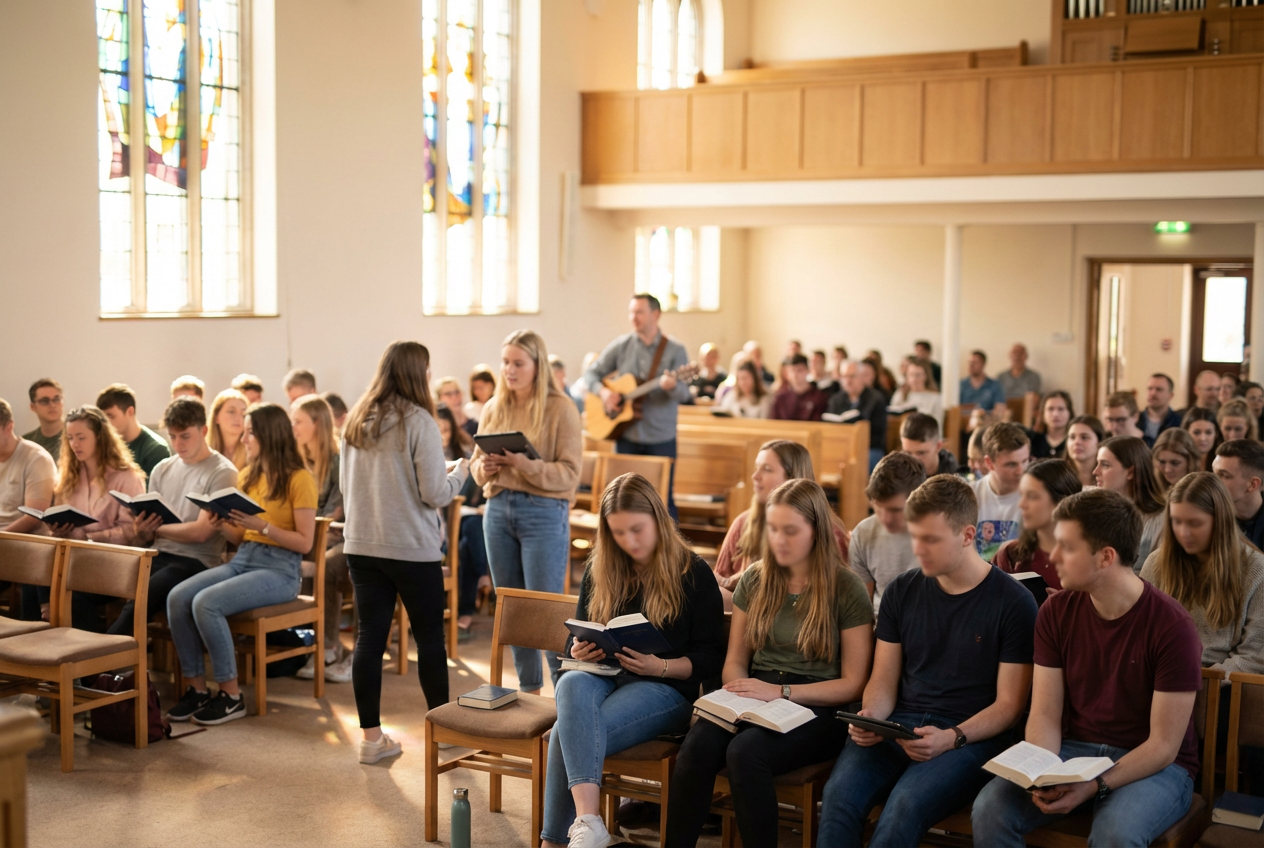
- The report revealed a third of young non-churchgoers would attend if invited by a friend, with a quarter eager to explore the Bible.
- Bible sales surged in 2025, with SPCK reporting record figures among younger readers seeking truth and peace.
- Bible Society stands firm, citing YouGov’s rigorous methods, as church leaders report fuller services and rising spiritual curiosity.
YouGov plans to repeat its church attendance survey later this year amid scrutiny of Bible Society’s
“Quiet Revival” report
which showed Christian attendance rising from 8% in 2018 to 12% in 2024.
Young adults aged 18-24 saw dramatic increases, from 4% to 16% overall, with over a fifth of young men and 12% of young women attending monthly, signaling hope for faith’s renewal.
Despite secular critics questioning the data, this upcoming survey offers a chance to affirm God’s work in Britain.
Pray for revival, invite friends to church, and stand boldly for faith and freedom.

Faith Facts
- God rested on the seventh day after creation, blessing the Sabbath as an example for His people (Genesis 2:2-3).
- Hebrews 4:9-10 promises a Sabbath-rest for God’s people, mirroring His own rest from works.
- Jesus invites the weary to find soul-rest in Him, with an easy yoke and light burden (Matthew 11:28-30).
In a culture glorifying endless toil, Christians must reclaim rest as sacred obedience to God’s design.
Rest ceases striving and depends fully on the Creator, renewing strength for faith, family, and freedom.
“Be still, and know that I am God; I will be exalted among the nations, I will be exalted in the earth.” (Psalm 46:10)
“Truly my soul finds rest in God; my salvation comes from Him.” (Psalm 62:1)
Today, pause from worldly pressures, trust in divine provision, and rest to stand firm in biblical values.


-

 Self-Reliance11 months ago
Trump’s Bold Move Uncovers Massive Social Security Fraud
-

 News12 months ago
Governor Walz’s Rhetoric Sparks National Controversy
-

 Faith11 months ago
New Clues Emerge in Noah’s Ark Mystery
-

 Family11 months ago
Texas Lawmaker Targets Furries in Schools
-

 News11 months ago
Mel Gibson’s ‘The Passion of the Christ’ Sequel Title Announced
-

 Freedom12 months ago
Maine Lawmaker Challenges Sports Fairness Controversy
-

 Family9 months ago
Canada’s Controversial Policy Sparks Ethical Debate
-
Faith3 months ago
Congress Hears Pleas for Nigerian Christians