
Faith
Christian Zionism Debate Highlights Jerusalem Divides

Faith Facts
- Church leaders in Jerusalem recently criticized Christian Zionism without clarifying what it means.
- Their statement claims a political agenda harms Christian unity and presence in the Holy Land.
- Many Christians in Israel support a Jewish homeland for biblical reasons, with diverse views on Israel.
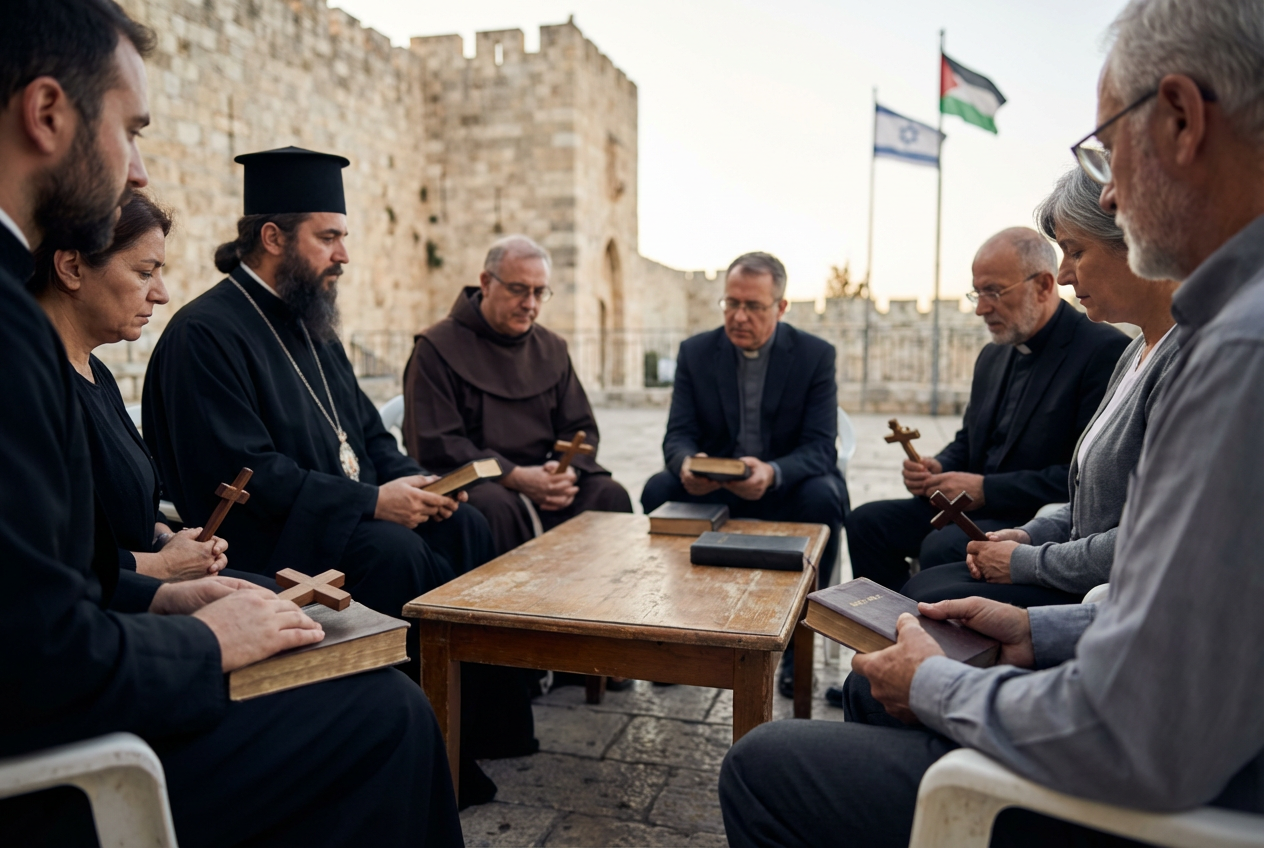
Church leaders in Jerusalem released a statement denouncing Christian Zionism, but failed to clearly define the term or acknowledge the diversity among believers in the region.
Many Christians support Israel from a biblical perspective, while critics often mischaracterize them as blindly political or monolithic in their convictions.
“Recent activities undertaken by local individuals who advance damaging ideologies, such as Christian Zionism, mislead the public, sow confusion, and harm the unity of our flock. These undertakings have found favour among certain political actors in Israel and beyond who seek to push a political agenda which may harm the Christian presence in the Holy Land and the wider Middle East.”
This council’s statement represents primarily Orthodox church leaders and doesn’t reflect the voices of all believers, including evangelical Protestants and Messianic Jews in Israel.
The complex nature of the Christian community in the Holy Land means no single group should claim to speak for everyone, especially when Orthodox, Catholic, Anglican, and Lutheran traditions all have a presence.
The letter’s timing raises questions, especially amid increased antisemitism worldwide and recent tragic attacks affecting Jewish communities.
Some suggest that frustration after the tragedy of October 7, 2023, has led church leaders to fear that Christian Zionism may legitimize mistreatment of Palestinian Christians.
Additionally, social pressures make it difficult for Arab Christians to voice concerns about mistreatment by Muslims, often leading to a silence about certain issues while others are freely discussed.
Israel has generally offered better conditions for its Christian minority compared to most neighboring countries; for example, Bethlehem’s Christian population has sharply declined under Palestinian Authority rule, reflecting broader regional trends.
It is crucial for the faithful to assess every perspective prayerfully, seeking to uphold the dignity and freedoms of all while standing on biblical truth.
Let us pray for unity, courage, and clarity for the Body of Christ in the Holy Land as we continue to defend our values of faith, family, and freedom amid today’s challenges.

Faith Facts
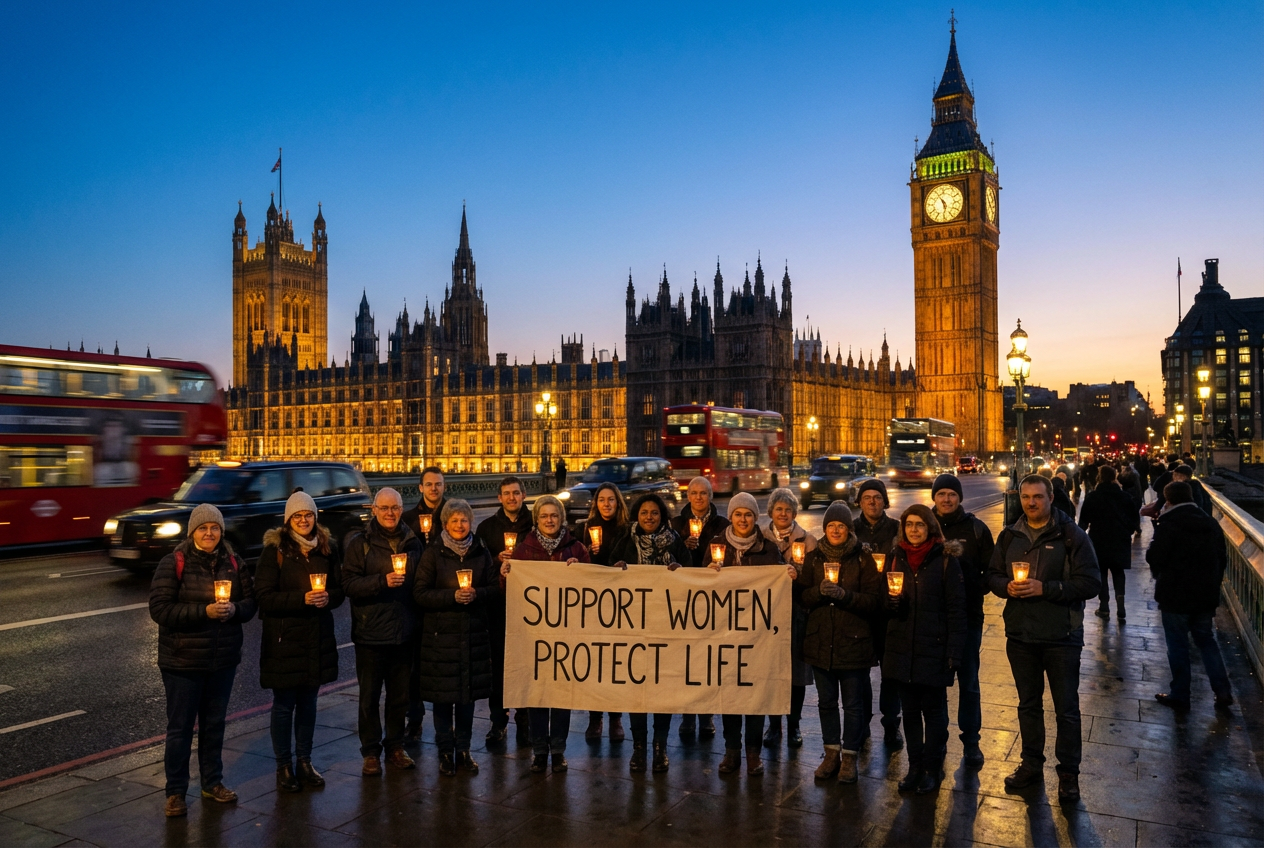
- The House of Lords is considering an amendment that would fully decriminalise abortion up to birth.
- Public support for late-term abortion remains extremely low, reflecting a widespread belief in the value of unborn life.
- Abortion is often the result of economic and social pressures, not true choice or desire.
Britain already ends the lives of a third of its unborn children. Expanding abortion law further would mark a grave departure from biblical values and undermine protections for the most vulnerable.
If enacted, the new law would permit abortion at any stage of pregnancy, making Britain’s policy among the world’s most extreme. This deeply concerns many who cherish the sanctity of life.
Surveys consistently reveal that a broad majority believe in safeguarding unborn children, especially in later stages of pregnancy.
Abortion is often framed as a solution for women in crisis, but this ignores the deeper societal failures that drive women to such desperate decisions.
As Christians, we must recognize that resorting to abortion reveals profound societal brokenness. Women need hope, not hardship.
Research shows abortion is associated with increased anxiety, substance abuse, and despair, confirming there is no cost-free escape from its consequences.
“Abortion is not cost-free, and pretending otherwise helps no one.”
The decline in births and the high rate of abortion signal a society in need of faith-based renewal and stronger support for families.
Instead of expanding abortion access, we must find compassionate Christian solutions that affirm life and support both women and children.
Practical Faith-Based Solutions
- Invest in babies and new parents by advocating policies that ease economic burdens and celebrate each child as a gift from God.
- Support mothers through longer, more flexible parental leave, honoring caregiving as a vital calling, not an obstacle to employment.
- Encourage marriage and stable families through fairer tax policies and community support, reinforcing the biblical foundation of family life.
- Improve education to foster responsibility and commitment, teaching young people the beauty of marriage and parenthood from a values-driven worldview.
- Expand alternatives to abortion by protecting faith-based charities and ministries that provide real support to women and families in need.
True compassion means helping women overcome the challenges that make motherhood seem impossible. As a community rooted in faith, let us champion policies and actions that uphold life, nurture families, and restore hope to Britain’s future.
Faith Facts
- Scripture teaches that a good name is rooted in character, not image or status.
- Modern culture often treats family names as brands to control and monetize.
- In the Bible, name changes symbolize transformation and divine calling.
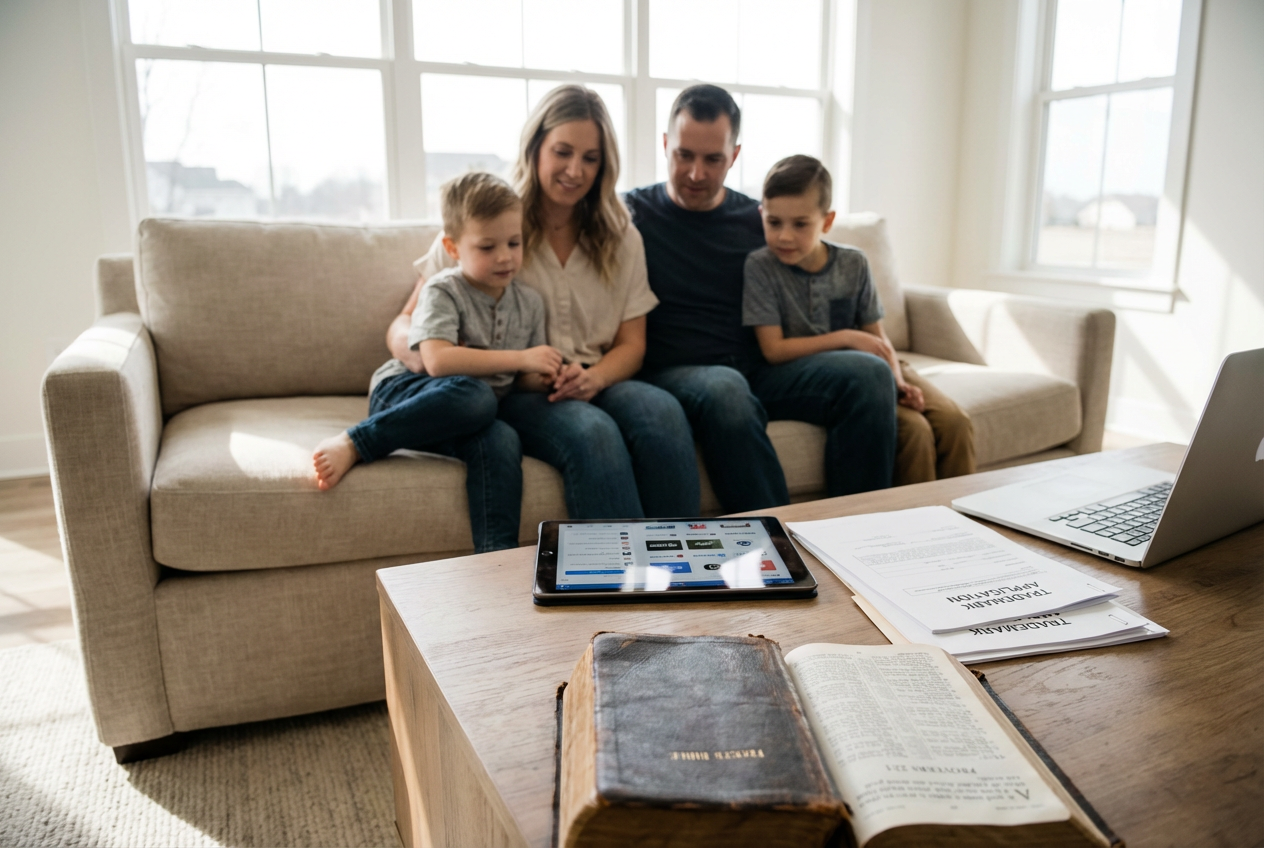
Celebrity families treat surnames like trademarks, revealing societal pressures to manage identity. Yet the Bible urges us to value a “good name” shaped by integrity rather than public image.
Even royalty, like Prince William and Princess Catherine, change names based on tradition and role, showing names carry legacy but also reflect shifting expectations.
Observing the Beckham family, we see a name treated as an asset that can be curated and contested, highlighting how culture measures worth by reputation rather than belonging.
Once, surnames signaled community and origin, but today names are shaped by branding and digital presence, losing their relational meaning.
Across society, naming customs are changing, challenging long-standing assumptions about family identity and which traditions define us.
“Proverbs 22:1 says: ‘A good name is more desirable than great riches.'”
In the biblical view, a good name is born of truthfulness and consistency, not fame or perfection. Godly character matters more than public acclaim.
Genealogies in Scripture place people within God’s story, emphasizing grace and adoption over status or performance.
Brand culture turns belonging into a transaction, but Christian faith calls us to embrace identity as a gift of grace, not an achievement.
Rather than consume the struggles of others as entertainment, we honor the image of God in every person and approach family stories with compassion.
Our legacy isn’t about managing image but living out faith and integrity. A name is meaningful, but it must not become an idol.
The Christian path is to value a good name rightly, allowing it to reflect Christlike character and remind us to find our true identity in God’s love.

Faith Facts
- World Relief urges an end to the review policy for Biden-era refugees.
- CEO Myal Greene insists vetting meets Christian and legal standards.
- Over 10,000 Christians join the call, prioritizing compassion over fear.
World Relief’s CEO, Myal Greene, is urging the Trump administration to reverse its policy requiring refugees admitted under President Biden to undergo new reviews. He underscores that these refugees have already faced thorough vetting, and the process aligns with a biblical mandate to welcome the stranger.
Greene warns that the new policy introduces uncertainty for families who have fled hardship, risking renewed trauma rather than security. He insists, “Initially, the refugees are screened by the United Nations related to the merits of their case. They’re again screened by the U.S. government to determine if they qualify as a refugee. And then they’re also screened on a security basis by the U.S. government to ensure that they’re not a threat to the United States when they come.”
A federal judge recently blocked the policy, stating it may violate legal protections and noting that these individuals have already been cleared through multiple channels. “These refugees have undergone rigorous background checks and vetting, been approved by multiple federal agencies for entry, been given permission to work, received support from the government, and been resettled in the United States,” Judge John Tunheim wrote. “None have been deemed a danger to the community or a flight risk. None have been charged with any ground for removal.”
Over 10,000 Christians stand with Greene, emphasizing a Christ-centered compassion that does not compromise American security or values. They highlight that faith calls Christians to stand with the vulnerable and uphold the moral duty to care for strangers who seek new beginnings in liberty.
As believers, we must continue to pray for wisdom among our nation’s leaders and take action anchored in Christ’s love. Stand firm and make your voice heard for Biblical compassion, freedom, and godly security.


-

 Self-Reliance10 months ago
Trump’s Bold Move Uncovers Massive Social Security Fraud
-

 News11 months ago
Governor Walz’s Rhetoric Sparks National Controversy
-

 Faith10 months ago
New Clues Emerge in Noah’s Ark Mystery
-

 Family10 months ago
Texas Lawmaker Targets Furries in Schools
-

 News10 months ago
Mel Gibson’s ‘The Passion of the Christ’ Sequel Title Announced
-

 Freedom11 months ago
Maine Lawmaker Challenges Sports Fairness Controversy
-

 Family8 months ago
Canada’s Controversial Policy Sparks Ethical Debate
-
Faith2 months ago
Congress Hears Pleas for Nigerian Christians