
News
Trump Halts Livestream Of Hasan Execution


Faith Facts
- Scripture teaches that governments bear the sword to punish evildoers and protect the innocent, as stated in Romans 13:4.
- Christian teaching affirms the value of every human life while upholding the right of lawful authority to administer justice.
- Prayer for victims and their families remains central to the Christian response to violence.
President Donald Trump announced Thursday on Truth Social that he had canceled the Pentagon plan to livestream the Dec. 3 firing-squad execution of convicted Fort Hood shooter Nidal Hasan.
The decision followed widespread public criticism of the proposal to broadcast the proceeding.
“The President has directed that the execution proceed without a livestream,” the statement read.
Supporters of the move argue that capital punishment for mass murder upholds justice and deters future attacks.
“The American people deserve accountability, not spectacle,” one official said.
The Fort Hood attack left thirteen people dead and dozens wounded, prompting renewed national focus on protecting military communities.
Let us know what you think, please share your thoughts in the comments below.

Faith Facts
- The Roman Catholic Church has long held that sacred icons serve as windows to the divine, created through prayerful human hands under the guidance of the Holy Spirit.
- Scripture warns believers to guard against innovations that may blur the line between the Creator and His creation.
- Christian tradition teaches that true worship flows from hearts surrendered to God, not from tools or technology crafted by man.
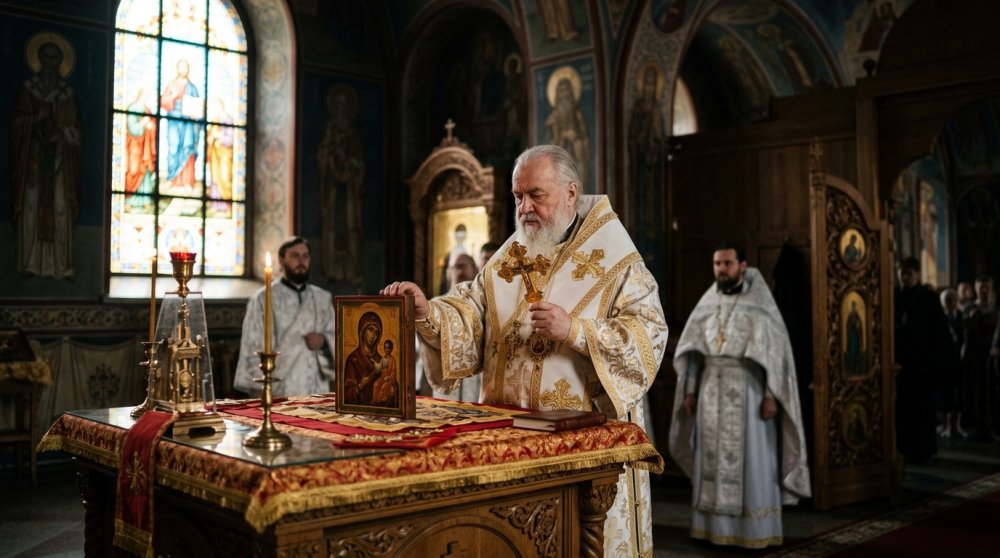
A Roman Catholic archbishop in Belarus drew sharp criticism after he publicly blessed what is being called the first AI-generated religious icon.
The blessing took place last Sunday and immediately raised concerns among faithful Christians about the growing role of artificial intelligence in matters of worship.
“Have we no shame?” asked one observer, capturing the unease felt by many traditional believers who see the act as a troubling departure from centuries of sacred practice.
Critics argue that allowing machine-generated images into the sanctuary risks replacing the heartfelt devotion of human artisans with cold, algorithm-driven output.
“Have we no shame?” the question echoes again as congregations wrestle with whether technology should ever stand where only Spirit-led hands have stood before.
? Belarus has blessed its first AI-generated religious icon The icon depicts Carlo Acutis, an Italian teenager who was canonized in 2025 and became known as the “Cyber Apostle.” The icon was installed in a Catholic church in Novolukoml, where Archbishop Tadeusz Kondrusiewicz blessed it on October 11. The move has sparked debate on social media, with some believers arguing that AI-generated images should not be used for prayer.
— NEXTA (@nexta_tv) October 12, 2026
Supporters of the archbishop maintain that the blessing was simply an acknowledgment of new tools available to spread the Gospel.
Yet many in the pews worry that once the door is opened to AI-created icons, the line between authentic sacred art and digital fabrication will only grow harder to defend.
Let us know what you think, please share your thoughts in the comments below.
Faith Facts
- Five Swiss church bodies from Protestant, Roman Catholic, Old Catholic, and evangelical traditions issued joint ethical guidelines on artificial intelligence.
- The guidelines stress that human dignity, not technical capability, must guide the use of AI in churches and society.
- Ten principles were released to help believers apply biblical values to rapidly advancing technology.
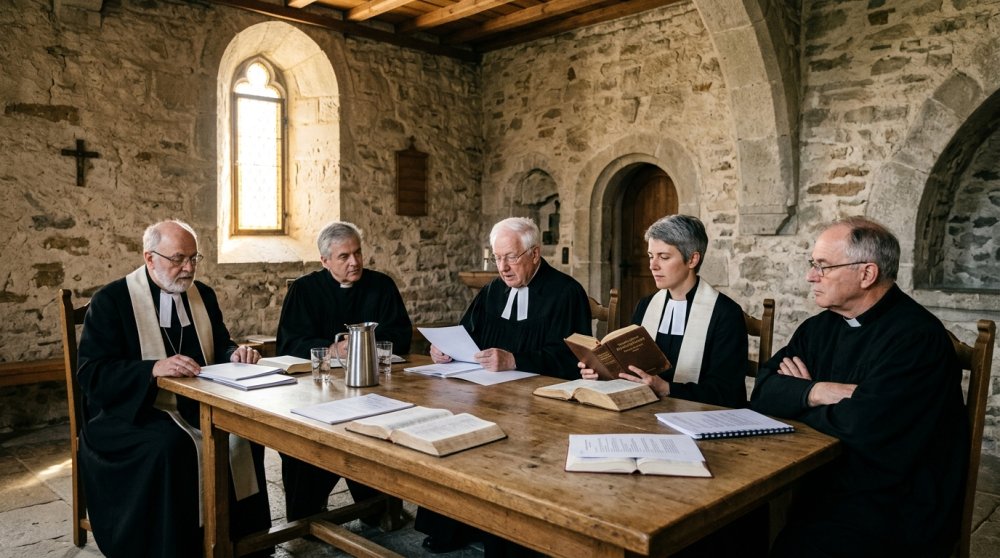
Christian leaders from across Switzerland have come together to address the moral questions raised by artificial intelligence. Their joint statement reflects a shared commitment to placing human worth above technological power.
The new guidelines were developed by representatives of five major church traditions. Together they seek to ensure that AI tools are used in ways that honor the image of God in every person.
“Human dignity rather than technical capability should determine how churches and society use the technology,”
Believers across the country are being encouraged to examine new tools through the lens of Scripture. The churches hope the guidelines will help Christians navigate questions of privacy, fairness, and the sanctity of life.
Church leaders noted that rapid advances in artificial intelligence require clear moral boundaries. Without such boundaries, they warned, society risks placing machines above the people they are meant to serve.
“The guidelines stress that human dignity, not technical capability, must guide the use of AI in churches and society.”
By issuing a unified statement, the Swiss churches are modeling cooperation across denominational lines. Their effort underscores the importance of standing together when confronting cultural and technological challenges.
Let us know what you think, please share your thoughts in the comments below.
Faith Facts
- The Bible teaches parents to guard their children from harmful influences, as stated in Proverbs 22:6.
- Scripture calls believers to stand for righteousness and protect the innocence of the next generation.
- Traditional American values emphasize parental rights and community oversight of public institutions.
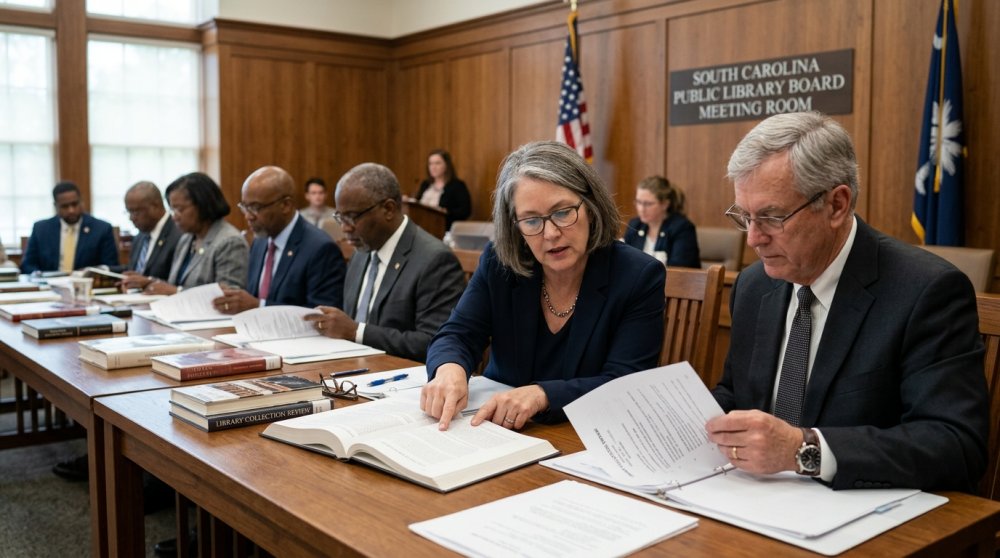
A South Carolina public library board has voted to overrule staff and relocate four books containing sexually explicit content and LGBT ideology from the children’s and teen sections to the adult area.
The decision came after community members raised concerns about the material being accessible to minors. Board members cited their responsibility to protect young readers from inappropriate content.
“We have a duty to ensure that our libraries remain safe spaces for families,” one trustee stated.
Staff had previously defended keeping the books in the youth sections, arguing that removal constituted censorship. The board rejected that position and placed the responsibility for access on parents rather than public institutions.
Critics of the board’s action have labeled it an attack on diversity. Supporters counter that the move simply aligns library policy with age-appropriate standards long upheld by parents and communities.
The books in question include graphic depictions and themes that many families find incompatible with Christian values and traditional upbringing. Parents have expressed gratitude that elected trustees listened to their concerns rather than deferring to library staff.
Let us know what you think, please share your thoughts in the comments below.


-

 Self-Reliance2 years ago
Trump’s Bold Move Uncovers Massive Social Security Fraud
-
 Faith2 years ago
New Clues Emerge in Noah’s Ark Mystery
-

 News2 years ago
Governor Walz’s Rhetoric Sparks National Controversy
-

 News2 years ago
Mel Gibson’s ‘The Passion of the Christ’ Sequel Title Announced
-

 Family2 years ago
Texas Lawmaker Targets Furries in Schools
-

 Freedom2 years ago
Maine Lawmaker Challenges Sports Fairness Controversy
-

 Family1 year ago
Canada’s Controversial Policy Sparks Ethical Debate
-
Faith11 months ago
Congress Hears Pleas for Nigerian Christians