
Faith
Faith Leader’s Legacy Endures Beyond His Passing

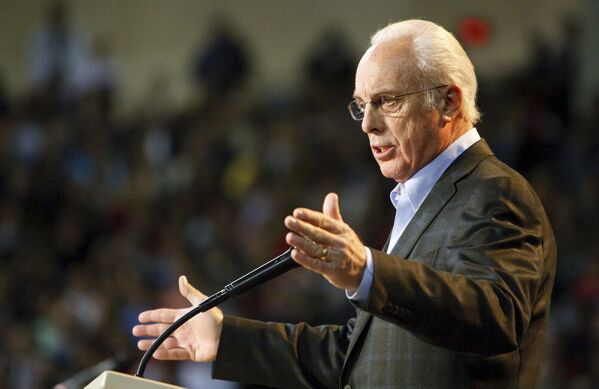
The Christian community and the nation have lost a towering figure in faith and leadership with the passing of John MacArthur, who went to be with the Lord at the age of 86. After a valiant battle with pneumonia, MacArthur’s journey on this earth concluded, leaving behind a legacy deeply rooted in Christian doctrine and traditional values.
“Our hearts are heavy, yet rejoicing, as we share the news that our beloved pastor and teacher John MacArthur has entered into the presence of the Savior,” stated a heartfelt message from “Grace to You,” his media ministry. “This evening, his faith became sight. He faithfully endured until his race was run.”
MacArthur’s ministry began in earnest in 1969 at Grace Community Church in Sun Valley, California, where his leadership and unwavering commitment to biblical truth transformed the church into a beacon of faith. Under his guidance, the church’s services grew to fill a 3,500-seat auditorium, reflecting his profound impact on the community and beyond.
In 1985, MacArthur took on the role of president at The Master’s University, a Christian institution dedicated to instilling biblical values in higher education. A year later, he founded The Master’s Seminary, focusing on preparing men for pastoral and missionary work, emphasizing the importance of spreading the Gospel worldwide.
MacArthur’s influence extended beyond the pulpit through “Grace to You,” a nonprofit organization that distributed his teachings via audio recordings, books, and television and radio programs. His prolific writing career included nearly 400 books and study resources, such as *The Gospel According to Jesus* and *Our Sufficiency in Christ*, which have been translated into over two dozen languages, reaching believers across the globe.
In 2020, MacArthur stood as a stalwart defender of religious freedom when he challenged California’s restrictions on in-person worship services. His commitment to upholding the right to worship freely resonated with many who value faith and liberty as foundational pillars of American society.
Despite facing health challenges, including multiple surgeries for atrial fibrillation and other conditions, MacArthur’s resolve remained unshaken. His dedication to his ministry and community was evident, even as his health continued to decline. Earlier this year, he was hospitalized for a “second procedure” on his lungs, as reported by the church.
John MacArthur leaves behind a loving family, including his wife, Patricia, four children, and fifteen grandchildren. His life was a testament to the power of faith, the importance of family, and the enduring strength of traditional values.
As we reflect on MacArthur’s legacy, we are reminded of the profound impact one individual can have when guided by unwavering faith and a commitment to truth. His teachings and leadership will continue to inspire future generations to uphold the principles that define a strong and virtuous society.
Let us know what you think, please share your thoughts in the comments below.


Faith Facts
- Christians are called to redeem every tool for God’s glory and the spread of the Gospel.
- Artificial intelligence is a human creation and remains under God’s sovereign authority.
- Believers must approach emerging technologies with wisdom rooted in Scripture.
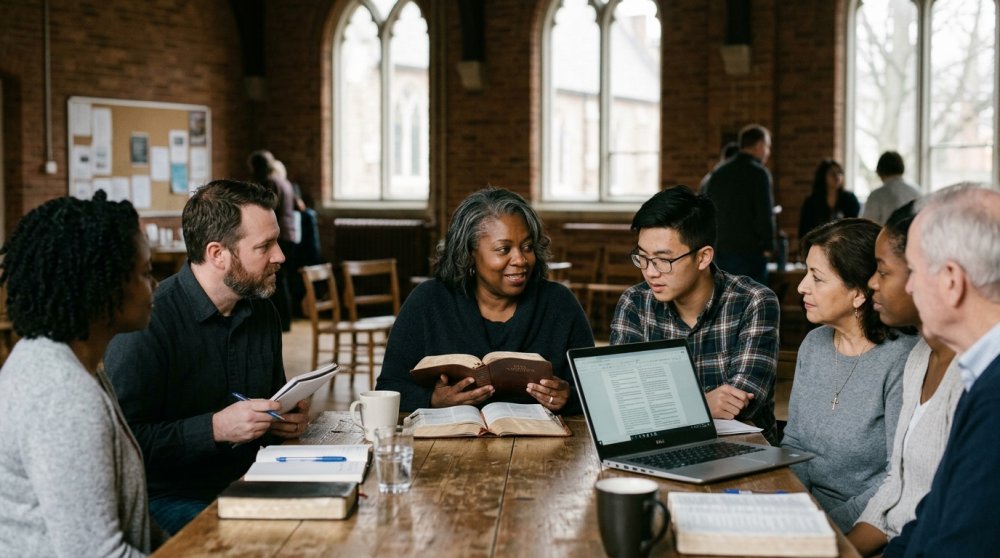
Christians around the world are asking an important question as artificial intelligence grows more powerful. How can this technology be captured for the glory of God and the advancement of the Gospel?
Scripture teaches that every good gift comes from above. Technology itself is not evil, but its use must be directed by truth and righteousness.
AI systems are built by people and trained on data created by people. They reflect human choices and remain limited by the boundaries God has established.
Believers have a responsibility to guide these tools toward purposes that honor Christ and serve others. That includes sharing the Gospel, protecting life, and strengthening families.
“Whether therefore ye eat, or drink, or whatsoever ye do, do all to the glory of God,” 1 Corinthians 10:31 reminds us.
Churches and ministries are already exploring ways to use AI for translation, accessibility, and discipleship resources. These efforts must stay anchored in sound doctrine and prayerful discernment.
At the same time, Christians are right to raise concerns about privacy, truth, and the temptation to place ultimate trust in machines rather than in the Lord.
“Trust in the Lord with all thine heart; and lean not unto thine own understanding,” Proverbs 3:5 declares.
Ultimately, the future belongs to the One who created all things, not to any algorithm or invention of man. AI will never have the final word over humanity.
Let us know what you think, please share your thoughts in the comments below.
Faith Facts
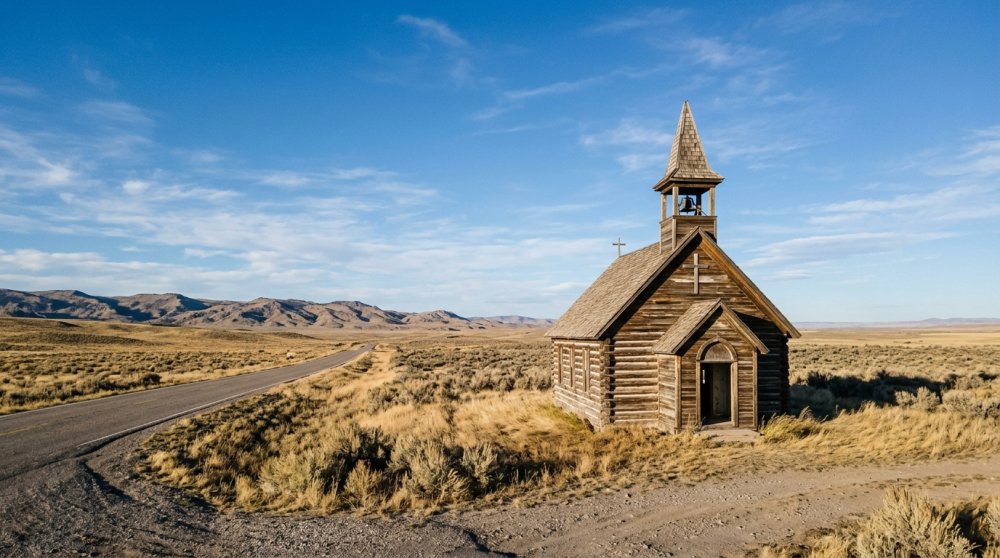
- The little log church has stood along the historic Oregon Trail route, serving as a steadfast reminder of Christian faith amid the rugged American frontier.
- U.S. Highway 191 passes near this enduring structure, connecting modern travelers to the spiritual legacy of pioneer families who settled the West.
- The church continues to bear witness to the traditional values of faith, family, and freedom that shaped our nation’s westward expansion.
Along U.S. Highway 191 stands a little log church that looks as though it has occupied this windswept landscape since the days of wagon trains.
The humble structure serves as a tangible link to the pioneer families who carried their Bibles and their faith across the plains in search of new beginnings.
Its weathered logs and simple steeple rise against the vast Western sky, a quiet testament to the enduring strength of Christian witness in America.
Travelers passing by are reminded that the values of hard work, self-reliance, and devotion to God helped build this nation from the ground up.
Let us know what you think, please share your thoughts in the comments below.
Faith Facts
- Scripture teaches that creation groans under the weight of sin and awaits redemption
- Christian teaching holds that believers are called to reflect God’s compassion through practical help
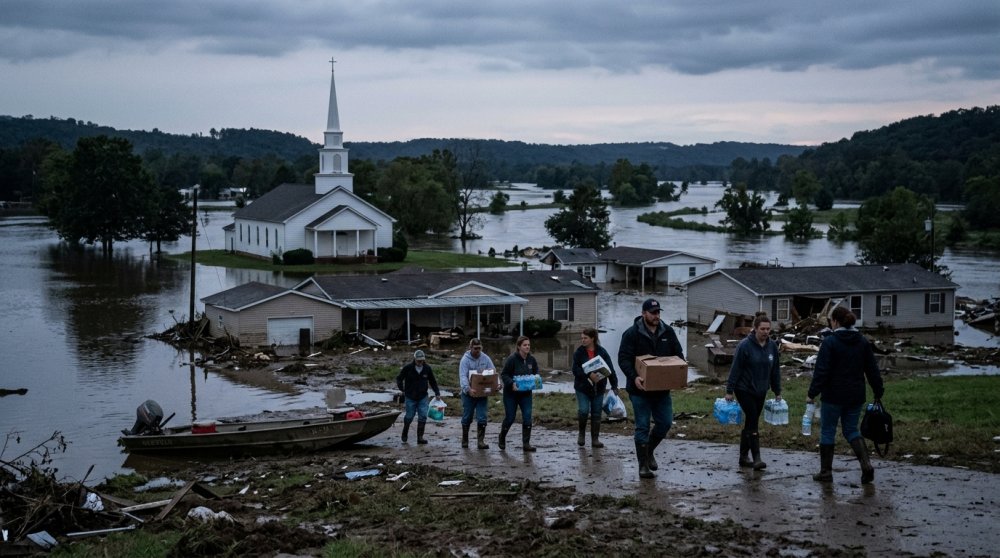
- History shows the church has long been first on the scene after floods, fires, and storms
Every natural disaster reminds us that we live in a fallen world — that mankind’s sin irreparably marred the world’s original perfection.
We call these events “natural disasters,” but the reality is that these tragedies are anything but “natural.”
Let us know what you think, please share your thoughts in the comments below.


-

 Self-Reliance1 year ago
Trump’s Bold Move Uncovers Massive Social Security Fraud
-

 Faith1 year ago
New Clues Emerge in Noah’s Ark Mystery
-

 News2 years ago
Governor Walz’s Rhetoric Sparks National Controversy
-

 News1 year ago
Mel Gibson’s ‘The Passion of the Christ’ Sequel Title Announced
-

 Family1 year ago
Texas Lawmaker Targets Furries in Schools
-

 Freedom2 years ago
Maine Lawmaker Challenges Sports Fairness Controversy
-

 Family1 year ago
Canada’s Controversial Policy Sparks Ethical Debate
-
Faith10 months ago
Congress Hears Pleas for Nigerian Christians