
News
South Dakota Brothers-in-Law Lead Historic Church Reunion

Faith Facts
- Two brothers-in-law ministers helped heal a 20-year church division in Sioux Falls, South Dakota, uniting two congregations into one thriving body of believers.
- Scripture teaches that division among Christians weakens the witness of the Gospel, and unity reflects the heart of Christ as stated in John 13:35.
- The merged Sioux Falls Church of Christ now serves over 200 members weekly, including many children, demonstrating how faith, family ties, and obedience to God can restore what was broken.
Two brothers-in-law. Two ministers of the Gospel. Two congregations once divided by disagreement. In Sioux Falls, South Dakota, those realities have become a powerful testimony to God’s ability to bring healing where there was once separation.
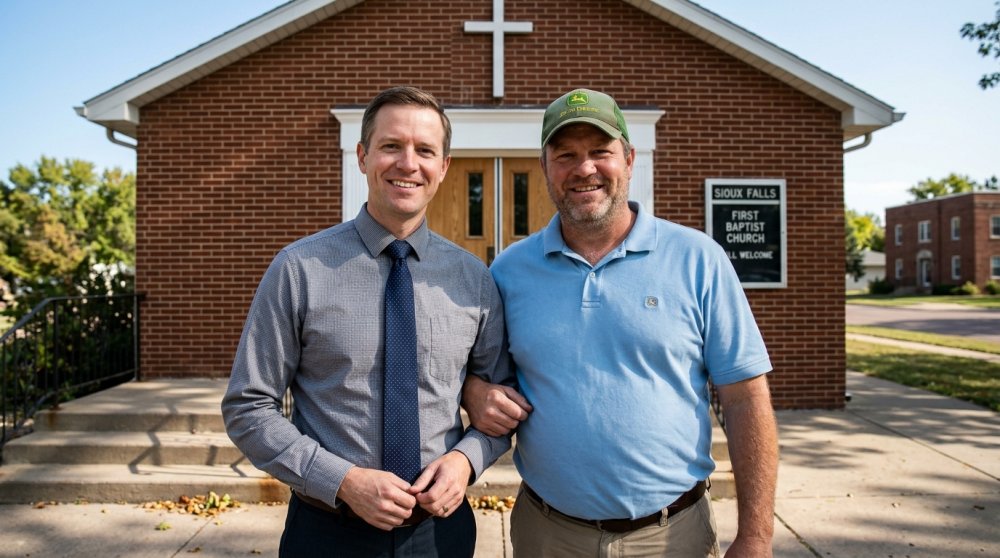
Clint Giltner, the church’s preaching evangelist, and Zack Opheim, its discipleship evangelist, shared their recollections over Sunday lunch at Blarney Stone Pub in Sioux Falls, the state’s largest city with a population of about 225,000.
Both still sported their Sunday best: a button-down shirt and necktie for Giltner, who delivered the sermon that morning, and a short-sleeved polo and John Deere cap for Opheim.
As their varied attire reflected, these two men of God could not be — in some ways — any more different. Count Giltner, 39, as the straight-laced one, the rule-following Oklahoma City cop’s son whose father, Greg, now serves as chief of police at Oklahoma Christian University.
View Opheim, 44, as the one with the rocky past, the drug addict who turned his life around. He found Jesus in a halfway house a quarter-century ago. “I was just a Minnesota methhead,” Opheim quipped.
Their paths crossed because Giltner, measured and reflective, and Opheim, blunt and spontaneous, married sisters. Both Sarah Giltner and Elizabeth Opheim have biblical names.
Contrasting personalities aside, the husbands always have gotten along well. That is, except for a brief time years ago when Giltner temporarily broke up with his future wife.
“So we were trying … to comfort Sarah,” Opheim recalled with a laugh. “So we said everything, like, ‘Clint is a scumbag. He’s a real, cheap, dirty loser.’ And two days later, she comes back smiling, and they’re back together. It’s like, ‘Hey, Clint.’”
“It was longer than two days,” Giltner corrected. “But definitely, she’s not forgotten that I did that.”
Same family, different churches
The sisters have family ties to Sioux Falls, where a monumental stainless-steel sculpture called the Arc of Dreams spans the Big Sioux River. Clint Giltner earned a degree in communication studies from Oklahoma Christian in 2009 before he felt called into ministry.
He served as the family and involvement minister for the Mannford Church of Christ in Oklahoma for five years. In 2015, Giltner returned to his wife’s South Dakota hometown to become the preacher for the 41st Street Church of Christ, which the sisters’ parents, Tom and Mary Wilcox, attended.
The 41st Street church, with Sunday attendance of about 150, had resulted from a 1999 breakaway from another Sioux Falls congregation. Since the split, the Southeastern Church of Christ, about 3 miles away, had dwindled to roughly 50 members.
“Being from Oklahoma, I’m just used to having multiple churches in a place, and that’s just normal,” Giltner said of his native state, which has more than 500 Churches of Christ. So the idea of trying to reunite the split congregations was not on Giltner’s radar.
But South Dakota — which is larger than Oklahoma geographically but more sparse in population — counts only a few dozen Churches of Christ. Long distances typically separate individual congregations in the Dakotas.
Enter Opheim, who completed his Bible degree at Oklahoma Christian in 2008. He did mission work in China and then preached domestically before experiencing ministry burnout. In 2017, he decided to move to Sioux Falls and work as a roofer.
His focus on manual labor did not last long. Opheim soon found himself recruited to serve as the full-time minister for the Southeastern church. “In my interview, I said, ‘I don’t see a reason why the churches remain divided, and I think we should work toward getting together,’” he recalled. “Immediately, people took me aside and said, ‘Oh no, that’s never happening.’”
One’s advantages, another’s disadvantages
Once in the Southeastern pulpit, Opheim preached expository sermons that he prayed would soften hearts to the idea of reuniting. In a Southeastern men’s meeting in January 2019, two members — Roger Schulke and Kyle Adams — proposed approaching 41st Street’s elders with the possibility of a merger. Southeastern did not have elders.
“I never got a voice out of the air that said, ‘Do this,’” Schulke said. “But the signs were there, and I said, ‘I think God might be telling us to pursue this.’”
Both Schulke and Adams became members at Southeastern after the split. Neither knew the ins and outs of why it occurred. Many of those involved had moved away or died. Gary Styke, one of 41st Street’s elders along with Tom Wilcox, was part of the group that left Southeastern in 1999.
While reluctant to discuss the specific reasons for the split, Styke told The Christian Chronicle concerns related to how to approach Scripture, including whether to preach a more positive message. When first approached by the Southeastern brothers in 2019, 41st Street’s elders were reluctant to consider a merger.
“Honestly, our thoughts were, ‘We want a good relationship, but we think there’s probably room for two churches in Sioux Falls,’” Styke said. “And the leadership from Southeastern was very persistent and adamant. … They convinced us that this was something that we at least needed to prayerfully consider.”
As Schulke saw it, bringing the two congregations together made sense. Southeastern had a larger building, while 41st Street was cramped for space. Southeastern’s members were mostly older, while 41st Street had younger people. “The advantages of one congregation were the disadvantages of the other,” Schulke said, “so we presented it that way in a positive manner.”
As the discussions progressed, the congregations decided to put aside past differences and become one body again — as the Sioux Falls Church of Christ. In May 2019, more than 200 men, women and children gathered for the kickoff service.
Jim and Kim Vander Woude started attending Southeastern in 2001. Although the split occurred before their arrival, they celebrated the merger. “I mean, division is never good,” said Kim Vander Woude, a mother of two daughters now in their 20s. “You see all the turmoil that happened in the first century church, and we know that God doesn’t want that.”
Giltner and Opheim remained as the ministers. Styke and Wilcox became elders for the full group, although Wilcox later stepped down after his wife, Mary, died of brain cancer in September 2019. Greg Alexander is now the second elder.
While moving into the former Southeastern building, the newly combined group kept 41st Street’s schedule — worship first on Sundays, followed by fellowship time with coffee, juice and doughnuts and then a Bible class hour.
“I just see God’s hand in it,” Styke said of the merger. “It’s been a blessing. It doesn’t seem like we have two congregations. It seems like we have one congregation, and that was the goal.”
Styke downplayed any notion that the family relationship between Giltner and Opheim played a huge role in the merger. “It was more due to their character,” Styke said. “I mean, they’re both interested in the Lord’s church.”
Different personalities and strengths
For their part, Giltner and Opheim welcomed the opportunity to work together and focus on their individual strengths. Giltner’s gifts include sermon preparation, church organization and hospital visitation. “I’m comfortable in the pulpit and teaching,” the father of four said.
Opheim said he’s at his best building relationships with seekers and leading Sioux Falls’ addiction recovery ministry. “I don’t have any administrative skills,” joked Opheim, a father of three. “I just open the Bible and drink coffee with people.”
Soon after the merger, a group of about 50 Christians — some who had driven about 70 miles each way from Tyler, Minn., to worship in Sioux Falls — formed a new congregation closer to home. But with growth in recent years, the Sioux Falls church still tops attendance of 200 some Sundays — including 60 to 80 children.
“Babies are a little noisier, but guess what? They are our future,” said Dave Cutshall, a deacon who helps lead Sioux Falls’ support of international ministries such as Healing Hands and Orphan’s Lifeline.
Jada Baltazar, a mother of four young children, drives more than 50 miles each way to worship with the Sioux Falls church. “Something that really made a difference to me is how much everybody accepts you and welcomes you and treats you as family, and that never changes,” said Baltazar, who owns a Mexican restaurant with her husband, Humberto, in Madison, S.D.
She previously attended the 41st Street church. The merger, she said, “gives the opportunity to share cross-generational wisdom for biblical living.”
Ethan Bilbrey witnessed the merger from about 260 miles away while serving as the minister for the Richfield Church of Christ in Minnesota. He recently moved back to his home state of Tennessee, where he preaches for the Westwood Church of Christ in McMinnville.
“I grew up in a Church of Christ that split when I was 7 years old,” Bilbrey said. “I know personally the grief this causes to brothers and sisters and the negative effect it has on our witness to the Gospel in the community.”
He emphasized how much the Sioux Falls merger encouraged him. “I see the work of God and the power of the Gospel in the reconciliation of the two congregations becoming one again,” he said, citing Jesus’ words in John 13:35. “I pray that more churches who have experienced division could love one another and be reconciled for the sake of the mission of God.”
Stepping out in faith — again
On a recent Lord’s Day, Sioux Falls’ opening announcements offered details on a community clothing giveaway, an areawide hay ride and a group going to encourage the Vermillion Church of Christ, about 60 miles south of Sioux Falls.
A third minister added to the Sioux Falls church staff last year — 32-year-old Mackenzie Driscoll — led the Vermillion trip. Driscoll, a Sioux Falls native, served for years as a volunteer youth minister before mentioning his desire to become a preacher.
He’s helping with the church’s technology needs and producing a church podcast featuring the ministry team. The congregation didn’t necessarily plan to budget money for a third evangelist, Giltner and Opheim said. But as with the merger, the Sioux Falls church stepped out in faith.
Let us know what you think, please share your thoughts in the comments below.

Faith Facts
- Churches of Christ in Pennsylvania, Oklahoma, and South Dakota reunited after decades of division, demonstrating that unity is possible through prayer and perseverance.
- Scripture calls believers to make every effort to maintain unity and peace, as stated in Ephesians 4:3 and modeled in Jesus’ prayer in John 17.
- The mergers resulted in stronger congregations that better steward God’s resources and bring together intergenerational wisdom and energy.
Three congregations separated by hundreds of miles have shown that healing old wounds and restoring fellowship is possible when Christians seek God’s will above personal preferences.
The Christian Chronicle followed the stories of reunions in Pottstown, Pennsylvania; Durant, Oklahoma; and Sioux Falls, South Dakota, each separated for decades before coming back together.
Christians like to talk about unity, the kind for which Jesus prayed in John 17.
But all too often, division occurs instead — instigated sometimes by doctrinal conflicts and other times by personality clashes. Many times, the real problem is a combination of both.
“Thankfully, a spirit of unity is stirring in the hearts of certain places,” said Jeremie Beller, a Chronicle contributing editor and dean of the Bible college at Oklahoma Christian University in Oklahoma City.
The Chronicle witnessed that spirit of unity at the Cornerstone Church of Christ in Pottstown, Pa., the Durant Church of Christ in Oklahoma and the Sioux Falls Church of Christ in South Dakota.
In those places, congregations 6.5 miles apart (Pennsylvania), 1.5 miles apart (Oklahoma) and 3 miles apart (South Dakota) reunited after decades of separation.
In Pennsylvania and South Dakota, the original divisions occurred as the result of long-ago disputes among members. But as time passed, fewer and fewer folks could remember the specifics, if they ever knew them in the first place.
As Pennsylvania elder Rick Elam explained, he came later and had no firsthand knowledge of what transpired.
“But I know those wounds were deep and painful for those involved,” Elam said.
The situation was different in Oklahoma, as one group left to plant a new neighborhood church — with the support of the original congregation. But even there, the separate bodies made less and less sense as the years unfolded.
“One of the big motivating factors was the fact that there were 150 of my brothers and sisters that met across town that I did not know well,” minister and elder Layne Heitz said.
Despite the varying circumstances, the cases highlighted by the Chronicle offer helpful lessons for other Christians.
These are five ways that split congregations could benefit from a merger:
1. Improve intergenerational diversity in the pews.
That occurred in each of the three cases featured in the series.
In each case, one congregation had more younger members, and the other congregation offered the wisdom and insight of older members — and the mergers brought everyone together.
2. Overcome hurt feelings — even after decades — and pursue Jesus’ call for unity.
That was the case in Pennsylvania and South Dakota and even, to a lesser extent, in Oklahoma, where the church planting — while positive — did not occur without a few wounds.
The passage of time certainly seems to help, as past combatants dying and moving away can make it easier to engage in open dialogue.
Far too often, division lingers for decades, even after the original people or problems have passed. Yet the Scriptures call for Christians to “make every effort” toward unity and peace (Ephesians 4:3).
3. Seek a natural means of infusing new ideas and leaders.
In Oklahoma, the merger resulted in a decision to worship on Sunday mornings and conduct children’s and adult Bible classes on Sunday nights. The change made life easier on the parents of young children and improved attendance, too.
In South Dakota, the full group adopted one congregation’s model of worshiping first on Sunday morning, then enjoying fellowship time with juice, coffee and doughnuts before Bible classes.
In both Pennsylvania and South Dakota, one congregation involved in the merger submitted to the leadership of the other congregation’s elders. In Oklahoma, an equal number of elders from each congregation kept serving.
4. Use resources, including church buildings, provided by God in a more efficient manner.
In Pennsylvania and South Dakota, dwindling congregations had small groups meeting in large buildings. Through the mergers, they welcomed more sizable groups and infused new life — spiritually and operationally — into their facilities.
In Oklahoma, the merging congregations’ former church buildings were sold. A new facility with classrooms and a multipurpose room were built. The church worships — for now — in the multipurpose room, but an 800-seat auditorium is under construction.
5. Open hearts to God’s calling and direction.
In each of the cases highlighted, talk of a possible merger started years before one actually occurred.
Before finally taking action, leaders of each congregation needed to be open to such a possibility — and willing to pray about it.
As Thomas Wise, minister for the Pennsylvania church, put it, “It definitely seems like God’s timing is always the right timing.”
In South Dakota, member Roger Schulke recalled: “I never got a voice out of the air that said, ‘Do this.’ But the signs were there, and I said, ‘I think God might be telling us to pursue this.’”
In Oklahoma, Alvadean Marcho, whose late husband, Bob, was a minister for 45 years, said the merger discussion focused on a simple question: “How can we glorify God?”
The advice of Logan Cates, the Oklahoma church’s family minister?
“Let us also show mercy and kindness to those we disagree with, and for the sake of Jesus Christ, lay our past disagreements to rest!” Cates urged. “Reunite with our brothers and sisters no matter what happened a generation back.”
Let us know what you think, please share your thoughts in the comments below.
Faith Facts
- A 20-year-old Christian woman in Somalia has been confined and physically abused by her Muslim uncle for leaving Islam.
- She has been denied adequate food and water while being held against her will in her uncle’s home.
- Her conversion to Christianity has triggered violent persecution, underscoring the dangers faced by believers in Muslim-majority regions.
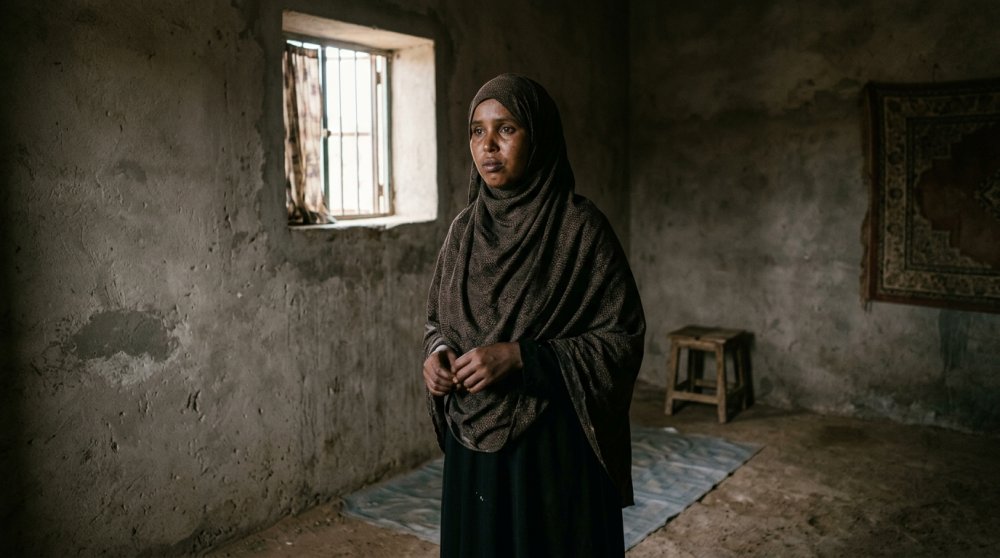
A young woman in Somalia is enduring severe persecution after choosing to follow Christ. Her Muslim uncle has confined her to his home, where she has been beaten and deprived of proper nourishment for her decision to convert to Christianity.
Sources close to the situation report that the 20-year-old has been subjected to physical abuse and intentional neglect as punishment for leaving Islam. The confinement has prevented her from receiving sufficient food and water, placing her health at serious risk.
“The Muslim uncle of a 20-year-old woman in Somalia has confined her to his home, where he has beaten her and deprived her of adequate food and water for converting to Christianity, sources said.”
This case reflects the harsh reality faced by many believers who leave Islam in regions where religious freedom is denied. The young woman’s courage to embrace Christianity despite the known risks demonstrates the transformative power of faith under fire.
Let us know what you think, please share your thoughts in the comments below.
Faith Facts
- Isabel Vaughan-Spruce is facing five new charges for silently praying outside an abortion clinic in the United Kingdom.
- The case highlights growing legal pressure on Christians who exercise their faith through prayer in public spaces.
- Believers across the world continue to stand for the sanctity of life and the freedom to pray without government interference.
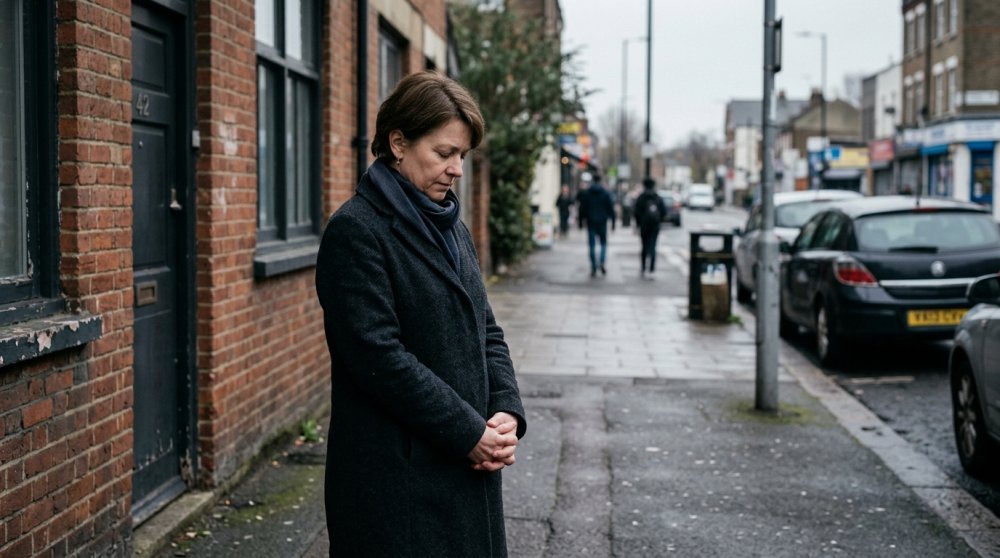
British courts are once again hearing the case of a woman arrested for the simple act of praying silently near an abortion facility. Isabel Vaughan-Spruce has entered a not-guilty plea to five new charges stemming from the same incident.
Her arrest has drawn attention to the growing restrictions placed on Christians who seek to exercise their faith in public spaces near abortion clinics. The charges reflect a broader cultural shift away from traditional protections for religious expression.
“I was not breaking the law,” Vaughan-Spruce has maintained throughout the proceedings.
Christian conservatives in the United States and abroad view the case as a troubling sign of how far governments may go in limiting basic religious freedoms under the guise of public order. The right to pray, even silently, remains a cornerstone of both Christian practice and historic Western liberty.
“The freedom to pray should never be subject to government approval,” one supporter stated.
Advocates for life and religious liberty argue that such prosecutions undermine the very foundations of a free society. They call on believers to remain steadfast in prayer and public witness despite legal challenges.
Let us know what you think, please share your thoughts in the comments below.


-

 Self-Reliance2 years ago
Trump’s Bold Move Uncovers Massive Social Security Fraud
-

 Faith1 year ago
New Clues Emerge in Noah’s Ark Mystery
-

 News2 years ago
Governor Walz’s Rhetoric Sparks National Controversy
-

 News2 years ago
Mel Gibson’s ‘The Passion of the Christ’ Sequel Title Announced
-

 Family2 years ago
Texas Lawmaker Targets Furries in Schools
-

 Freedom2 years ago
Maine Lawmaker Challenges Sports Fairness Controversy
-

 Family1 year ago
Canada’s Controversial Policy Sparks Ethical Debate
-
Faith11 months ago
Congress Hears Pleas for Nigerian Christians