
Self-Reliance
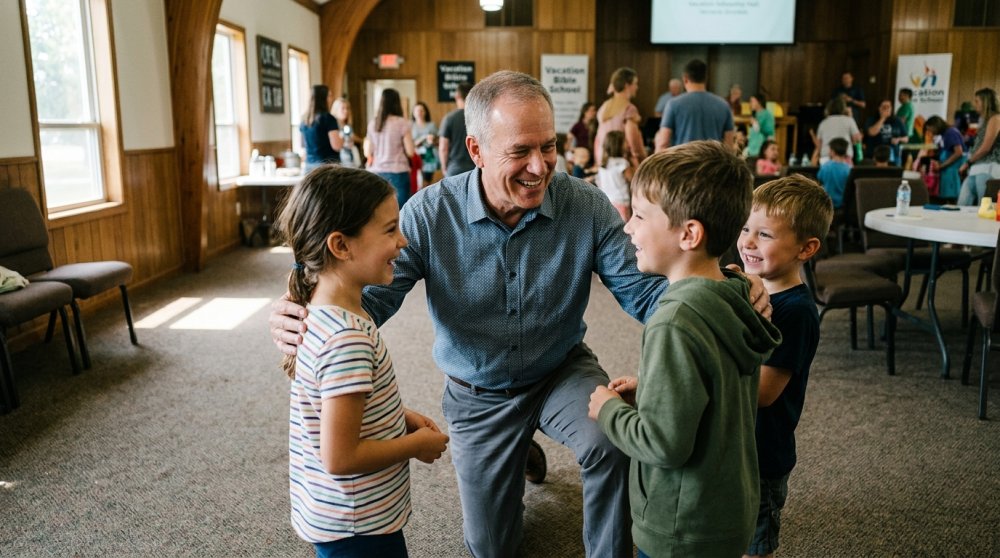
Christian Leadership Series Launches to Equip Faithful Servants

Faith Facts
- The new series examines biblical principles for leading with humility and integrity.
- Christian leaders are called to reflect Jesus in every area of influence and service.
- Guest writers will share practical wisdom rooted in Scripture and real-world experience.
In the “Leadership Matters” series, guest articles explore the dimensions of Christian leadership. The series opens with a clear call for believers to seek leaders who model the character of Christ in their homes, churches, and communities.
Readers will find links to every installment and related resources below. Each article will focus on practical steps that strengthen families, uphold biblical truth, and advance the cause of freedom.
PART 1
• We need leaders who look more like Jesus: New series will explore the dimensions of Christian leadership.
Let us know what you think, please share your thoughts in the comments below.

Faith Facts
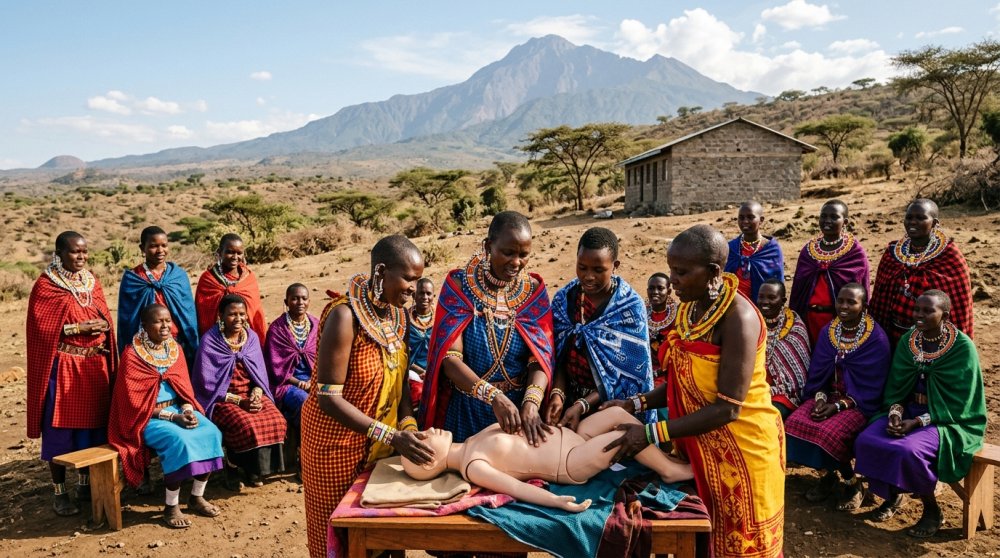
- Maasai traditional birthing attendants gathered at Neema Village in Arusha for a weeklong Save the Mothers training program that combined medical instruction with daily prayer and Scripture.
- Each graduate received a Bible in the Maasai language along with basic delivery supplies, underscoring the ministry’s belief that faith and practical skills together protect mothers and children.
- Graduates left equipped to serve villages lacking doctors or clinics, carrying both medical knowledge and the hope of the Gospel back to their communities.
ARUSHA, TANZANIA — Natashia has 10 children of her own and estimates that she has delivered at least 50 babies.
Notiketo also has 10 children and says she has delivered close to 60 babies.
Natiapwak is the rookie of the group with nine children of her own and 18 assists.
These women are not doctors or nurses. There are none in the remote villages where they live, in the East African homeland of the semi-nomadic Maasai people. The women serve in a role that medical practitioners call “traditional birthing attendants” — more commonly, midwives.
The three women represent thousands more who deliver children across East Africa. Most learn their skills from mothers and grandmothers who learned from the generations before them. In villages without electricity, running water or medical clinics, they rely on methods passed down for centuries. Some of their practices can help young mothers as they give birth. Others can endanger the lives of baby and mother, especially when complications arise.
That’s why Natashia, Notiketo and Natiapwak came to Neema Village, a rescue home for orphaned, abandoned and neglected babies built on a hillside in Arusha with majestic views of Mount Meru and, on clear days, Mount Kilimanjaro. Here, during a weeklong program called Save the Mothers, they learned basic, best practices when delivering babies, and some advanced techniques, including what to do in the event of a breech birth.
They also spent time in praise and prayer.
Each morning the midwives — often called “bibis,” the Swahili word for grandmother — dressed in colorful wraps and gathered for a devotional. After a brief message, sometimes translated from English to Swahili to Maasai, they sang and danced around the classroom, mimicking the joyous celebrations of new life and growth. As the dance concluded, the bibis hunched over and danced slowly, symbolizing the long journey to life’s end.
Birth and combat medicine
Two missionaries, an accountant and a global pandemic contributed to the program’s birth.
About 15 years ago, longtime missionary and campus minister Michael Fortson and his wife, Dorris, decided to use their retirement years to serve northern Tanzania and looked for needs in the community. They were heartbroken by the lack of services for newborns who were orphaned, left on the side of the road or abandoned at hospitals.
They launched Neema Village, which provides support and nurturing for close to 100 babies at a time. Michael Fortson died in June at age 83. The Fortson’s daughter, Kim White, now serves as the ministry’s director.
Tanzania’s maternal mortality rate contributes to the need for orphan care. In 2016, about 556 out of 100,000 mothers died during childbirth, most of them in rural areas, according to government statistics. In the U.S., the maternal mortality rate is less than 20 deaths per 100,000 births.
Kassie Stanfield, an accountant in her 20s, learned about the dire statistics during her time as a volunteer at Neema Village. After she returned to the U.S., the COVID-19 pandemic shut down much of the world. Stanfield stayed with her sister and brother-in-law, new parents themselves, during the lockdown. Stanfield realized that, had her sister lived in a Maasai village, she could have died from complications that easily could be addressed in a hospital.
A few days later, while reading her morning devotional with a cup of coffee, Stanfield heard a voice in her head say “combat medicine.”
“She took those words and began to research reasons for high maternal mortality in Maasai culture and ways to combat that,” White said. “She developed the program with the help of obstetricians and other physicians. It’s a God-inspired program.”
A translator finds freedom
Save the Mothers addresses common complications that can arise during pregnancy. Teachers also use the weeklong seminar to educate the midwives about prenatal care and to dispel myths.
“I didn’t know how twins were conceived,” one participant said. “I thought if you had twins, you slept with two men.”
Ester Kitutu served as an interpreter during the first Save the Mothers training in 2021. A Maasai herself, she was fluent in her people’s language and Swahili.
As a young girl, Kitutu was given to a man to be one of his wives. After years of abuse and neglect, she fled with her two young daughters. Her husband demanded that Kitutu’s father return the dowry he paid for her. Kitutu’s father responded by beating her mother, hoping that would force Kitutu to return to her husband.
At the end of the training, administrators attempted to pay Kitutu for her services. But she asked them to hold onto the funds until she had earned enough to pay off the bride-price for her release. Later, a volunteer who heard about Kitutu’s story provided the remainder of the funds.
Kitutu returned to translate for Neema Village. She also studied nursing and interned as a midwife. Now she teaches much of the Save the Mothers course, covering topics from basic hygiene to breech births, shoulder dystocia and retained placenta.
The volunteer who provided the funds to free Kitutu and her children hadn’t met her, but was present as she presided over a Save the Mothers graduation ceremony a few years ago. After the ceremony, when she learned that her benefactor was present, Kitutu ran to him, tears flowing, and fell on her knees, kissing his feet.
Diplomas and Bibles
Most of the Maasai midwives can’t read or write, so Kitutu and her fellow teachers use demonstration, practice and repetition in place of books and notetaking. The women practice repeatedly using a mannequin, baby dolls and a felt replica of a placenta. They laugh together when they make mistakes and help each other get the techniques right.
Many of the women possess a deep faith in God, shaped by decades of missionary work in northern Tanzania. Few have had the opportunity to read, much less own, a Bible.
As they graduate, each midwife receives a bag of supplies including gloves, razor blades and plastic sheets — items rarely available in their communities. They also receive a Bible in the Maasai language.
Dorris Fortson tells them, “You may not be able to read, but your grandchildren can.”
Recently, a group of women from the Memorial Road Church of Christ in Oklahoma City spent 11 days volunteering at Neema Village. Lisa Bialon, a mother of two, watched as Natashia, Notiketo and Natiapwak received their diplomas and Bibles.
“To equip and train even just a few people with more knowledge and confident abilities can go such a long way,” Bialon said. “I know that God will use this to not only save precious moms’ and babies’ lives in the birthing process, but also save souls. The experience they get at Neema with hearing about God and receiving their very own Bible is more powerful than anything else they could receive.”
Let us know what you think, please share your thoughts in the comments below.
Faith Facts
- Asbury Theological Seminary is one of the first prominent seminaries to exit the federal student loan program.
- The decision aims to protect the institution from potential future government pressure and reduce student debt.
- The seminary seeks to uphold biblical stewardship and independence from federal influence.
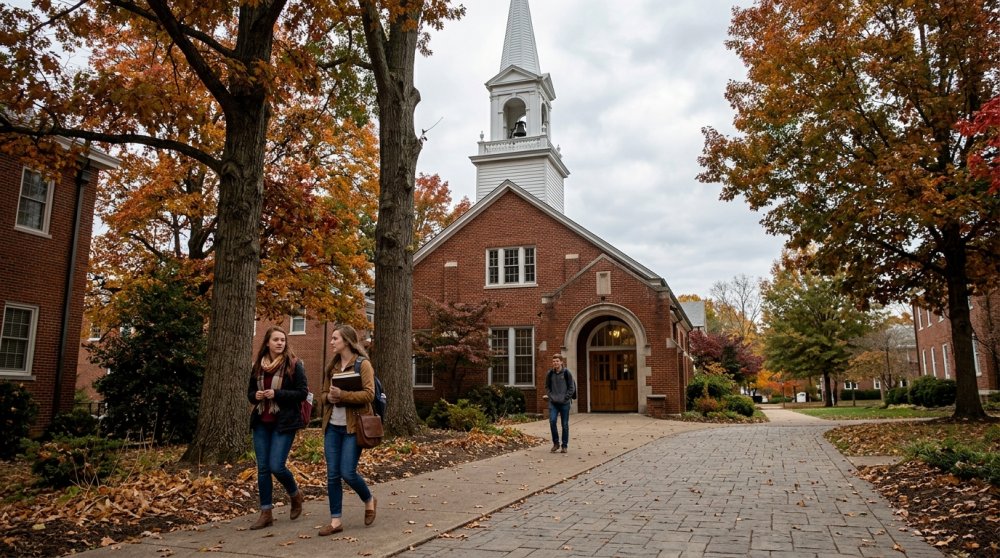
Asbury Theological Seminary has announced it will no longer participate in the federal student loan program. The move places the institution among a small number of seminaries stepping away from federal funding.
School leaders say the decision reflects a commitment to keeping future graduates free from heavy debt burdens. They also cite concern that a future administration hostile to Christian institutions could use federal dollars as leverage against the school.
“We believe this is the right step to protect our mission and our students,” a seminary spokesperson said.
By removing federal loans from the equation, Asbury hopes to encourage alternative paths such as private scholarships, church support, and work-study programs. Officials believe these approaches better reflect the values of Christian community and personal responsibility.
The seminary’s leaders view the change as consistent with long-standing convictions about financial freedom and institutional autonomy. They argue that dependence on government funding risks compromising the school’s ability to teach and operate according to Scripture.
Let us know what you think, please share your thoughts in the comments below.
Faith Facts
- The Bible teaches that believers are called to be good stewards of the resources God has entrusted to them.
- Scripture consistently warns against the love of money and the pursuit of wealth through dishonest gain.
- Christian teaching emphasizes that true prosperity comes through honest work and wise investment, not through games of chance.
Investing creates a win/win for all involved, but the opposite is true in gambling. For me to win, others must lose.
“A faithful man will be richly blessed, but one eager to get rich will not go unpunished.”
The contrast between investing and gambling reveals a fundamental difference in purpose and outcome. When individuals invest in productive enterprises, they contribute to economic growth that benefits workers, communities, and families across the nation.
Gambling, however, operates on a zero-sum principle where one person’s gain necessarily comes at another’s expense. This stands in direct opposition to the biblical call to love our neighbors as ourselves.
“The plans of the diligent lead surely to abundance, but everyone who is hasty comes only to poverty.”
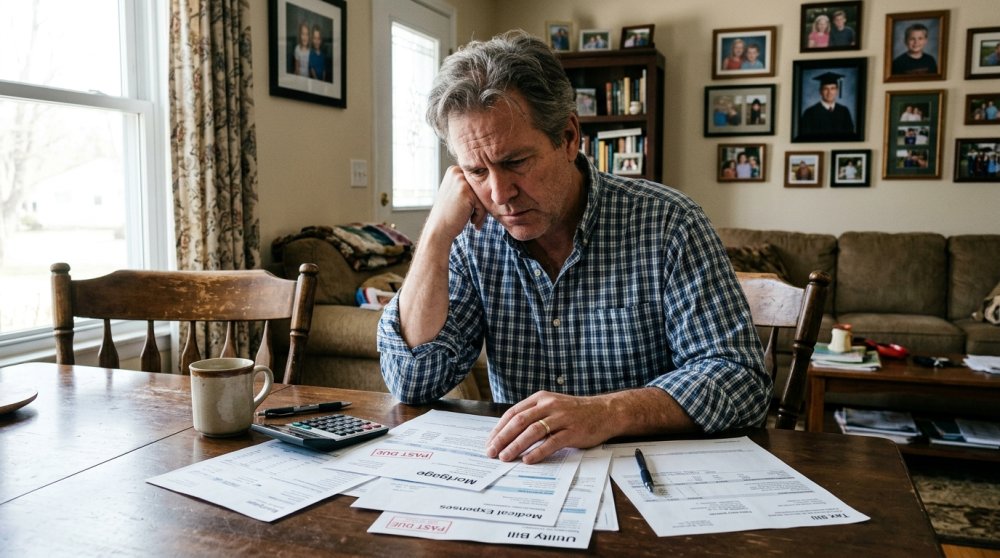
Christian families across America have witnessed how gambling addiction destroys marriages, devastates household finances, and leaves children without the stable homes they need. The ripple effects extend far beyond the individual gambler to entire communities that bear the social costs.
Traditional American values have long emphasized hard work, thrift, and prudent financial management as pathways to prosperity. These principles align with Scripture’s wisdom about building wealth through honest means rather than seeking shortcuts through games of chance.
Let us know what you think, please share your thoughts in the comments below.


-

 Self-Reliance1 year ago
Trump’s Bold Move Uncovers Massive Social Security Fraud
-

 Faith1 year ago
New Clues Emerge in Noah’s Ark Mystery
-

 News2 years ago
Governor Walz’s Rhetoric Sparks National Controversy
-

 News2 years ago
Mel Gibson’s ‘The Passion of the Christ’ Sequel Title Announced
-

 Family2 years ago
Texas Lawmaker Targets Furries in Schools
-

 Freedom2 years ago
Maine Lawmaker Challenges Sports Fairness Controversy
-

 Family1 year ago
Canada’s Controversial Policy Sparks Ethical Debate
-
Faith10 months ago
Congress Hears Pleas for Nigerian Christians