
Self-Reliance
Maasai Midwives Trained to Save Lives in Tanzania

Faith Facts
- Maasai traditional birthing attendants gathered at Neema Village in Arusha for a weeklong Save the Mothers training program that combined medical instruction with daily prayer and Scripture.
- Each graduate received a Bible in the Maasai language along with basic delivery supplies, underscoring the ministry’s belief that faith and practical skills together protect mothers and children.
- Graduates left equipped to serve villages lacking doctors or clinics, carrying both medical knowledge and the hope of the Gospel back to their communities.
ARUSHA, TANZANIA — Natashia has 10 children of her own and estimates that she has delivered at least 50 babies.
Notiketo also has 10 children and says she has delivered close to 60 babies.
Natiapwak is the rookie of the group with nine children of her own and 18 assists.
These women are not doctors or nurses. There are none in the remote villages where they live, in the East African homeland of the semi-nomadic Maasai people. The women serve in a role that medical practitioners call “traditional birthing attendants” — more commonly, midwives.
The three women represent thousands more who deliver children across East Africa. Most learn their skills from mothers and grandmothers who learned from the generations before them. In villages without electricity, running water or medical clinics, they rely on methods passed down for centuries. Some of their practices can help young mothers as they give birth. Others can endanger the lives of baby and mother, especially when complications arise.
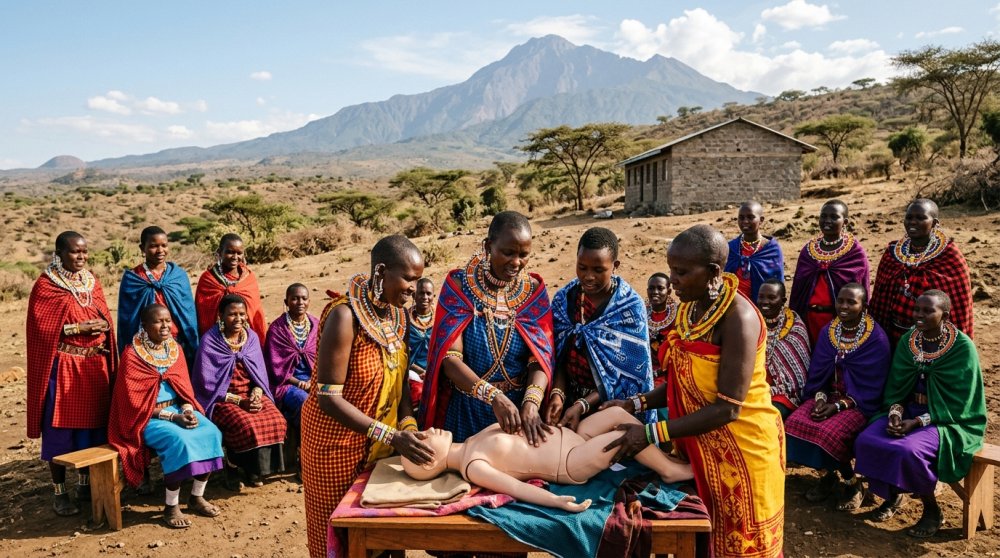
That’s why Natashia, Notiketo and Natiapwak came to Neema Village, a rescue home for orphaned, abandoned and neglected babies built on a hillside in Arusha with majestic views of Mount Meru and, on clear days, Mount Kilimanjaro. Here, during a weeklong program called Save the Mothers, they learned basic, best practices when delivering babies, and some advanced techniques, including what to do in the event of a breech birth.
They also spent time in praise and prayer.
Each morning the midwives — often called “bibis,” the Swahili word for grandmother — dressed in colorful wraps and gathered for a devotional. After a brief message, sometimes translated from English to Swahili to Maasai, they sang and danced around the classroom, mimicking the joyous celebrations of new life and growth. As the dance concluded, the bibis hunched over and danced slowly, symbolizing the long journey to life’s end.
Birth and combat medicine
Two missionaries, an accountant and a global pandemic contributed to the program’s birth.
About 15 years ago, longtime missionary and campus minister Michael Fortson and his wife, Dorris, decided to use their retirement years to serve northern Tanzania and looked for needs in the community. They were heartbroken by the lack of services for newborns who were orphaned, left on the side of the road or abandoned at hospitals.
They launched Neema Village, which provides support and nurturing for close to 100 babies at a time. Michael Fortson died in June at age 83. The Fortson’s daughter, Kim White, now serves as the ministry’s director.
Tanzania’s maternal mortality rate contributes to the need for orphan care. In 2016, about 556 out of 100,000 mothers died during childbirth, most of them in rural areas, according to government statistics. In the U.S., the maternal mortality rate is less than 20 deaths per 100,000 births.
Kassie Stanfield, an accountant in her 20s, learned about the dire statistics during her time as a volunteer at Neema Village. After she returned to the U.S., the COVID-19 pandemic shut down much of the world. Stanfield stayed with her sister and brother-in-law, new parents themselves, during the lockdown. Stanfield realized that, had her sister lived in a Maasai village, she could have died from complications that easily could be addressed in a hospital.
A few days later, while reading her morning devotional with a cup of coffee, Stanfield heard a voice in her head say “combat medicine.”
“She took those words and began to research reasons for high maternal mortality in Maasai culture and ways to combat that,” White said. “She developed the program with the help of obstetricians and other physicians. It’s a God-inspired program.”
A translator finds freedom
Save the Mothers addresses common complications that can arise during pregnancy. Teachers also use the weeklong seminar to educate the midwives about prenatal care and to dispel myths.
“I didn’t know how twins were conceived,” one participant said. “I thought if you had twins, you slept with two men.”
Ester Kitutu served as an interpreter during the first Save the Mothers training in 2021. A Maasai herself, she was fluent in her people’s language and Swahili.
As a young girl, Kitutu was given to a man to be one of his wives. After years of abuse and neglect, she fled with her two young daughters. Her husband demanded that Kitutu’s father return the dowry he paid for her. Kitutu’s father responded by beating her mother, hoping that would force Kitutu to return to her husband.
At the end of the training, administrators attempted to pay Kitutu for her services. But she asked them to hold onto the funds until she had earned enough to pay off the bride-price for her release. Later, a volunteer who heard about Kitutu’s story provided the remainder of the funds.
Kitutu returned to translate for Neema Village. She also studied nursing and interned as a midwife. Now she teaches much of the Save the Mothers course, covering topics from basic hygiene to breech births, shoulder dystocia and retained placenta.
The volunteer who provided the funds to free Kitutu and her children hadn’t met her, but was present as she presided over a Save the Mothers graduation ceremony a few years ago. After the ceremony, when she learned that her benefactor was present, Kitutu ran to him, tears flowing, and fell on her knees, kissing his feet.
Diplomas and Bibles
Most of the Maasai midwives can’t read or write, so Kitutu and her fellow teachers use demonstration, practice and repetition in place of books and notetaking. The women practice repeatedly using a mannequin, baby dolls and a felt replica of a placenta. They laugh together when they make mistakes and help each other get the techniques right.
Many of the women possess a deep faith in God, shaped by decades of missionary work in northern Tanzania. Few have had the opportunity to read, much less own, a Bible.
As they graduate, each midwife receives a bag of supplies including gloves, razor blades and plastic sheets — items rarely available in their communities. They also receive a Bible in the Maasai language.
Dorris Fortson tells them, “You may not be able to read, but your grandchildren can.”
Recently, a group of women from the Memorial Road Church of Christ in Oklahoma City spent 11 days volunteering at Neema Village. Lisa Bialon, a mother of two, watched as Natashia, Notiketo and Natiapwak received their diplomas and Bibles.
“To equip and train even just a few people with more knowledge and confident abilities can go such a long way,” Bialon said. “I know that God will use this to not only save precious moms’ and babies’ lives in the birthing process, but also save souls. The experience they get at Neema with hearing about God and receiving their very own Bible is more powerful than anything else they could receive.”
Let us know what you think, please share your thoughts in the comments below.

Faith Facts
- The Bible teaches that sexual intimacy is a sacred gift reserved for the covenant of marriage between one man and one woman.
- Scripture consistently upholds the protection of the vulnerable and the innocence of youth as a moral responsibility of society.
- Christian teaching affirms that true freedom is found in obedience to God’s design rather than in the unfettered pursuit of personal desires.
Recent allegations involving public figures have renewed important conversations about protecting young people from premature sexual relationships. These discussions highlight the need for laws that better reflect the maturity required for such serious commitments.
Proposals to increase protections for 16 and 17 year olds are a step in the right direction. However, the law should go further by raising the age of consent to 18 to ensure greater safeguards for developing minds and bodies.
Christian understanding holds that sexual relations are intended solely within the lifelong commitment of marriage. This view provides the clearest moral framework for guiding young people toward healthy and stable futures.
Supporters argue that 18 aligns more closely with other legal milestones such as voting and signing contracts. This consistency would strengthen the message that sexual relationships carry significant responsibilities.
Critics may claim such changes infringe on personal liberty, yet the role of law has always included protecting citizens from harm they may not yet fully comprehend. The state has a duty to shield the young from exploitation.
Parents and churches play the primary role in teaching biblical principles of purity and self-control. Clear legal standards support families in this task by reinforcing the seriousness of sexual conduct.
Evidence from multiple studies shows that early sexual activity correlates with higher rates of emotional distress and unstable relationships later in life. Raising the age of consent offers one practical way to reduce these risks.
Let us know what you think, please share your thoughts in the comments below.
Faith Facts
- Scripture teaches that gratitude is a deliberate choice, not a byproduct of possessions.
- The Apostle Paul urged believers to give thanks in every circumstance, not only when circumstances are favorable.
- Christian tradition holds that contentment flows from recognizing God’s provision rather than accumulating material goods.
We have more conveniences, more entertainment, and more choices than earlier generations could have imagined. Yet having more hasn’t made us more grateful. Sometimes it only makes us want more. Thanksgiving gives us a chance to ask a question we might otherwise avoid.
Our homes are filled with labor-saving devices, instant communication, and endless entertainment options. Our tables overflow with food selections that past generations would have considered unimaginable luxuries. Yet surveys consistently reveal rising levels of dissatisfaction and anxiety among Americans despite historic material prosperity.
The contradiction is not new to Scripture. The prophet Haggai warned that those who run after more while neglecting the things of God will find their efforts unsatisfying. Jesus Himself cautioned that life does not consist in the abundance of possessions.
“In everything give thanks: for this is the will of God in Christ Jesus concerning you.”
Thanksgiving was established as a national observance precisely to pause and acknowledge the Giver behind the gifts. The holiday calls citizens to remember that every good and perfect gift comes from above, not from human ingenuity alone.
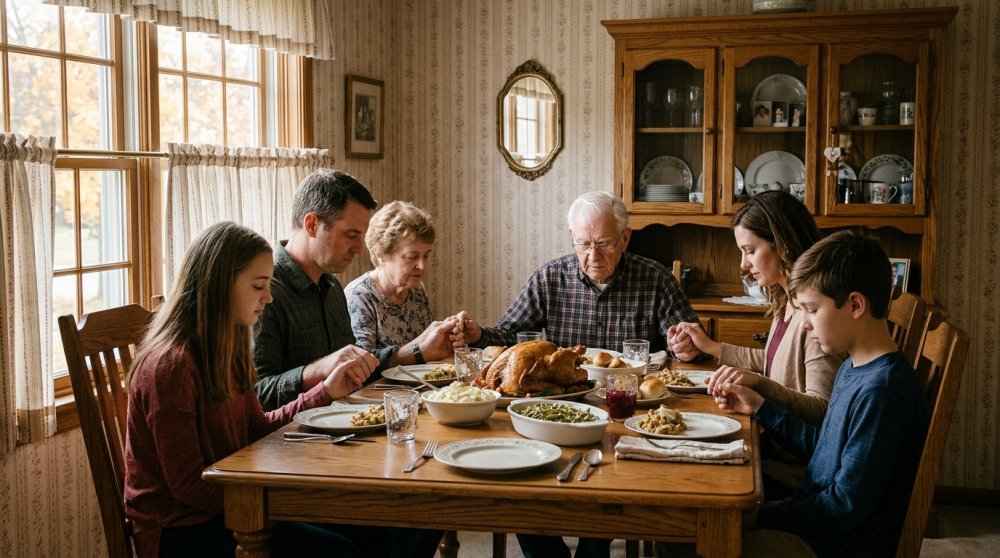
When families gather this week, they will have the opportunity to model the gratitude that once defined American character. Parents can teach children that thankfulness is expressed through words and deeds, not merely felt as an emotion.
The challenge remains the same in every generation: to receive God’s blessings with open hands and humble hearts rather than clenched fists that grasp for still more.
Let us know what you think, please share your thoughts in the comments below.
Faith Facts
- Gratitude is a biblical command repeated throughout Scripture.
- Comparison is identified as a source of discontent in multiple passages.
- Christian teaching emphasizes contentment in all circumstances.
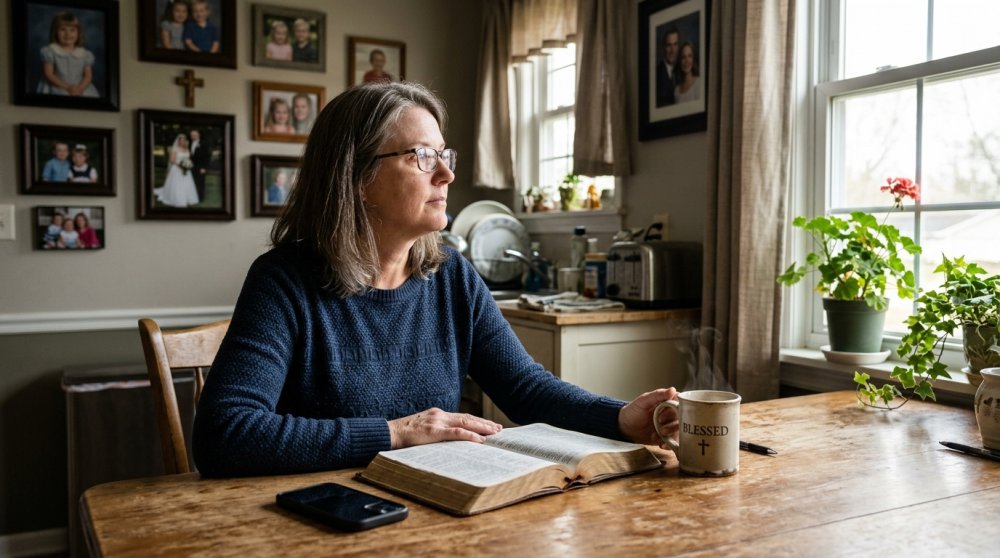
Nightly scrolling through Facebook and Instagram left one reader resenting what her family doesn’t have.
Here’s how gratitude can break the grip of comparison.
“Comparison is the thief of joy.”
Traditional Christian values teach that contentment comes from focusing on God’s provision rather than on the lives of others.
Many believers find that spending intentional time in prayer and Scripture helps restore perspective when social media stirs feelings of lack.
“Give thanks in all circumstances; for this is God’s will for you in Christ Jesus.”
American families grounded in faith often choose to limit online time in order to protect their homes from the subtle pull of envy.
Parents are encouraged to model thankfulness at the dinner table and in daily conversation so children learn to value what they have been given.
“But godliness with contentment is great gain.”
Let us know what you think, please share your thoughts in the comments below.


-

 Self-Reliance2 years ago
Trump’s Bold Move Uncovers Massive Social Security Fraud
-
 Faith2 years ago
New Clues Emerge in Noah’s Ark Mystery
-

 News2 years ago
Governor Walz’s Rhetoric Sparks National Controversy
-

 News2 years ago
Mel Gibson’s ‘The Passion of the Christ’ Sequel Title Announced
-

 Family2 years ago
Texas Lawmaker Targets Furries in Schools
-

 Freedom2 years ago
Maine Lawmaker Challenges Sports Fairness Controversy
-

 Family2 years ago
Canada’s Controversial Policy Sparks Ethical Debate
-
Faith12 months ago
Congress Hears Pleas for Nigerian Christians