
Faith
Worship Leader Sparks Debate Over Song Declaring Buddha and Allah Are Dead


Faith Facts
- A new worship song declares ‘Buddha is dead and Allah is silent,’ sparking debate among Christian worship leaders
- Worship leader Richard James Butt examines whether the provocative lyrics are appropriate for Sunday morning services
- The song emphasizes the unique claims of Christianity while addressing other world religions as ‘dead idols’
A provocative new worship song is stirring conversation across Christian congregations, with lyrics boldly proclaiming that Buddha, Muhammad, and Allah are “dead idols.” The song has prompted worship leader Richard James Butt to consider a fundamental question: Is this message appropriate for Sunday morning worship?
The song takes a direct approach to the exclusive claims of Christianity, contrasting the risen Christ with the founders and deities of other world religions. Its uncompromising lyrics challenge worshipers to consider the distinct nature of Christian faith in an increasingly pluralistic society.
For many believers, the song articulates a truth they hold dear—that Jesus Christ alone conquered death and offers salvation. The resurrection remains the cornerstone of Christian faith, setting it apart from all other religious systems. This theological distinction has been central to Christian teaching since the apostolic age.
However, the directness of the lyrics raises practical questions about worship programming. Church leaders must balance doctrinal clarity with pastoral wisdom, especially in communities where members may have friends, family, or neighbors who practice other faiths. The question becomes not whether the claims are true, but whether a worship service is the appropriate venue for such explicit declarations.
Butt’s examination reflects a broader tension within American Christianity between maintaining doctrinal distinctiveness and engaging a diverse culture with grace. Traditional Christian theology has always affirmed the exclusivity of salvation through Jesus Christ, but the manner of communicating that truth varies widely among congregations.
Some worship leaders argue that modern Christianity has become too accommodating, watering down the Gospel message to avoid offense. They see songs like this as a necessary corrective, reminding believers of Christianity’s unique truth claims. In their view, the church’s mission includes clearly articulating what makes the Christian faith different.
Others caution that while the theological content may be sound, the confrontational tone could hinder evangelism rather than advance it. They suggest that worship services should primarily focus on glorifying God and edifying believers, while apologetic arguments might be better suited for teaching settings or personal conversations.
The debate also touches on questions of cultural sensitivity and effective witness. Christians are called to speak truth while also demonstrating love toward those who believe differently. Finding the balance between these imperatives remains a perennial challenge for church leadership.
American Christians have historically held firm to the belief that Jesus Christ is the only way to salvation, even as they’ve sought to live peacefully alongside neighbors of different faiths. This commitment to both truth and neighborliness reflects biblical teaching about being “wise as serpents and harmless as doves.”
The discussion surrounding this song ultimately reflects deeper questions about the church’s role in contemporary society. Should worship services function primarily as spaces for believers to encounter God together, or should they also serve as evangelistic opportunities addressing those outside the faith? Different traditions and congregations answer these questions differently.
As churches navigate these decisions, they must consider their specific contexts—the composition of their congregations, their communities, and their mission fields. What works in one setting may not be appropriate in another, requiring pastors and worship leaders to exercise discernment and wisdom.
The conversation also highlights the power of music in shaping theological understanding. Worship songs often communicate doctrine more memorably than sermons, making the selection of congregational music a matter of significant spiritual importance. Church leaders bear responsibility for what theological messages their congregations internalize through song.
Regardless of where individual Christians land on this particular song, the underlying truth remains clear: Christianity’s claims are exclusive. Jesus himself declared, “I am the way, the truth, and the life. No one comes to the Father except through me.” The challenge for modern believers is faithfully communicating that truth in a manner that honors both God’s holiness and His love for all people.
Let us know what you think, please share your thoughts in the comments below.

Faith Facts
- Infant baptism is a sacred Christian tradition that welcomes children into the faith community as an act of divine grace.
- Scripture affirms that children are to be brought to Jesus, as He declared, “Let the little children come to me, and do not hinder them, for the kingdom of heaven belongs to such as these.”
- Baptism represents God’s free gift of grace, not a violation of rights, but a profound blessing passed from one generation to the next.
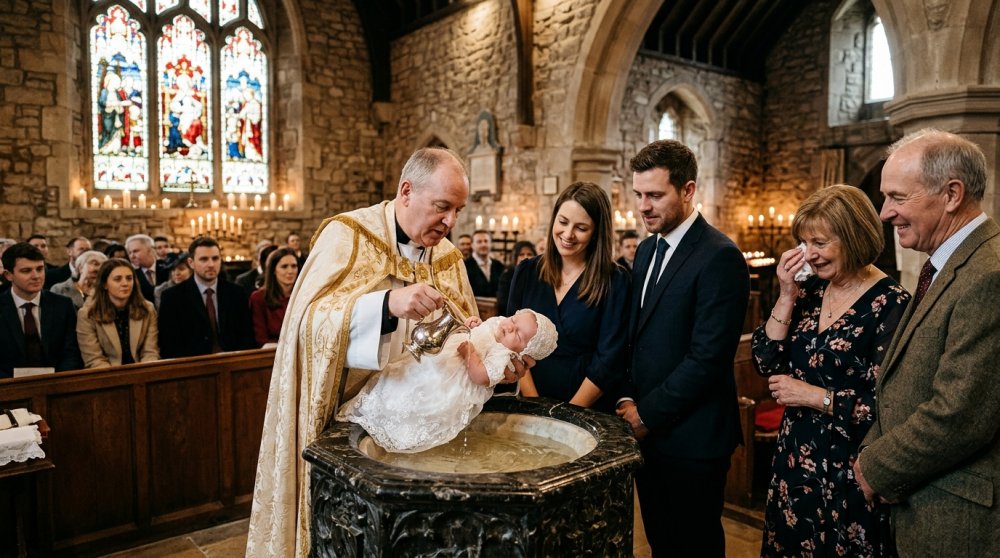
Former Irish President Mary McAleese recently made headlines by asserting that baptizing infants amounts to an infringement on their human rights. This claim strikes at the heart of centuries-old Christian practice and the biblical understanding of grace.
Christian theologian Gavin Ashenden has responded forcefully, calling the assertion “nonsense.” He argues that baptizing children into a loving church family is actually the greatest gift parents can give, reflecting God’s own free gift of grace to humanity.
“Being baptised into a loving church family is the greatest gift we can offer our children, and echoes God’s free gift of grace to us all.”
Ashenden’s defense of infant baptism aligns with the historic teaching of the Church across denominations. For generations, Christian parents have brought their children to the baptismal font, trusting in God’s promises rather than waiting for a profession of faith that may never come.
The controversy reveals a deeper cultural shift, where traditional religious practices are increasingly scrutinized through the lens of modern human rights ideology. This framework often pits individual autonomy against the communal bonds of faith and family that have sustained Western civilization.
Critics like McAleese frame baptism as an imposition rather than a blessing. Yet Christian teaching holds that children are born into original sin and stand in need of the regenerating grace that baptism signifies. Far from violating rights, baptism restores what was lost in the Fall.
Parents who baptize their infants are exercising their God-given responsibility to raise children in the nurture and admonition of the Lord. This sacred duty cannot be reduced to a question of consent any more than feeding or clothing a child requires their permission.
The push to redefine baptism as a rights violation represents yet another front in the ongoing conflict between secular progressivism and historic Christianity. As the culture drifts further from its biblical foundations, even the most cherished sacraments face new forms of attack.
Let us know what you think, please share your thoughts in the comments below.
Faith Facts
- Renowned New Testament scholar N.T. Wright teaches that biblical glory centers on restored humanity rather than heavenly escape.
- Wright stresses that Scripture calls believers to serve as God’s image-bearing agents in a renewed creation.
- This understanding affirms traditional Christian teaching on the value of the physical world and human responsibility.
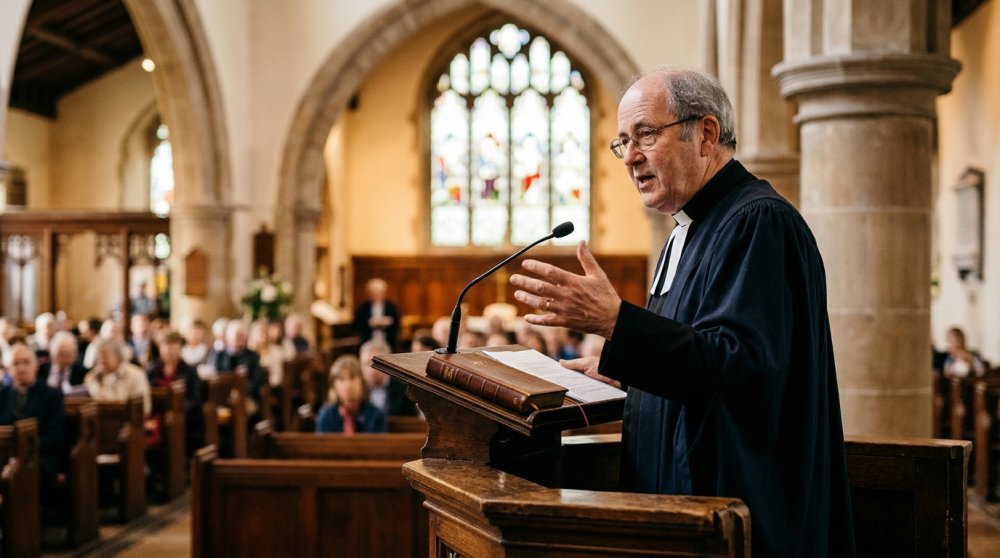
For renowned New Testament scholar N.T. Wright, the “glory” promised in the Bible doesn’t primarily mean “going to Heaven,” but the restoration of humanity’s role as God’s image-bearing agents in a renewed creation.
This perspective challenges modern assumptions that reduce the Christian hope to an otherworldly escape. Wright’s view instead highlights the biblical emphasis on God’s intention to redeem and restore His creation through faithful human stewardship.
“Glory doesn’t mean going to Heaven” but rather “becoming fully human,” says NT Wright
By framing glory as the fulfillment of humanity’s original calling, Wright invites believers to embrace their earthly responsibilities with renewed purpose. This message resonates with traditional Christian values that honor work, family, and community as sacred vocations.
Let us know what you think, please share your thoughts in the comments below.
Faith Facts
- Scripture calls believers to bear one another’s burdens and so fulfill the law of Christ (Galatians 6:2).
- Regular church attendance alone does not guarantee the deep fellowship God designed for His people.
- True Christian community requires honest vulnerability and genuine relationship, not merely surface-level conversation.
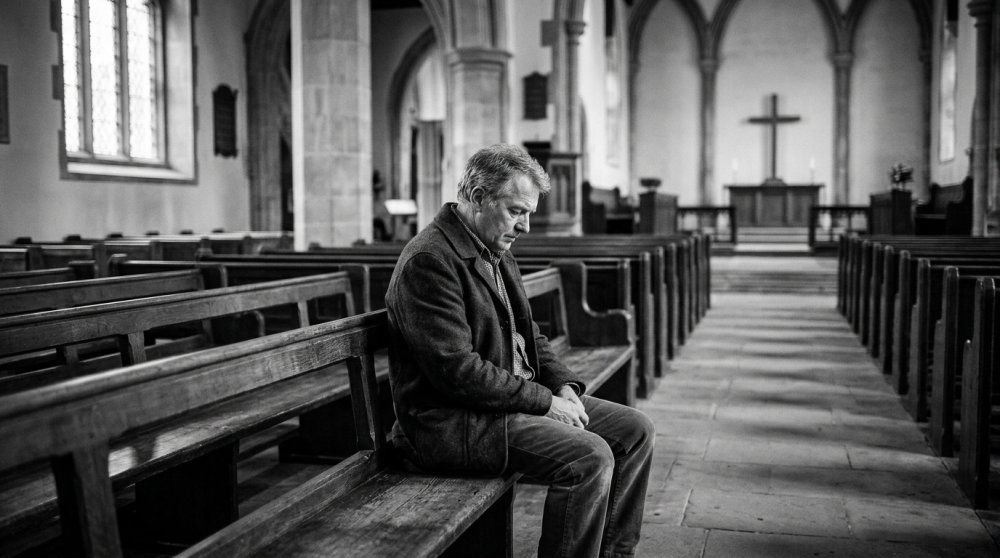
You can attend church every Sunday, know everyone by name and still feel desperately lonely. Derek Hughes knows what it’s like to hide behind small talk. Here’s why genuine Christian community requires more than simply showing up.
Many believers show up week after week, exchange polite greetings, and leave without ever being truly known. This pattern leaves hearts heavy even in crowded sanctuaries.
God never intended His church to function as a collection of isolated individuals who merely occupy the same space for an hour. He calls His people to live in deep, accountable, and loving community.
“You can attend church every Sunday, know everyone by name and still feel desperately lonely.”
Small talk serves as a convenient shield, allowing Christians to remain hidden even while surrounded by brothers and sisters in Christ. This kind of superficial interaction falls far short of the biblical vision for fellowship.
Authentic Christian community demands courage to step beyond pleasantries and share real struggles, prayer requests, and victories. When believers open their lives to one another, the body of Christ functions as God intended.
“Here’s why genuine Christian community requires more than simply showing up.”
Churches that prioritize depth over attendance numbers create spaces where lonely hearts find true belonging. Such fellowships reflect the love of Christ in practical, life-giving ways.
Believers who invest in meaningful relationships discover that church becomes more than a weekly obligation; it becomes a spiritual family where burdens are shared and hope is renewed.
Let us know what you think, please share your thoughts in the comments below.


-

 Self-Reliance2 years ago
Trump’s Bold Move Uncovers Massive Social Security Fraud
-

 Faith2 years ago
New Clues Emerge in Noah’s Ark Mystery
-

 News2 years ago
Governor Walz’s Rhetoric Sparks National Controversy
-

 News2 years ago
Mel Gibson’s ‘The Passion of the Christ’ Sequel Title Announced
-

 Family2 years ago
Texas Lawmaker Targets Furries in Schools
-

 Freedom2 years ago
Maine Lawmaker Challenges Sports Fairness Controversy
-

 Family1 year ago
Canada’s Controversial Policy Sparks Ethical Debate
-
Faith12 months ago
Congress Hears Pleas for Nigerian Christians