
Faith
American Missionaries Narrowly Escape Nepal Disaster That Swallowed 40 Christians

Faith Facts
- More than 40 Church of Christ members are missing after a catastrophic glacier collapse triggered deadly floods along the Nepal-Tibet border, killing at least 1,010 people
- An Alabama mission team escaped the disaster by just 30 minutes when police turned them back before a bridge was swept away by muddy floodwaters
- Despite the tragedy, Christian youth who lost family members traveled for hours on damaged roads to attend a faith camp, demonstrating unwavering commitment to Christ
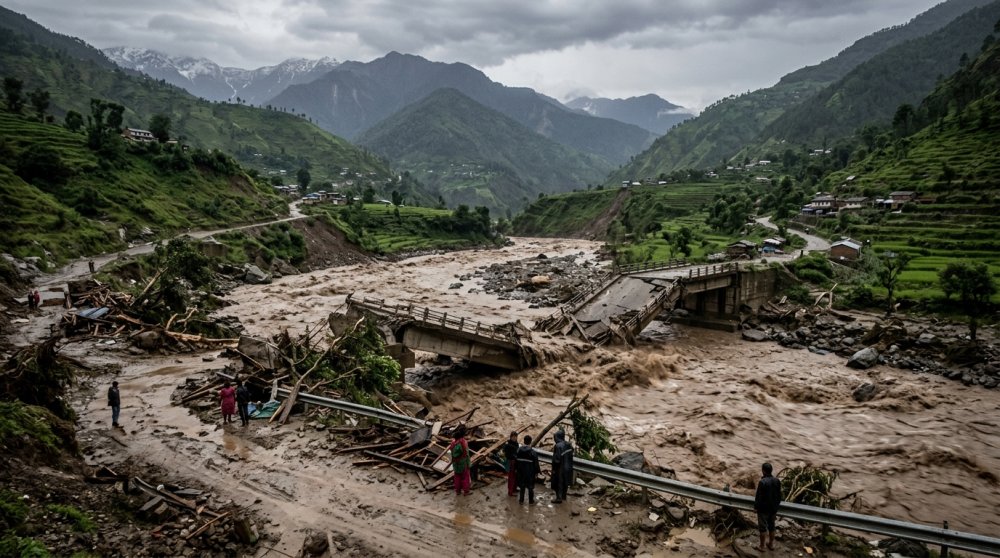
More than 40 members of Churches of Christ are among the 4,600 people missing after a tidal wave of muddy water, earth and rock devastated communities along the Nepal-Tibet border. A team of church members from Nepal and Alabama could easily have been among them.
“We missed it by 30 minutes,” Jerry Ross said in a message from Nepal.
The associate minister for the East Colbert Church of Christ in Muscle Shoals, Alabama, and a small team of fellow Christians were headed to the city of Dhading Besi on August 26 to host a gospel meeting. Before they crossed a bridge over the Trishuli River, a police officer stopped them, warned of rising floodwaters and “forced us to take shelter in a safer place,” Nepali minister Pramod Dhakal said.
“In a while, the connecting bridge to Dhading Besi was swallowed by the rising flood.”
“If the police hadn’t turned us around, we would have been swept away with a bridge or caught on the wrong side of the bridge, unable to get back,” Ross added.
The collapse of a high-altitude glacier near the China-Nepal border initiated an avalanche of ice and rock that dammed river channels and created a tsunami of mud, boulder and water along the banks of the Trishuli, the World Meteorological Organization reported. At least 1,010 people died, the Nepali government estimated. China reported additional deaths on the Tibet side of the border.
The missing church members worked at a hydropower facility along the river, said Krishna Oli, a Nepali minister who accompanied Dhakal and the Alabama Christians on their aborted trip. Nepal, a landlocked country that borders India to the south and China to the north, is home to the Himalayas and Mount Everest, the highest mountain on earth.
The floods destroyed roads and bridges across Nepal’s rugged terrain, cutting access to rural communities, including the hard-hit Rasuwa District. Oli made contact with Karpo Lama, a preacher in the affected region.
“He reported that the situation is becoming very difficult due to severe food shortages,” Oli said.
“All the roads are blocked because of the catastrophic floods, making it extremely difficult to bring essential supplies into the affected areas.”
Nepali church members Sanjaya Thapa and Markus Tamang are making their way to the Rasuwa District, Dhakal said. “They have started walking on foot on a Himalayan trail … which will take two days,” the minister said.
“They will go around and visit seven churches as much as possible to know the actual scenario and needs of relief and rebuilding. … Please pray for the safety of two brothers who dared to travel on foot caring for affected brethren.”
One Kingdom, a Louisiana-based ministry associated with Churches of Christ, works with Dhakal and Oli and is collecting funds to assist in relief efforts. The Nepali minister oversee Nepal Bible College in the capital, Kathmandu.
After escaping the floodwaters, the mission team continued its work. Oli reported four baptisms. The church members from Alabama made the prayerful decision to carry on with a Christian youth camp in Pokhara, a popular tourist town known for its scenic views of the Himalayas.
About 85 youths from flood-affected areas attended the camp, Dhakal said. With multiple bridges washed out, the youths had to take long routes, changing buses multiple times, to reach the event. Some lost relatives in the floods, the minister said, but “they were committed to attending the youth camp in Pokhara.”
As they begin the long process of relief and recovery, the ministers asked for prayers and support. “This tragedy has brought an even greater burden for prayer, pastoral care, encouragement and practical assistance to affected churches, families, and communities,” said Oli, who referenced Psalm 147:3, “He healeth the broken in heart, and bindeth up their wounds.”
“In the midst of suffering and uncertainty, the ministry continues to trust God, serve his people, proclaim his Word and encourage believers to remain faithful to Christ.”
Let us know what you think, please share your thoughts in the comments below.

Faith Facts
- Christians in Essex are taking legal action to defend their right to share the Gospel in public spaces.
- A local council has banned the use of loudspeakers and prohibited street preaching about Hell.
- The church maintains that sharing the Gospel belongs on the streets and is a core expression of faith.
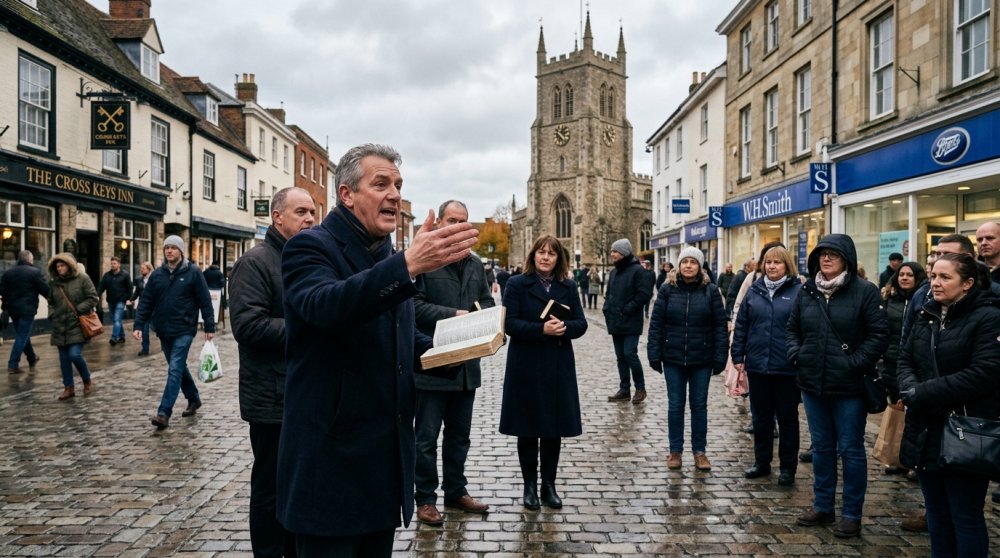
Christians at a church in Essex are fighting in court for the right to share the Gospel on British streets after a city council banned their use of loudspeakers and ordered them to stop warning people about Hell.
The case highlights growing tensions between traditional Christian witness and local government restrictions on public preaching.
“The Gospel belongs on the streets,” church leaders declared in their legal challenge.
Faithful believers see this as part of a broader pattern of restrictions aimed at silencing biblical truth in the public square.
“We will not be silenced from proclaiming the truth that saves,” a church spokesperson stated.
Let us know what you think, please share your thoughts in the comments below.
Faith Facts
- A Colombian pastor was murdered in Cartagena for refusing to allow gang members he had evangelized to use his motorcycle.
- The pastor’s death highlights the dangers faced by Christians boldly sharing the Gospel in violent urban areas.
- His sacrifice serves as a sobering reminder of the cost of faithfulness to Christ in regions controlled by criminal gangs.
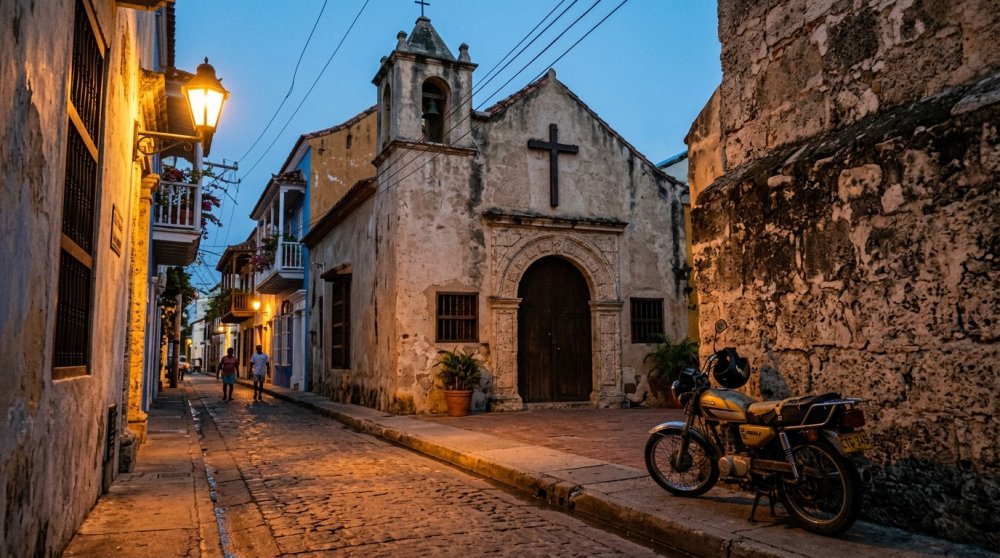
A Colombian pastor was beaten to death by members of a criminal gang he had been evangelizing in the city of Cartagena.
The gang members attacked the pastor after he refused to allow them to use his motorcycle, according to a report.
Let us know what you think, please share your thoughts in the comments below.
Faith Facts
- Research from the Institute for Family Studies shows couples with different last names divorce at a 50% higher rate.
- A shared family name reflects the biblical call for husband and wife to become one flesh in covenant marriage.
- Taking a husband’s last name serves as a visible sign of leaving, cleaving, and surrender within Christian marriage.
New research is shining a light on a simple yet profound tradition many Christian couples continue to embrace.
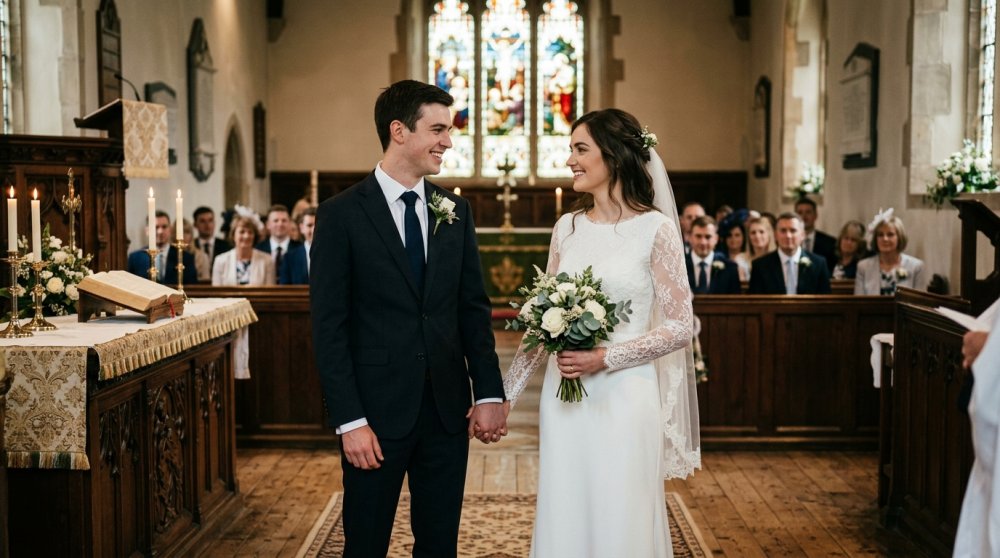
Couples who choose to keep separate last names after marriage face a divorce rate 50% higher than those who share one name, according to findings from the Institute for Family Studies.
“A shared name is an outward sign of the leaving, cleaving and covenantal surrender at the heart of biblical marriage,” the report notes.
This practice aligns with Scripture’s description of marriage as a lifelong union where two become one, both in spirit and in name.
Christian wives who adopt their husband’s surname often see it as an act of unity and humility that strengthens their household witness.
Let us know what you think, please share your thoughts in the comments below.


-

 Self-Reliance2 years ago
Trump’s Bold Move Uncovers Massive Social Security Fraud
-

 Faith2 years ago
New Clues Emerge in Noah’s Ark Mystery
-

 News2 years ago
Governor Walz’s Rhetoric Sparks National Controversy
-

 News2 years ago
Mel Gibson’s ‘The Passion of the Christ’ Sequel Title Announced
-

 Family2 years ago
Texas Lawmaker Targets Furries in Schools
-

 Freedom2 years ago
Maine Lawmaker Challenges Sports Fairness Controversy
-

 Family1 year ago
Canada’s Controversial Policy Sparks Ethical Debate
-
Faith11 months ago
Congress Hears Pleas for Nigerian Christians