
News
When Academic Excellence Bows to Identity Politics

Faith Facts
- Cambridge University professor Jason Arday’s academic credentials are under scrutiny after allegations emerged of plagiarism and questionable qualifications
- The case reveals how modern institutions prioritize diversity narratives over academic excellence and truth-telling
- Christian values teach that grace must be balanced with truth, and lowering standards ultimately harms those it claims to help
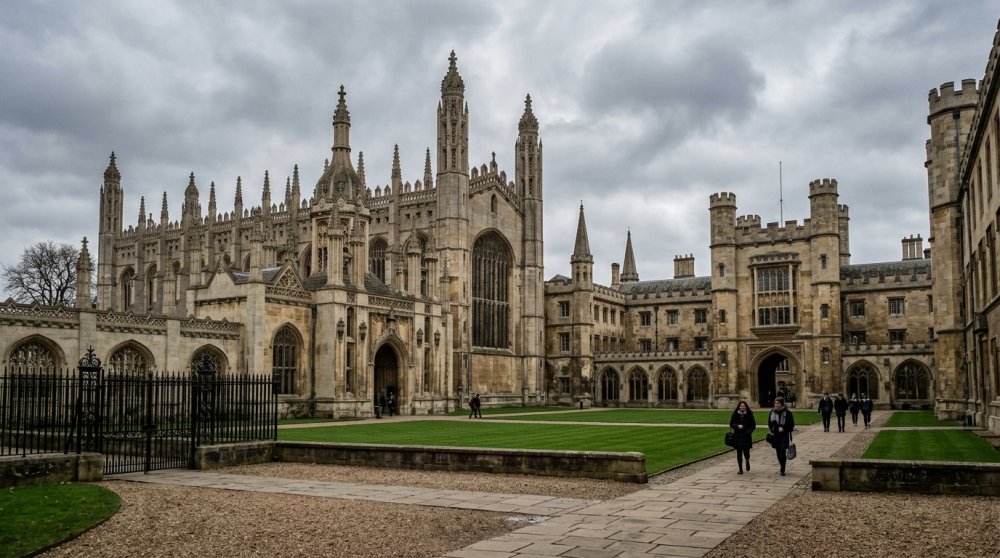
The unfolding controversy surrounding Cambridge University professor Jason Arday offers a sobering lesson about what happens when institutions abandon objective standards in favor of identity-driven narratives. While mainstream coverage focuses on race, the deeper issue concerns institutional integrity and our society’s dangerous departure from truth-based evaluation.
Dr. Arday, who rose rapidly through academia to become Cambridge’s youngest black professor, now faces serious questions about plagiarism and the legitimacy of his academic work. The allegations include copying substantial portions of others’ research and presenting questionable credentials.
What makes this case particularly significant is not the individual failings—we are all sinners in need of redemption—but rather the institutional response. Rather than conducting rigorous vetting, prestigious universities appeared more concerned with achieving diversity benchmarks than maintaining academic excellence.
This represents a fundamental misunderstanding of both grace and justice. As Christians, we understand that true compassion doesn’t mean abandoning standards or truth. Scripture teaches us that “grace and truth came through Jesus Christ” (John 1:17)—the two must work together.
When institutions lower standards in the name of inclusion, they ultimately harm everyone involved. They rob deserving candidates of opportunities earned through genuine merit, they set up others for failure by placing them in positions they’re unprepared for, and they undermine public trust in the entire academic enterprise.
The case also reveals something deeper: a culture of narcissism where personal advancement takes precedence over integrity. When we remove the guardrails of objective truth and replace them with subjective narratives, we create environments ripe for exploitation.
Our Christian heritage understood this danger. Traditional institutions—universities, churches, civic organizations—were built on the foundation that truth exists independent of our feelings about it. Standards weren’t arbitrary obstacles but protective structures ensuring excellence and fairness.
Today’s progressive ideology rejects this framework, viewing objective standards as inherently oppressive. But the Arday case demonstrates the logical conclusion of this thinking: a system where credentials mean nothing, achievement is performative, and everyone suffers except those skilled at manipulating the new rules.
Real compassion demands both grace and accountability. It means creating pathways for all people to succeed while maintaining rigorous standards that ensure success is meaningful. It means being honest about qualifications rather than pretending everyone is equally prepared for every role.
The Bible teaches that the truth sets us free (John 8:32). When we abandon truth—even with good intentions—we don’t create freedom but rather new forms of bondage. Students denied honest feedback cannot improve. Professors advanced beyond their competence face inevitable exposure. Institutions that prioritize narratives over facts lose credibility.
This doesn’t mean rejecting diversity or refusing to address past injustices. It means doing so honestly, with programs that genuinely prepare people for excellence rather than simply placing them in positions for optics. It means celebrating real achievement rather than manufactured credentials.
The solution isn’t to eliminate grace but to properly balance it with truth. We can offer second chances, mentorship, and genuine support while still maintaining standards that ensure quality and fairness. This is the Christian way—extending mercy without abandoning justice.
As this case unfolds, we should resist the temptation to make it solely about race or politics. Instead, we must recognize it as a warning about what happens when any society—including our academic institutions—loses its moral compass and abandons the biblical principle that grace without truth leaves us blind to both our own failings and the path forward.
Let us know what you think, please share your thoughts in the comments below.


Faith Facts
- Alejandro Monteverde, director of the pro-family film Sound of Freedom, is directing a new biblical epic titled Zero A.D.: The Birth of Christ.
- The film focuses on the danger and extraordinary faith surrounding the Nativity story of Jesus Christ.
- Monteverde and his cast emphasize surrendering to the biblical narrative as the heart of the project ahead of the Christmas season.
Ahead of the Christmas season, “Sound of Freedom” filmmaker Alejandro Monteverde is exploring the birth of Jesus Christ through a new lens in “Zero A.D.: The Birth of Christ,” a biblical epic that explores the danger and extraordinary faith surrounding the Nativity.
The project comes from a director whose previous work championed the protection of children and traditional values. Monteverde returns to the screen with a story centered on the arrival of Christ.
“I surrender to the story”
Monteverde and his cast are highlighting the powerful message behind the film. They stress the importance of yielding to Scripture rather than shaping it to modern sensibilities.
The film promises to portray the Nativity with the same courage and clarity that defined Sound of Freedom. Families seeking wholesome entertainment aligned with biblical truth will find a new reason to celebrate the season.
Let us know what you think, please share your thoughts in the comments below.
Faith Facts
- The ruling protects the sanctity of houses of worship from government intrusion during immigration enforcement actions.
- Churches and synagogues maintain their historic role as places of refuge and spiritual sanctuary for all people.
- The decision affirms constitutional protections for religious liberty and the free exercise of faith in America.
An appeals court has delivered a significant victory for houses of worship across the nation. The panel sided with multiple churches and faith-based organizations that challenged the Trump administration’s policy permitting immigration enforcement actions inside religious facilities.
The decision reinforces long-standing American principles that recognize houses of worship as sacred spaces. Faith communities have consistently argued that allowing raids inside churches and synagogues would violate both religious liberty and the constitutional separation between government power and spiritual practice.
“This ruling protects the fundamental right of Americans to worship without fear of government intrusion,”
The case arose after the administration expanded immigration enforcement guidelines that removed previous restrictions on conducting operations at sensitive locations, including religious institutions. Faith leaders from various denominations expressed concern that such policies would hinder their ability to minister freely to congregants and communities in need.
“Our churches have always been places where people can come for spiritual guidance and practical help,”
Legal advocates representing the faith-based plaintiffs argued that the policy change threatened the historic role of religious institutions as sanctuaries. The appeals court found merit in these concerns and determined that the administration’s approach raised substantial constitutional questions regarding religious freedom.
The ruling comes at a time when many Americans are increasingly concerned about government overreach into religious practice. Conservative faith leaders have long maintained that protecting the autonomy of houses of worship is essential to preserving religious liberty for all citizens.
Let us know what you think, please share your thoughts in the comments below.
Faith Facts
- Christians have disagreed over theology for centuries, yet many divisions stem from misunderstanding rather than substantive differences.
- Stefan Tijanić seeks to clarify what Orthodox Christians actually believe to foster greater understanding.
- Clear communication of doctrine can strengthen Christian witness and unity on foundational truths.
Christians have long wrestled with theological differences that stretch back centuries. Some disagreements touch core doctrines, but many arise from simple misunderstandings about what each tradition truly teaches.
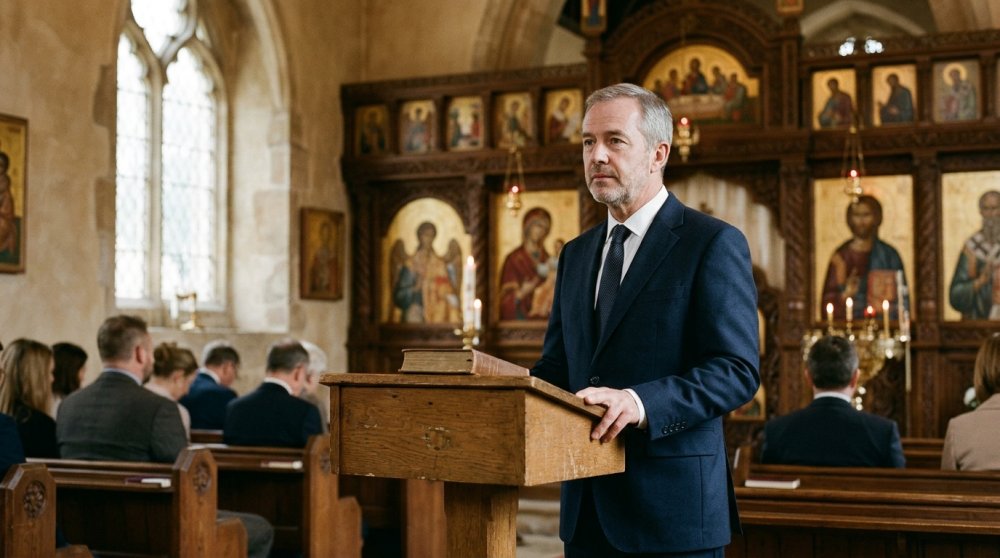
Stefan Tijanić addresses this gap directly, explaining the beliefs held by Orthodox Christians. His goal is to replace assumptions with accurate information so that conversations between traditions rest on truth rather than caricature.
“Christians have disagreed over theology for centuries, says Stefan Tijanić. While some of those differences are substantial, many of them are rooted in misunderstanding.”
He outlines several common points of confusion that evangelicals sometimes bring to discussions with Orthodox believers. By walking through these areas with clarity, Tijanić hopes to open the door for more charitable and informed dialogue.
Accurate understanding matters because shared Christian witness depends on knowing what each side actually affirms. When believers speak precisely about doctrine, opportunities for cooperation on moral and cultural issues become clearer.
“He explains what Orthodox Christians actually believe.”
Let us know what you think, please share your thoughts in the comments below.


-

 Self-Reliance2 years ago
Trump’s Bold Move Uncovers Massive Social Security Fraud
-

 Faith2 years ago
New Clues Emerge in Noah’s Ark Mystery
-

 News2 years ago
Governor Walz’s Rhetoric Sparks National Controversy
-

 News2 years ago
Mel Gibson’s ‘The Passion of the Christ’ Sequel Title Announced
-

 Family2 years ago
Texas Lawmaker Targets Furries in Schools
-

 Freedom2 years ago
Maine Lawmaker Challenges Sports Fairness Controversy
-

 Family1 year ago
Canada’s Controversial Policy Sparks Ethical Debate
-
Faith11 months ago
Congress Hears Pleas for Nigerian Christians