
Faith
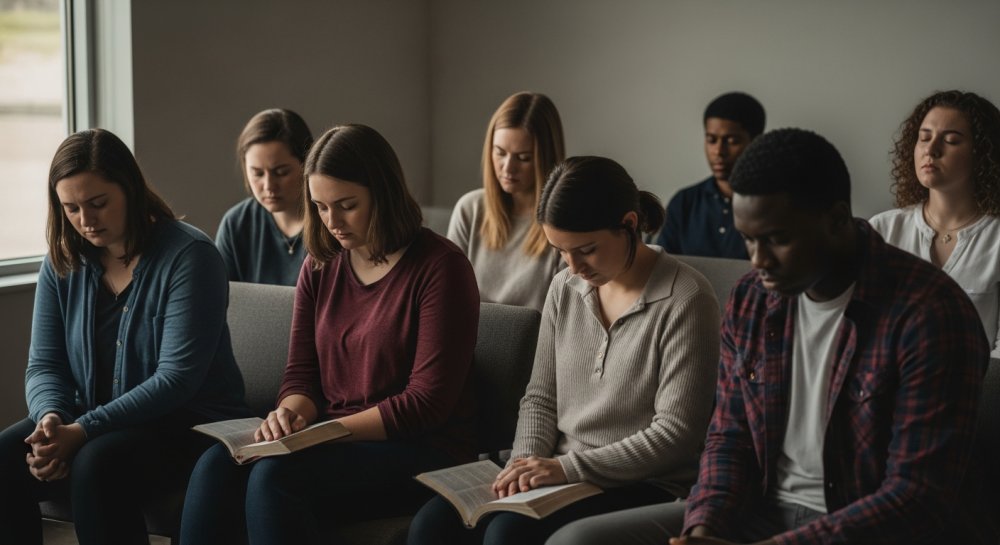
The Quiet Crisis Among Young Believers That Few Are Talking About

Faith Facts
- Gen Z discusses their Christian faith more openly than previous generations but struggles with doubt about whether God truly hears them
- New research reveals a troubling disconnect between young people’s public faith expressions and their private confidence in God’s presence
- The crisis points to a faith that flourishes on Sunday but falters when tested during the week
America’s youngest generation of believers faces a paradox that should concern every Christian parent, pastor, and mentor. Gen Z talks about Jesus more than their parents or grandparents ever did, yet they’re simultaneously the generation most plagued by doubts about whether God actually hears their prayers.
This isn’t about young people abandoning church buildings or rejecting Christianity outright. It’s something more subtle and perhaps more dangerous — a crisis of confidence in the very foundation of our relationship with God.
Recent research illuminates a troubling pattern: young Christians are vocal about their faith on social media and in public spaces, but privately wrestle with whether their prayers reach beyond the ceiling. They know the right words, they understand the theology, but when life gets hard during the week, that Sunday morning certainty evaporates.
Scripture speaks directly to this struggle. James 1:6-8 warns believers: “But when you ask, you must believe and not doubt, because the one who doubts is like a wave of the sea, blown and tossed by the wind. That person should not expect to receive anything from the Lord. Such a person is double-minded and unstable in all they do.”
The question facing the Church today isn’t whether Gen Z believes in God — most do. The question is whether they believe God believes in them, whether He’s actively involved in their daily lives, whether their prayers matter.
One young person’s testimony captures this tension perfectly. Raised in a Christian home, active in youth group, able to quote Scripture and defend doctrine, this individual discovered their faith crumbled the moment real trials came. What looked like solid belief on Sunday proved to be borrowed confidence that couldn’t sustain them through Monday’s challenges.
This generation has grown up in unprecedented times — connected digitally yet isolated relationally, bombarded with information yet starving for truth, affirmed constantly yet doubting their worth. They’ve seen hypocrisy in the Church and inconsistency in Christian leaders. They’ve watched believers claim God’s promises on Sunday and live in practical atheism the rest of the week.
The solution isn’t simply telling young people to pray more or have stronger faith. It’s about modeling what genuine, tested, resilient faith looks like when the world isn’t watching. It’s about honest conversations that acknowledge doubt while pointing to God’s faithfulness.
Psalm 34:17-18 offers hope: “The righteous cry out, and the Lord hears them; he delivers them from all their troubles. The Lord is close to the brokenhearted and saves those who are crushed in spirit.”
Gen Z needs to hear that doubt isn’t the opposite of faith — it’s often the pathway to deeper faith. They need mentors who’ve walked through valleys and emerged with confidence not in their own strength but in God’s unchanging character. They need to see Christianity that works on Wednesday as powerfully as it does on Sunday.
The Church has an opportunity here. We can either dismiss this generation’s struggles as weakness or recognize them as an invitation to demonstrate the reality of a God who doesn’t just exist in theory but intervenes in history, answers prayers, and transforms lives.
Our young people aren’t losing faith — they’re losing confidence that what they believe actually makes a difference. That’s a crisis the American Church cannot afford to ignore.
Let us know what you think, please share your thoughts in the comments below.

Faith Facts
- Dallas Theological Seminary has partnered with Evangelical Theological Seminary in India to establish a graduate-level biblical counseling degree program
- The program aims to train Christian counselors grounded in Scripture to serve India’s growing mental health needs from a biblical worldview
- The partnership includes a strategic plan for the Indian seminary to eventually operate the program independently, expanding Christian influence in the region
A major American theological institution is extending its reach across the globe to equip believers with biblical tools for ministry. Dallas Theological Seminary has announced a groundbreaking partnership with Evangelical Theological Seminary in India to launch a graduate-level Christian counseling program that prioritizes Scripture over secular psychology.
The collaboration represents a strategic effort to address mental health challenges through a Christian worldview in one of the world’s most populous nations. Rather than importing Western secular counseling models, the program will train Indian believers to minister to their communities using biblically-grounded principles.
The partnership structure reflects a missions-minded approach to theological education. Dallas Theological Seminary will provide initial expertise, curriculum development, and faculty training, with the ultimate goal of empowering the Indian institution to operate the program independently.
This model ensures sustainability and cultural appropriateness while maintaining theological integrity. By equipping local leaders rather than creating permanent dependency, the partnership honors both the sovereignty of the local church and the universal truth of Scripture.
India’s Christian community, though a minority in the predominantly Hindu nation, has shown remarkable growth and resilience. Access to quality theological education rooted in evangelical principles strengthens the church’s ability to serve both believers and the broader society with compassion and truth.
The graduate-level biblical counseling degree will prepare students to address issues ranging from family conflict to trauma recovery, always anchoring therapeutic approaches in the authority of God’s Word. This stands in contrast to secular counseling programs that often dismiss or marginalize Christian beliefs.
For American Christians, this partnership demonstrates the global impact of faithful theological institutions. Dallas Theological Seminary’s commitment to expanding biblical education internationally reflects the Great Commission’s call to make disciples of all nations.
The initiative also highlights the importance of exporting Christian values and biblical truth rather than allowing secular ideologies to dominate the helping professions worldwide. As Western culture increasingly embraces therapeutic frameworks that contradict Scripture, equipping believers in other nations with biblical counseling tools becomes even more critical.
The long-term vision for Indian independence in operating the program reflects biblical principles of stewardship and multiplication. Rather than maintaining control, Dallas Theological Seminary is investing in local leadership development that will bear fruit for generations.
This approach mirrors the Apostle Paul’s ministry strategy of establishing churches and equipping elders to shepherd their own communities. It recognizes that the gospel transcends culture while respecting the unique contexts in which believers minister.
As the partnership develops, it will serve as a model for other theological institutions seeking to expand their global impact without creating dependency or compromising doctrinal integrity. The focus remains on Scripture, sound doctrine, and practical ministry skills that honor Christ.
Let us know what you think, please share your thoughts in the comments below.
Faith Facts
- Police in Wenzhou, China raided a house church and seized Pastor David Tang along with six fellow believers, all of whom have disappeared
- Wenzhou is known as ‘China’s Jerusalem’ due to its large Christian population and history of persecution
- The incident highlights escalating religious persecution under Communist Party rule targeting faithful Christians
In a disturbing reminder of the price Christians pay for their faith under communist rule, authorities in China’s Wenzhou city raided a house church and detained its founding pastor along with six fellow believers. All seven remain missing, their whereabouts unknown to family and church members.
Pastor David Tang, who founded the unregistered house church, was taken into custody during the police operation. Six other Christians were also seized in the raid. None have been seen or heard from since their detention.
Wenzhou has earned the designation ‘China’s Jerusalem’ because of its substantial Christian population and long history of vibrant faith communities. Yet this same prominence has made it a prime target for the Chinese Communist Party’s intensifying campaign against religious freedom.
House churches like Pastor Tang’s operate outside the government-controlled ‘Three-Self’ church system that requires registration and submission to state oversight. These independent congregations maintain their autonomy to preach the gospel freely, but face constant risk of persecution from authorities determined to control all religious expression.
The disappearance of these seven believers reflects a broader pattern across China, where President Xi Jinping has systematically tightened restrictions on Christianity and other faiths. Churches have been demolished, crosses removed from buildings, and countless pastors and lay leaders imprisoned or forced into hiding.
For decades, Wenzhou’s Christians courageously built a thriving faith community despite communist opposition. Their dedication transformed the coastal city into a beacon of Christianity in an officially atheist nation. Now that legacy faces an existential threat as authorities work to erase independent Christian witness.
The fate of Pastor Tang and his six colleagues remains unknown. Their families have received no information about charges, location, or condition. This deliberate silence is itself a form of psychological torture, designed to instill fear and break the spirit of the faithful.
American Christians must remember our brothers and sisters suffering for their faith in China and around the world. Their courage under persecution should inspire us to defend religious liberty here at home and to demand our leaders prioritize human rights in diplomatic relations with Beijing.
Let us know what you think, please share your thoughts in the comments below.
Faith Facts
- Christian media leader Mark Rodgers demonstrates how believers can influence secular culture through bold creativity and gracious engagement
- Traditional approaches to cultural engagement are insufficient in today’s media-driven society
- Believers must combine tireless determination with respectful outreach to make a lasting impact on American culture
In an era when Christian values are increasingly marginalized in the public square, one media leader is charting a different path forward. Mark Rodgers, a prominent figure in American Christian media, exemplifies how believers can effectively engage secular culture without compromising their faith.
The challenge facing Christians today is clear: business-as-usual approaches to cultural influence simply aren’t working. As America’s entertainment industry, educational institutions, and media outlets drift further from traditional values, believers must adopt new strategies rooted in excellence and creativity.
According to insights shared in a recent interview conducted by Bruce Barron, Rodgers emphasizes that Christians need three essential qualities to make a meaningful impact: bold creativity that captures attention, tireless determination that doesn’t give up when facing opposition, and gracious respectfulness that builds bridges rather than walls.
This approach stands in stark contrast to both cultural retreat and combative engagement. Rather than withdrawing from secular spaces or adopting an antagonistic posture, Rodgers advocates for Christians to be present as “salt and light” in the arts and media—fulfilling the biblical mandate to influence culture from within.
The arts represent a particularly powerful arena for cultural engagement. Through film, music, literature, and visual media, Christians can communicate truth in ways that resonate with broader audiences. When believers create excellent work that reflects both professional quality and authentic faith, they gain credibility and influence that preaching alone cannot achieve.
America’s cultural landscape has been shaped predominantly by voices hostile or indifferent to Christian values for decades. Reversing this trend requires Christians willing to invest in long-term creative projects, develop professional excellence in their crafts, and engage respectfully with those who don’t share their worldview.
Rodgers’ example demonstrates that cultural influence isn’t about seeking power or control—it’s about faithful presence and excellent work. When Christians commit to creating art and media that honors God while meeting professional standards, they naturally attract attention and open doors for gospel witness.
The call to be salt and light has never been more urgent. As traditional American values face unprecedented challenges, believers who combine creative boldness with gracious engagement can make a profound difference in their communities and beyond.
Let us know what you think, please share your thoughts in the comments below.
-

 Self-Reliance1 year ago
Trump’s Bold Move Uncovers Massive Social Security Fraud
-

 Faith1 year ago
New Clues Emerge in Noah’s Ark Mystery
-

 News1 year ago
Governor Walz’s Rhetoric Sparks National Controversy
-

 News1 year ago
Mel Gibson’s ‘The Passion of the Christ’ Sequel Title Announced
-

 Family1 year ago
Texas Lawmaker Targets Furries in Schools
-

 Freedom1 year ago
Maine Lawmaker Challenges Sports Fairness Controversy
-

 Family1 year ago
Canada’s Controversial Policy Sparks Ethical Debate
-
Faith9 months ago
Congress Hears Pleas for Nigerian Christians