
Faith
When Faith Costs Everything: Recognizing Modern Christian Sacrifice

Faith Facts
- Christians facing legal persecution for their faith may be experiencing a form of “bloodless martyrdom” according to theological tradition
- Throughout history, the Church has recognized that suffering financial loss, reputation damage, and ministry destruction for conscience’s sake constitutes genuine Christian witness
- Modern believers who refuse to compromise biblical principles despite legal and social consequences are following in the footsteps of ancient confessors
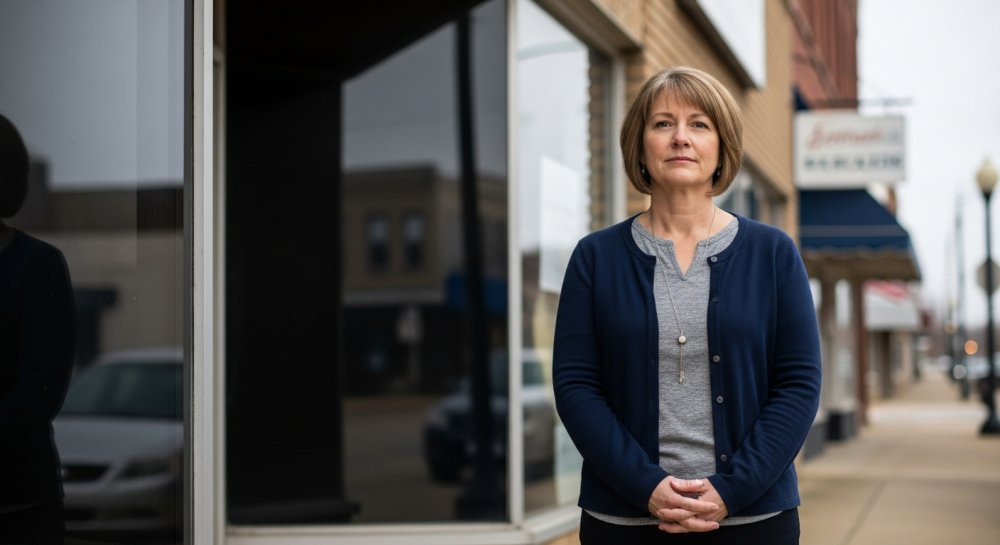
Across America, faithful Christians are finding themselves at a crossroads: compromise their deeply held biblical beliefs or face devastating legal and financial consequences. While they may not be physically dying for their faith as believers in hostile nations do, something profound is happening — a form of sacrifice the early Church understood well.
The concept of “bloodless martyrdom” has deep roots in Christian tradition. It recognizes that giving up one’s livelihood, reputation, and life’s work rather than betray Jesus Christ represents a real and costly witness to the faith.
We’re witnessing this unfold in real time. Christian business owners who decline to participate in ceremonies that violate their conscience face crippling lawsuits. Ministries that uphold biblical teaching on marriage and sexuality lose their tax-exempt status and public standing. Medical professionals who refuse to participate in procedures they believe end human life find themselves pushed out of their professions.
These aren’t hypothetical scenarios. They’re happening in communities across the nation, often unreported or dismissed by mainstream culture.
The early Church fathers understood that martyrdom wasn’t limited to those who shed their blood. They recognized “white martyrdom” — the complete abandonment of everything one holds dear for Christ’s sake. This included those who gave up wealth, family ties, social position, and worldly success to remain faithful.
Today’s legal warfare against Christians mirrors this ancient pattern. The weapons have changed from swords to subpoenas, from lions to litigation, from execution to financial ruin. But the fundamental choice remains the same: will you bow to Caesar, or will you stand with Christ?
For the Christian baker, photographer, or florist who loses everything rather than participate in what Scripture calls sin, the cost is real. The business built over decades — gone. The retirement savings — depleted in legal fees. The community standing — destroyed by media attacks. The life’s work — reduced to ashes.
Yet they stand firm. Not out of hatred or bigotry, as their opponents claim, but out of love for the One who stood firm for them at Calvary.
This isn’t mere stubbornness or political partisanship. It’s the same spirit that animated Christians throughout the ages who understood that some things matter more than comfort, more than prosperity, more than the approval of the world.
The confessors of the early Church — those who suffered but survived persecution — were honored alongside the martyrs. They had faced the same choice and made the same decision. They simply lived to tell about it.
Perhaps it’s time we recognize that the Christian college administrator fired for upholding biblical sexuality, the adoption agency shuttered for placing children with married mothers and fathers, and the medical professional dismissed for refusing to facilitate gender transitions are our generation’s confessors.
They’re not seeking victimhood. Many would prefer the quiet life, running their businesses and serving their communities in peace. But when forced to choose between their faith and their livelihoods, they’ve chosen Christ.
This matters for how we, as the Church, respond. These brothers and sisters in Christ need more than our prayers, though they certainly need those. They need our practical support — financial, professional, and social.
When a Christian loses a job for refusing to compromise on biblical truth, does the church step in to help? When legal bills mount for those defending their religious freedom, do we contribute? When someone becomes a pariah in their profession for their faith, do we offer friendship and fellowship?
The early Church took care of the confessors because they recognized their sacrifice as genuine Christian witness. We should do no less.
Calling legal persecution “bloodless martyrdom” isn’t exaggeration or melodrama. It’s recognizing reality. These believers are experiencing real loss, real suffering, and real sacrifice for the name of Christ. The fact that they survive it doesn’t make it less significant.
In an age when American Christianity is often criticized as comfortable and compromised, these modern confessors remind us what it looks like to count the cost and pay it anyway. They demonstrate that faith isn’t just what we believe on Sunday morning, but what we’re willing to lose on Monday afternoon.
As the cultural pressure intensifies and the legal battles multiply, more Christians will face these choices. Will we support them, honor them, and learn from them? Or will we look away, grateful it wasn’t us, hoping to avoid the same fate?
The confessors of old would tell us: standing costs something, but compromise costs everything. Their witness, bloodless but real, calls us to the same faithfulness in our generation.
Let us know what you think, please share your thoughts in the comments below.

Faith Facts
- The Holy See has called on global governments to prioritize homelessness as a fundamental human dignity issue, not merely an economic concern.
- The Vatican emphasized that access to safe housing must be central to all housing and urban policy worldwide.
- This call comes as homelessness continues to rise in numerous developed and developing nations.
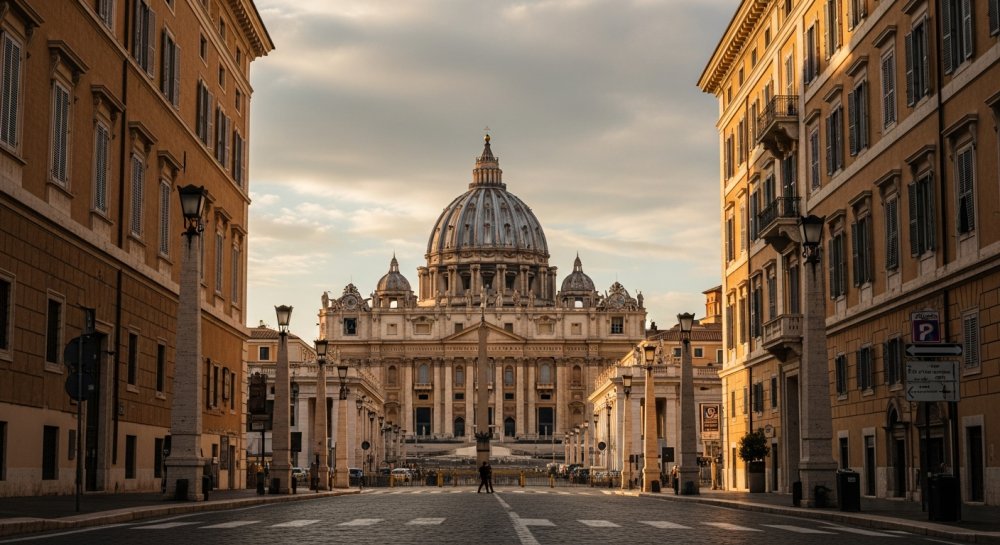
The Vatican has issued a compelling call to the international community, urging world leaders to recognize homelessness as a crisis of human dignity that demands immediate attention and comprehensive policy reform.
In a statement that underscores the Catholic Church’s long-standing commitment to the poor and vulnerable, the Holy See has emphasized that access to safe and adequate housing is a fundamental human right. This is not simply an economic calculation or a matter of market forces, but a moral imperative that goes to the heart of what it means to respect the dignity of every person.
The Vatican’s appeal challenges governments to move beyond treating housing as a commodity and instead recognize it as essential to human flourishing. By calling for homelessness to be placed at the center of housing and urban policy, Church leaders are advocating for a dramatic shift in how nations approach one of the most pressing social challenges of our time.
This message resonates deeply with Christian values that have always emphasized caring for the least among us. From Biblical teachings to the example of Christ himself, the call to shelter the homeless and protect the vulnerable has been central to the faith for two millennia.
As homelessness continues to rise across both developed and developing nations, the Vatican’s intervention serves as a moral compass for policymakers. The Church’s voice reminds us that economic systems must serve human needs, not the other way around.
The Holy See’s statement comes at a critical time when many communities are grappling with housing affordability crises, rising displacement, and inadequate support systems for those without stable shelter. By framing this as a matter of fundamental human dignity, the Vatican elevates the conversation beyond partisan politics to the realm of universal moral obligation.
For Christians, this call to action is not merely political—it is deeply spiritual. The way a society treats its most vulnerable members reflects its core values and commitment to the teachings of Christ, who identified himself with the poor and the homeless.
Let us know what you think, please share your thoughts in the comments below.

Faith Facts
- Secular activists are conducting organized campaigns to influence how Australians answer the religion question on the national census
- The ‘No Religion’ checkbox campaigns have been running for decades, with intensified digital efforts targeting younger citizens
- Census data on religious affiliation directly impacts government policy decisions, resource allocation, and cultural representation across the nation
A coordinated effort to reshape Australia’s religious landscape is unfolding not in churches or town halls, but on social media platforms and websites. Secular advocacy groups have launched sophisticated campaigns aimed at persuading Australians to check the ‘No Religion’ box on the upcoming national census, raising concerns about the integrity of data that shapes public policy for years to come.
The campaigns, which have evolved over multiple census cycles, represent more than casual online activism. They constitute a deliberate strategy to influence official government statistics that determine everything from funding allocations to cultural policy decisions.
These digital campaigns specifically target young Australians and those with nominal religious connections, encouraging them to reject any religious identification even if they maintain cultural or family ties to faith traditions. The organized nature of these efforts stands in stark contrast to the census’s intent: to capture an accurate snapshot of the nation’s genuine beliefs and practices.
Census religion data carries significant weight in Australian public life. Government agencies, educational institutions, and community organizations rely on these figures when making decisions about chaplaincy services, religious education programs, and the accommodation of faith practices in public spaces. Artificially inflated ‘No Religion’ numbers would systematically disadvantage faith communities and potentially misrepresent the true spiritual character of the nation.
The campaigns exploit a unique vulnerability in census methodology. While questions about age, income, or household composition are relatively objective, the religion question asks respondents to self-identify their beliefs. This subjective element creates an opening for advocacy groups to frame the question itself as a political statement rather than a straightforward request for information.
Christian leaders have expressed concern that these coordinated efforts undermine the democratic principle that government policy should reflect actual community needs and values. When data is manipulated through organized campaigns, the resulting policies may fail to serve citizens who quietly maintain their faith without engaging in counter-campaigns.
The situation also highlights a broader cultural tension. While Australia’s Constitution protects religious freedom, secular activists appear increasingly comfortable using strategic campaigns to minimize the statistical representation of religious Australians. This approach raises questions about whether the goal is accurate data collection or cultural engineering.
For families who practice their faith regularly, send their children to religious schools, or draw on spiritual resources during life’s challenges, being accurately counted matters. It ensures their communities receive appropriate recognition and that their needs are considered in policy deliberations.
The phenomenon is not unique to Australia. Similar campaigns have emerged in other Western nations where census data influences public policy. What makes the Australian situation particularly notable is the long-running and increasingly sophisticated nature of the digital campaigns.
As the census approaches, faith communities face a decision about whether to launch counter-campaigns or simply encourage honest responses. Many Christian leaders advocate for the latter approach, trusting that authentic representation will ultimately serve both truth and the common good better than engagement in a statistical arms race.
The integrity of democratic governance depends on accurate information. When advocacy groups on any side seek to manipulate census data through organized campaigns, they undermine the foundation of evidence-based policy making that should serve all citizens fairly.
Let us know what you think, please share your thoughts in the comments below.
Faith Facts
- Catholic dioceses across America are reporting unprecedented increases in exorcism requests, with some priests conducting hundreds of cases annually
- Church leaders attribute the rise to declining faith, increased occult practices, and a culture turning away from God
- Mental health professionals and clergy emphasize the importance of distinguishing between spiritual warfare and psychological conditions requiring medical treatment
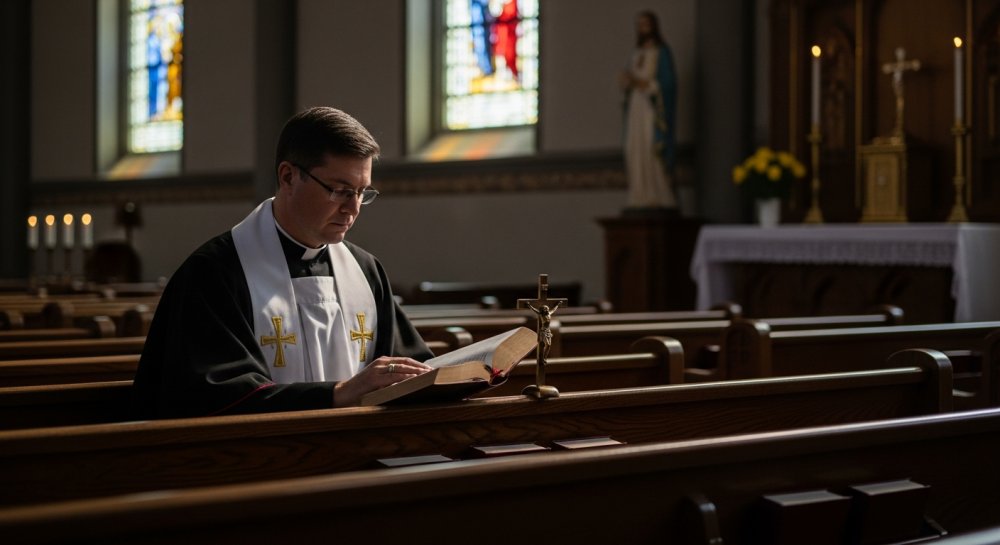
A troubling trend is sweeping through American churches as demand for exorcisms reaches levels not seen in generations. Catholic dioceses nationwide are reporting dramatic increases in requests for deliverance ministry, forcing the Church to train more priests in the ancient rite.
The phenomenon raises a critical question for believers: is our nation experiencing heightened demonic activity, or are Americans increasingly turning to faith-based solutions for struggles that were once addressed only through secular means?
Church officials point to multiple factors driving the surge. The proliferation of occult practices through popular culture, including tarot cards, astrology, and New Age spirituality marketed to young people, has opened dangerous spiritual doors. Meanwhile, declining church attendance and biblical literacy have left many Americans vulnerable to spiritual attack without the protective armor of faith.
“We’re seeing the consequences of a culture that has turned its back on God,” noted one exorcist who requested anonymity due to the sensitive nature of his ministry. “When people reject Christ, they don’t choose neutrality—they become susceptible to dark spiritual forces.”
The Catholic Church maintains strict protocols for discernment, requiring thorough medical and psychological evaluation before proceeding with exorcism. This careful approach recognizes that many symptoms attributed to demonic possession—including voices, personality changes, and self-harm—can stem from mental illness requiring professional treatment.
Yet experienced exorcists describe cases that defy medical explanation: individuals speaking ancient languages they’ve never studied, displaying supernatural knowledge, or exhibiting physical strength beyond natural capability. These classic signs of possession align with biblical accounts of Jesus casting out demons.
The rise in exorcism requests coincides with troubling cultural trends. Youth suicide rates have climbed dramatically in recent years. Anxiety and depression diagnoses continue their upward trajectory. Traditional family structures have weakened. Many Americans report feeling spiritually empty despite material prosperity.
For Christians, this convergence suggests spiritual warfare intensifying as America drifts from its biblical foundations. Scripture warns that Satan prowls like a roaring lion, seeking whom he may devour. As prayer disappears from public life and moral relativism replaces absolute truth, communities lose their spiritual defenses.
However, the increased demand for exorcism may also reflect something positive: a renewed recognition that human struggles have spiritual dimensions that secular psychology alone cannot address. Americans suffering from oppression may be rediscovering that deliverance comes through Christ, not merely through therapy and medication.
The challenge for the Church lies in responding with both spiritual wisdom and pastoral care. Authentic cases of demonic influence require the authority of Christ exercised through trained ministers. But many seeking help need Christian community, biblical counseling, and medical treatment—not exorcism.
Protestant churches are also seeing increased interest in deliverance ministry, though approaches vary widely. Some charismatic congregations regularly conduct spiritual warfare sessions, while more traditional denominations emphasize the sacraments and Scripture as primary spiritual protections.
Regardless of denominational differences, biblical Christians agree on core truths: Satan is real, spiritual warfare is ongoing, and Christ has ultimate authority over evil. The Name of Jesus remains the most powerful weapon against darkness.
As exorcism requests continue rising, the Church faces an opportunity to proclaim timeless truth to a hurting generation. The answer to both demonic oppression and psychological suffering begins with repentance, faith in Christ, and surrender to God’s Word. Only through Jesus can people find genuine freedom—whether from spiritual bondage, mental anguish, or the emptiness of life without God.
The question isn’t merely whether Satan is attacking more aggressively, but whether Americans are finally recognizing their desperate need for the Savior who conquered sin, death, and the devil through His cross and resurrection.
Let us know what you think, please share your thoughts in the comments below.


-

 Self-Reliance1 year ago
Trump’s Bold Move Uncovers Massive Social Security Fraud
-

 Faith1 year ago
New Clues Emerge in Noah’s Ark Mystery
-

 News1 year ago
Governor Walz’s Rhetoric Sparks National Controversy
-

 News1 year ago
Mel Gibson’s ‘The Passion of the Christ’ Sequel Title Announced
-

 Family1 year ago
Texas Lawmaker Targets Furries in Schools
-

 Freedom1 year ago
Maine Lawmaker Challenges Sports Fairness Controversy
-

 Family1 year ago
Canada’s Controversial Policy Sparks Ethical Debate
-
Faith9 months ago
Congress Hears Pleas for Nigerian Christians