
News
Young Republicans Break With Party Tradition on Israel Support

Faith Facts
- A recent poll reveals declining American support for Israel and Prime Minister Benjamin Netanyahu’s government, with a notable generational divide emerging within the Republican Party.
- While older Republicans maintain traditional strong support for Israel, younger GOP members show markedly different attitudes toward the Jewish state and its current leadership.
- The shift represents a potential departure from decades of unified Republican backing for America’s key Middle Eastern ally.
New polling data suggests a significant generational fault line is developing within the Republican Party regarding support for Israel and Prime Minister Benjamin Netanyahu’s government. The findings indicate a broader decline in American support for the Jewish state, but the internal GOP divide marks a notable shift in conservative political alignment.
For decades, unwavering support for Israel has been a cornerstone of Republican foreign policy and a reflection of Christian conservative values rooted in biblical principles. Many evangelical Christians view support for Israel as both a moral imperative and a fulfillment of scriptural prophecy.
However, the emerging generational split suggests younger Republicans may be reassessing traditional party positions on Middle Eastern policy. The data points to changing attitudes that could reshape future GOP approaches to one of America’s most important international relationships.
The polling reveals that support for Netanyahu’s government specifically has experienced measurable decline across the American electorate. This trend appears particularly pronounced among younger demographics, including younger Republican voters who historically would have aligned with their party’s pro-Israel stance.
The shift comes amid ongoing regional tensions and complex geopolitical dynamics in the Middle East. Israel faces continued security threats while navigating domestic political challenges and international scrutiny of its policies.
For Christian conservatives, support for Israel has long been understood as both a strategic national interest and a matter of faith. Biblical passages promising blessings to those who bless Israel have informed evangelical political engagement for generations.
The generational divide within the GOP raises questions about how the party will navigate these changing attitudes while maintaining its traditional pro-Israel platform. Republican leadership faces the challenge of bridging perspectives between older party members who view Israel support as non-negotiable and younger voters who may prioritize different considerations.
Political analysts suggest this internal tension could influence future Republican foreign policy positions and electoral strategies. The party’s approach to Israel has traditionally unified its evangelical base, national security hawks, and broader conservative coalition.
As American politics continues to experience generational realignment across multiple issues, the Republican Party’s relationship with Israel emerges as another area where age-based differences are becoming increasingly apparent. How party leaders address this divide may shape both GOP unity and U.S.-Israel relations in coming years.
Let us know what you think, please share your thoughts in the comments below.

Faith Facts
- Ray Montgomery, former pastor and civil rights advocate, convicted of misdemeanor domestic violence for attacking a former girlfriend at his home two years ago.
- The verdict serves as a reminder that positions of spiritual leadership do not place individuals above the law or accountability.
- The case highlights the importance of church accountability and the protection of the vulnerable, particularly women, within faith communities.
A former pastor and civil rights advocate has been convicted of domestic violence, sending shockwaves through the community that once looked to him for spiritual guidance. Ray Montgomery was found guilty of misdemeanor domestic violence following an attack on a former girlfriend at his residence two years ago.
The conviction represents a sobering moment for those who witnessed Montgomery’s public advocacy work while being unaware of the private violence that occurred behind closed doors. The case underscores a critical truth that resonates deeply within Christian communities: leadership and public service do not exempt anyone from moral accountability or legal consequences.
As Christians, we are called to protect the vulnerable and stand firmly against violence in all its forms, especially within the home. Scripture is clear that those who shepherd God’s people must be “above reproach” (1 Timothy 3:2), and that standard extends to how leaders treat those in their personal lives.
This case serves as a painful reminder that the church must remain vigilant in holding its leaders accountable, not only in matters of doctrine but also in their personal conduct. Too often, the reputation of ministries or the public profile of leaders has shielded bad behavior from proper scrutiny and justice.
The conviction also brings attention to the broader issue of domestic violence, which affects families across America, including Christian households. Churches must be sanctuaries where victims feel safe to come forward and receive support, rather than environments where abuse is minimized or concealed to protect institutional reputation.
As this case concludes in the legal system, it opens important conversations about accountability, repentance, and restoration within the body of Christ. True Christian leadership requires humility, integrity, and a commitment to treating all people with the dignity and respect that reflects the character of Christ.
Let us know what you think, please share your thoughts in the comments below.
Faith Facts
- Christopher Nolan’s adaptation of Homer’s “The Odyssey” is scheduled for theatrical release on July 17
- The film’s casting decisions have triggered significant controversy among those who view the ancient Greek epic as foundational to Western civilization
- Critics argue the choices reflect a broader cultural trend that prioritizes modern ideological concerns over historical and literary authenticity
Director Christopher Nolan’s upcoming adaptation of Homer’s classical epic “The Odyssey” has ignited a cultural firestorm months before audiences will see it on screen. The controversy centers on casting decisions that many conservatives view as yet another example of Hollywood’s willingness to reshape Western civilization’s most treasured stories.
The film, set for U.S. release on July 17, has become a flashpoint in the ongoing debate about how modern entertainment handles historical and literary works that form the bedrock of Western culture. For many Christian conservatives, “The Odyssey” represents more than just an ancient story—it embodies timeless themes of faith, perseverance, homecoming, and the struggle between virtue and vice.
Elliot Page at The Odyssey World Premiere in London. Experience it only in cinemas July 17. pic.twitter.com/VDskvHKQWv
— The Odyssey Movie (@odysseymovie) July 7, 2026
“What 1 thing would you say to Homer?”
Lupita Nyong’o (Helen Of Troy): “How do you feel about the screen time given to women?”
— End Wokeness (@EndWokeness) July 6, 2026
Social media erupted with criticism from those who see the casting as symptomatic of a larger cultural agenda. Some commentators have characterized the approach as reflecting a “dying, immoral agenda” that seeks to deconstruct rather than honor the foundations of Western literary tradition.
The backlash highlights a growing divide between traditional Americans who value historical authenticity in adaptations of classical works and Hollywood’s apparent commitment to contemporary social priorities. Many conservative voices argue that respecting the cultural context of ancient texts doesn’t mean rejecting them, but rather understanding them as products of their time that still offer profound wisdom.
Homer’s “Odyssey,” composed nearly 3,000 years ago, tells the story of the Greek hero Odysseus’s decade-long journey home after the Trojan War. The epic has profoundly influenced Western literature, art, and thought for millennia, with its themes of loyalty, faith in divine providence, and the importance of home and family resonating across generations.
For Christian audiences, the work holds particular significance as a bridge between pagan antiquity and the Judeo-Christian tradition that would follow. Many church fathers and medieval Christian scholars engaged deeply with Homer’s works, finding in them pre-Christian wisdom that could be reconciled with Biblical truth.
The controversy surrounding Nolan’s adaptation arrives at a moment when many Americans feel their cultural heritage is under sustained assault. From curriculum debates in schools to museum exhibitions to entertainment adaptations, traditional Americans increasingly perceive a coordinated effort to diminish or distort the Western canon.
Supporters of more traditional approaches to classical adaptations argue that authenticity matters—not out of prejudice, but out of respect for historical truth and cultural inheritance. They contend that every civilization has the right to preserve and honor its foundational stories without apology.
Nolan, known for cerebral and ambitious films like “Inception,” “Interstellar,” and the “Dark Knight” trilogy, has not yet responded to the growing controversy. His previous works have generally avoided overt political messaging, focusing instead on complex narratives and philosophical themes.
The debate over “The Odyssey” adaptation reflects broader tensions in American culture about who gets to tell our stories and how they should be told. For many conservatives, the issue isn’t resistance to change itself, but concern that changing everything erases the particular heritage that made Western civilization distinctive and successful.
As the July release date approaches, the controversy shows no signs of abating. Whether the film itself will justify concerns or prove them overblown remains to be seen, but the passionate response demonstrates how deeply many Americans care about preserving the integrity of their cultural inheritance.
Let us know what you think, please share your thoughts in the comments below.
Faith Facts
- Georgia authorities arrested a suspect in the 1995 murder of a pastor who was shot while repairing his church roof
- The case remained unsolved for 30 years despite ongoing investigation efforts
- The breakthrough represents a significant development in justice for the slain minister and his family
After three decades of unanswered questions, Georgia law enforcement has made a breakthrough in a case that shocked a community of faith. A suspect has been arrested in connection with the murder of a pastor who was killed while performing maintenance work on his church building in 1995.
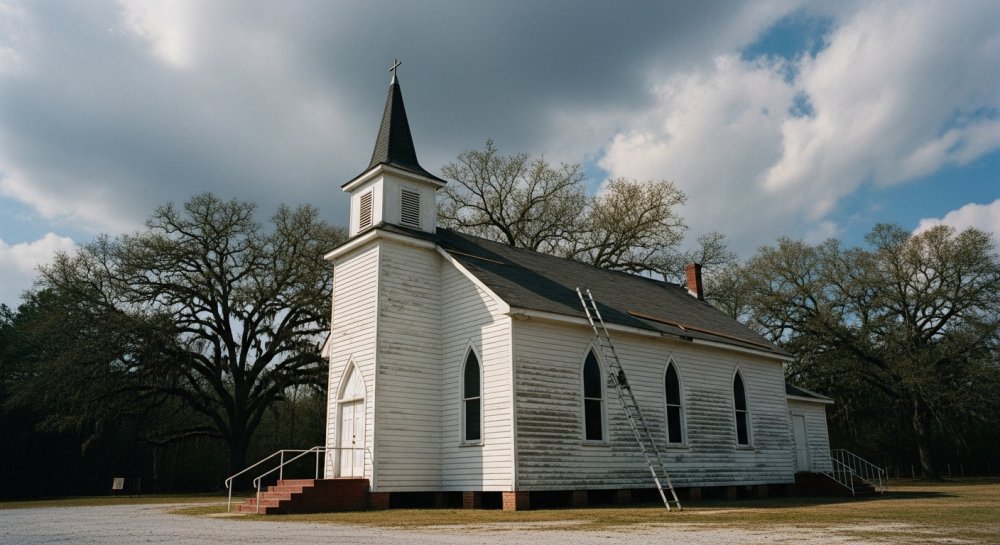
The pastor was gunned down while repairing the roof of his church, a tragic end to what should have been a routine day of service. For 30 years, investigators worked to piece together evidence that would lead them to the person responsible for this senseless act of violence against a man of God.
The arrest marks a turning point in a case that had grown cold over the years. While many details remain sealed as the legal process moves forward, the development brings renewed hope for justice to the pastor’s family, congregation, and the broader community that has waited decades for answers.
This case serves as a reminder of the vulnerability that ministers and church leaders sometimes face while serving their communities. Churches across America remain soft targets, and pastors often work alone on their properties, making security a growing concern for faith communities nationwide.
The dedication of law enforcement officials who refused to let this case fade into obscurity demonstrates that justice, though delayed, can still be achieved. Cold case investigations require patience, persistence, and often benefit from advances in forensic technology that weren’t available when crimes were originally committed.
As the legal proceedings begin, the faith community can take some comfort knowing that accountability may finally be served for a crime that took the life of a shepherd who was simply caring for his flock’s place of worship.
Let us know what you think, please share your thoughts in the comments below.


-

 Self-Reliance1 year ago
Trump’s Bold Move Uncovers Massive Social Security Fraud
-

 Faith1 year ago
New Clues Emerge in Noah’s Ark Mystery
-

 News1 year ago
Governor Walz’s Rhetoric Sparks National Controversy
-

 News1 year ago
Mel Gibson’s ‘The Passion of the Christ’ Sequel Title Announced
-

 Family1 year ago
Texas Lawmaker Targets Furries in Schools
-

 Freedom1 year ago
Maine Lawmaker Challenges Sports Fairness Controversy
-

 Family1 year ago
Canada’s Controversial Policy Sparks Ethical Debate
-
Faith8 months ago
Congress Hears Pleas for Nigerian Christians