
News
Houston Church Stands With Ukrainian Refugees as U.S. Leaves Them in Legal Limbo

Faith Facts
- Over 240,000 Ukrainian refugees welcomed to America after Russia’s 2022 invasion now face an uncertain future as legal work authorizations expire
- Memorial Church of Christ in Houston has baptized Ukrainian refugees and provided food, shelter, and spiritual support for three and a half years
- Processing delays at U.S. Citizenship and Immigration Services leave thousands of Ukrainian families unable to work legally while war continues to devastate their homeland
Liza Sharii-Yukabovska fled her native Ukraine four years ago after Russia attacked its Eastern European neighbor. In the U.S., the mother — who escaped with her daughter, Sophie, now 17 — connected with Houston’s Memorial Church of Christ and was baptized.
Liza speaks English, French, Portuguese, Russian and Ukrainian and a bit of German and Italian. She found fulfilling work as an interpreter for a faith-based nonprofit.
But the Memorial church member recently lost her job. Her legal authorization to work in the U.S. expired — a frightening reality confronting thousands of Ukrainians.
“We came here not because we were looking to stay here, but we were looking for safety for our kids,” Liza said. “We lost shelter back at home. We wanted stability.
“And, of course, as everyone knows all over the world, there is an American dream. I guess, somehow, you believe that it’s a country of opportunities. Unfortunately, nobody tells you that it’s very difficult to get to this American dream.”
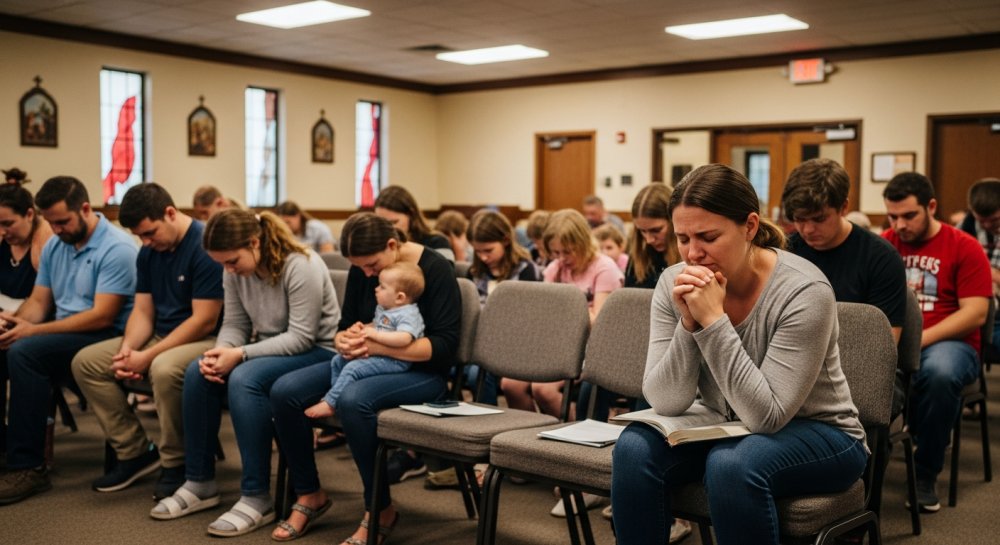
As a handful of Texans and two dozen Ukrainians gathered for a midweek Bible class at the Memorial church, tears and talk of bombs underscored the precarious circumstances. As with Liza, the work authorization for Dirai Datsenko’s family lapsed.
“We need to pay our bills, and we don’t have the opportunity to do this because my husband lost a job … and he couldn’t work,” Datsenko said through tears.
“We cannot go back to Ukraine because it’s unsafe. We are from Kyiv, the capital of Ukraine, and Kyiv is bombed every day. My mom and my dad go to the shelter every night.”
Why Are We Not Helping Them Stay?
For three and a half years, the Memorial church has worked to serve the physical and spiritual needs of Ukrainian families — even as the estimated number of Russian and Ukrainian troop casualties has topped 2 million.
“I don’t know of any situation where our church has said no — not just for people who come to church but for every Ukrainian,” said Olesia McGowan, a Ukrainian who met her husband, Matt, in the Wednesday night class.
But now, many of the 240,000 Ukrainians welcomed to America after Russia’s 2022 invasion face an uncertain future as they lose their legal right to live or work in the U.S.
“We’ve just come to love all these people so much, and we’re just so thankful for them,” said Connie McKaskle, who is active with Memorial’s ministry to Ukrainians.
The church member voiced frustration with the U.S. government’s handling of the Ukrainians’ cases.
“I don’t understand how they could treat them this way. Our country gave them the permission to come and said, ‘We’ll protect you, and we’ll give you the benefits of being here.’ Now, to leave them in limbo by not renewing their visas to work and drive — I mean, that’s the worst thing you could do.”
Memorial’s Ukrainian ministry has organized a food bank, diapers for the refugees’ babies and other practical assistance along with “ongoing prayer for healing, stability and hope in their lives,” church leaders said in a letter prepared for Texas political leaders.
Like McKaskle, church member Brent Simmons stressed the Ukrainians’ reasons for fleeing to America.
“They were welcomed here because they needed a place to go because their communities were bombed, their country invaded. That has not changed, so why are we not helping them stay here?”
Stuck in Limbo
Most of the Ukrainians entered the U.S. through a “humanitarian parole” program launched by former President Joe Biden.
But after President Donald Trump’s inauguration in January 2025, his administration suspended Biden’s Uniting for Ukraine program. Trump has focused on ending legal pathways for immigrants to come to the U.S.
While Ukrainians already granted parole can seek an extension to remain in America, lengthy processing delays by U.S. Citizenship and Immigration Services leave many in limbo — with no work authorization or lawful status, refugee advocates report.
“This is … an unfortunate situation,” said Zori Opanasevych, a naturalized U.S. citizen who directs a Pentecostal Christian nonprofit that helped more than 1,300 Ukrainians resettle in Alaska.
“The government is not saying anything, not to stay or leave. They opened renewal proceedings and skyrocketed the fees for the paperwork. USCIS says it’s dealing with backlogs and other more prioritized tasks. People, especially large families, decide if they should pay the insane USCIS fees or use that money for an airplane ticket home as there is no guarantee to getting an approval after applying for re-parole. It is $2,330 per person. Imagine if it’s a family of eight to 10 people.”
In response to a request for comment, USCIS issued a written statement.
“U.S. Citizenship and Immigration Services is actively processing discretionary re-parole cases, including those for Ukrainians, on a case-by-case basis as the law intends. Under this administration, all aliens are undergoing intense screening and vetting to better protect the safety and security of the American people.”
Global Refuge, a Baltimore-based national refugee resettlement organization with ties to the Evangelical Lutheran Church in America, has warned of “quietly but dangerously eroding” protections for Ukrainians in the U.S.
“Some re-parole and work permit requests from Ukrainians are getting approved, but it remains spotty and inconsistent,” said Daniel Salazar, Global Refuge’s refugee and protection policy adviser. “Many more have gone unadjudicated or been delayed in their responses, resulting in the lapses in status and work authorization.”
No Place to Return
Back at Memorial, Angelina Titarenko said she has waited for over a year for any update on her status.
“It’s very hard for us just because we don’t have any information about our situation, and we don’t have any place where we can return. I’m from Odesa. Odesa is bombed every night, like most cities in Ukraine.
“I guess every Ukrainian is thinking right now about Plan B. What should we do … if they will not give us permission to stay here?”
Oksana Loshkarova, another Ukrainian with ties to the church’s ministry, said her husband’s application for extended humanitarian parole remains pending. At this point, he can’t work legally.
“We do not know how much longer we will have to wait for our case to be reviewed. Despite all these hardships, we continue to hope for a positive decision and respectfully ask that our case be considered. We simply want the opportunity to return to a normal life, so that my husband can obtain work authorization, support our family and provide for our basic needs, including housing, food and other essential expenses.”
Yulia Merchant, a naturalized U.S. citizen born in Russia, started Memorial’s outreach to Ukrainians in 2023.
“My heart is breaking for them. They are very honest people. They want to pay taxes. They want to be a part of the community.”
David Duncan, preaching minister for the church, which averages Sunday attendance of about 800, echoed Merchant. Duncan spent a decade as a missionary to Brazil — an experience that helped shape his love and concern for Houston’s diverse population.
“They’re real people with real families, and they don’t know what tomorrow brings. I guess none of us do, but can you imagine not knowing what country you will live in? … That’s hard, and some of the kids who are now in school have lived in the United States longer than they’ve lived anywhere.”
On behalf of her fellow Ukrainians, Liza — the interpreter who lost her job — emphasized that the refugees are grateful for the church’s help and support. They’re trying hard not to lose hope, she said.
“God always told us that you will never lack anything with me. So that’s my motto from the Bible, I guess. I try to calm myself down, saying that I was never hungry in my life, and I was never homeless.”
Still, she can’t help but contemplate how long the journey to a better life might take. Recalling the biblical Israelites’ time in the wilderness, she wondered, “Will it take us 40 years to be walking around to finally get to our Promised Land?”
As the midweek class ended, Memorial member Philip Bailey — who leads the Bible study along with elder Chris Shanks — asked God to intercede and bring peace.
“Father, we have our hope in you, not in our governments but in you. As Americans, we thank you for blessing us in our lives with these Ukrainians. You have blessed us richly.
“God, to you be the glory. It’s in Jesus’ name we pray. Amen.”
Let us know what you think, please share your thoughts in the comments below.

Faith Facts
- Terry Brown, pastor of Greater Harvest Ministries Church in Holly Hill, Florida, maintains she had no knowledge of criminal activity on church property.
- More than two dozen individuals, including Brown’s son and grandson, were arrested on drug and weapons charges following a major law enforcement operation.
- Authorities allege the church property was being used as headquarters for a criminal enterprise involving narcotics and illegal firearms.
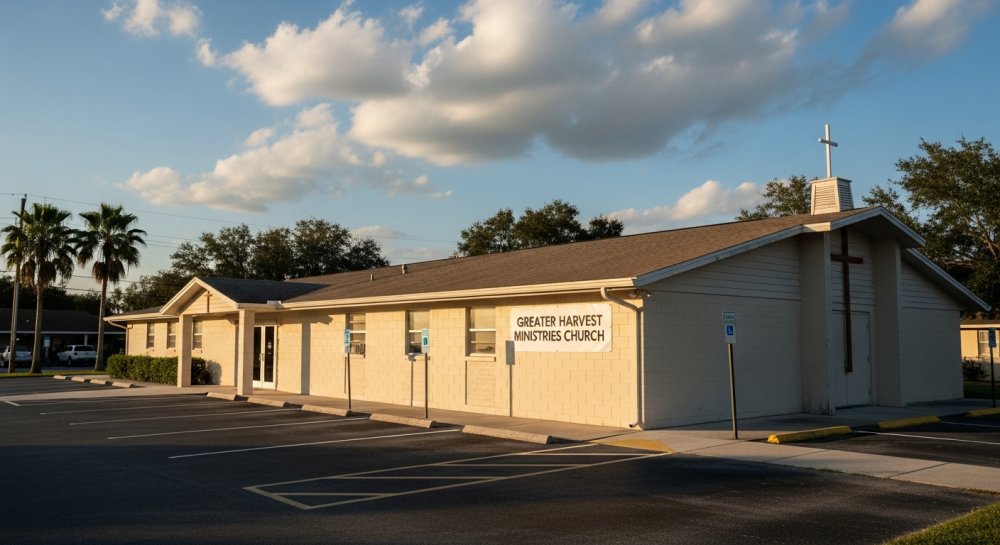
A Florida church has become the center of a shocking criminal investigation after law enforcement officials arrested more than two dozen individuals on serious drug and weapons charges. Among those taken into custody were the son and grandson of the church’s pastor, raising troubling questions about how houses of worship can be exploited by those who would abuse positions of trust.
Terry Brown, who leads Greater Harvest Ministries Church in Holly Hill, Florida, has firmly denied any knowledge that her church property was allegedly being used as a base of operations for what authorities describe as a deadly criminal enterprise. The arrests occurred Tuesday following what appears to have been an extensive investigation by law enforcement.
The situation highlights the vulnerability of faith communities to exploitation, even from within family structures. Church properties, typically seen as sanctuaries of hope and refuge, can sometimes become targets for those seeking to hide illicit activities behind the veil of religious legitimacy.
Details about the specific charges against Brown’s family members and the other defendants have not been fully disclosed, though authorities have confirmed the arrests involve both narcotics trafficking and illegal weapons possession. The scale of the operation—involving more than two dozen arrests—suggests a significant criminal network that allegedly operated from the church grounds.
For Pastor Brown, the situation represents a painful betrayal of trust and a test of faith. Many pastors face the difficult reality that leading a congregation does not exempt their families from temptation or poor choices. The burden of spiritual leadership often becomes heavier when those closest to a pastor make decisions that contradict the values being preached from the pulpit.
This case also serves as a sobering reminder to church leaders nationwide about the importance of vigilance regarding how church property is used and who has access to it. While churches rightly operate on principles of trust and openness, wisdom demands appropriate oversight and accountability, especially when it comes to facility management and security.
The Holly Hill community, located in Volusia County along Florida’s east coast, now grapples with the fallout from these arrests. For congregants at Greater Harvest Ministries, the revelation that their church may have been unwittingly harboring criminal activity represents a crisis of confidence that will require pastoral care, transparent communication, and steadfast faith to overcome.
Law enforcement officials have not indicated whether Pastor Brown herself faces any charges or is considered a person of interest in the investigation. Her denial of knowledge suggests she may have been unaware of the alleged criminal activities taking place on church grounds, though the investigation presumably continues.
The incident underscores the reality that no institution, not even the church, is immune from the reach of criminal elements seeking to exploit good intentions and trusting environments. As Scripture warns, believers must be “wise as serpents and innocent as doves,” exercising discernment even in contexts where we hope to extend grace and trust.
For communities of faith, this troubling case offers important lessons about the balance between maintaining an open, welcoming environment and implementing appropriate safeguards to prevent abuse. Churches must protect their mission and their people while remaining true to their calling to be places of redemption and transformation.
Let us know what you think, please share your thoughts in the comments below.
Faith Facts
- Anti-immigration protests in South Africa passed peacefully on June 30th after churches and prayer groups interceded, with heavy police presence preventing feared violence
- Thousands of immigrants remain in makeshift camps under difficult conditions as tensions over illegal immigration continue across the nation
- Christian leaders credit divine intervention and law enforcement cooperation for averting the bloodshed that marked previous demonstrations
South Africa witnessed what many believers are calling a direct answer to prayer as an unofficial ultimatum from anti-immigration groups expired peacefully on June 30th. Major cities across the nation were spared the looting and violence that characterized earlier protests, with church leaders pointing to coordinated prayer efforts alongside robust police deployment as the key factors.
The calm stood in stark contrast to previous demonstrations where property destruction and civil unrest gripped communities. This time, Christian groups had mobilized prayer chains in the days leading up to the deadline, asking God to protect both citizens and immigrants from harm.
Save for isolated incidents, the nation maintained order as government officials took a firm stance against lawlessness. Law enforcement agencies deployed heavily across urban centers, sending a clear message that destruction of property and attacks on individuals would not be tolerated.
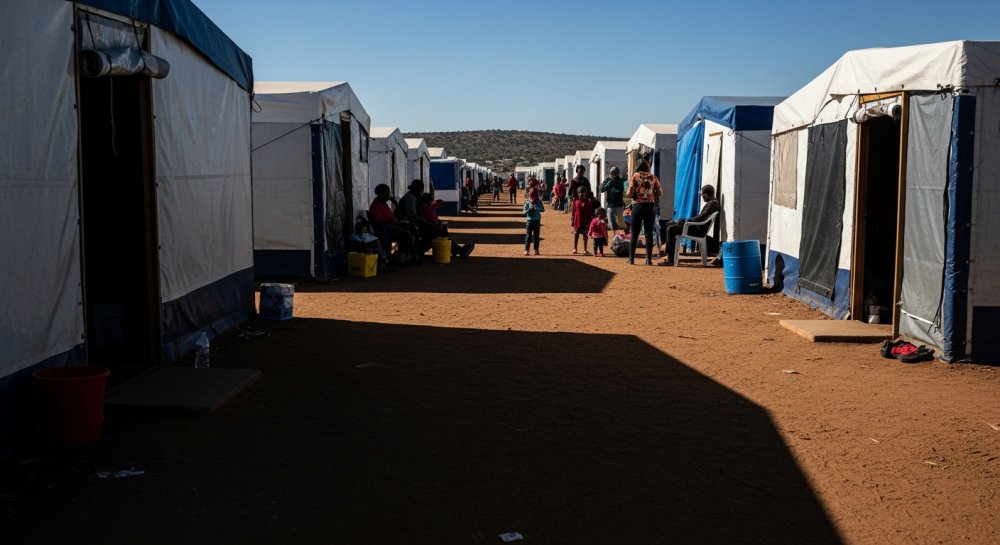
Despite the peaceful outcome, thousands of immigrants remain confined to makeshift camps throughout South Africa, living in difficult and uncertain conditions. The camps have become symbols of the nation’s ongoing struggle with illegal immigration and the complex humanitarian questions that accompany border security issues.
Faith communities continue to minister to those in the camps while also acknowledging the legitimate concerns of South African citizens about illegal immigration’s impact on jobs, resources, and national security. The situation presents a challenging balance between compassion for migrants and respect for the rule of law—principles both rooted in biblical teaching.
Christian leaders are urging continued prayer for wisdom among government officials, protection for vulnerable populations, and just solutions that honor both national sovereignty and human dignity. Many see the peaceful outcome of June 30th as evidence that prayer changes circumstances and that God responds to the cries of His people.
The situation remains fluid as South Africa grapples with immigration policy questions that echo debates occurring in the United States and other Western nations. Believers worldwide are watching to see how this chapter unfolds, recognizing that the tensions between compassion and law, between humanitarian concerns and national security, reflect challenges facing Christians everywhere.
Let us know what you think, please share your thoughts in the comments below.
Faith Facts
- United Methodist megachurch pastor Adam Hamilton has released his first campaign ad for his Kansas U.S. Senate race
- Hamilton accuses government leaders of creating a democracy that is ‘for sale’
- The pastor and author is running as a Democrat in a traditionally conservative state
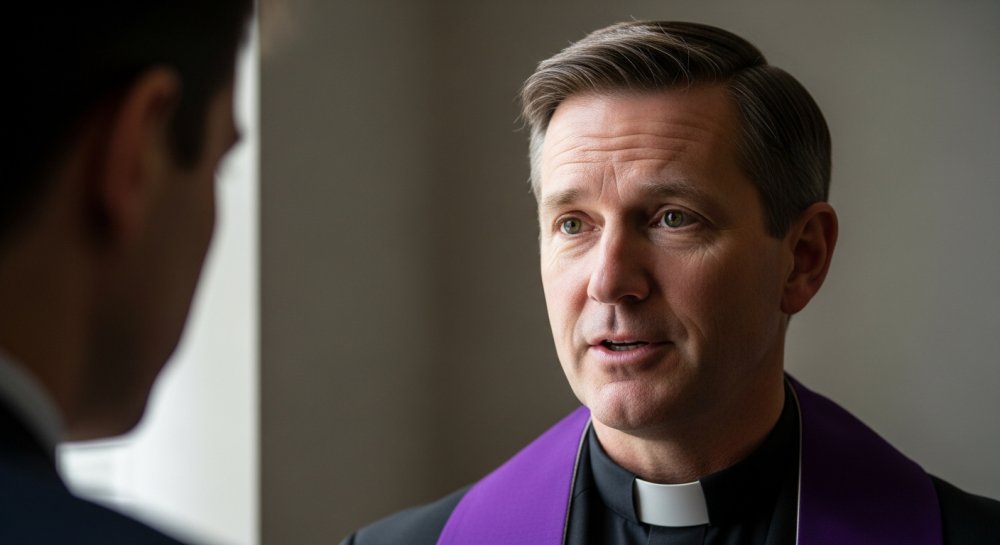
A prominent United Methodist pastor is taking his message from the pulpit to the political arena with a sharp critique of Washington leadership. Adam Hamilton, who leads one of America’s largest Methodist congregations, has launched his campaign for U.S. Senate in Kansas with a television advertisement challenging the current state of American democracy.
In his debut campaign spot, Hamilton frames his candidacy as a response to what he sees as systemic corruption in government. The pastor’s message centers on restoring integrity to public service and ending what he characterizes as the influence of money in politics.
“It’s time for something different,” Hamilton declares in the advertisement, positioning himself as an outsider alternative to career politicians.
Hamilton’s entry into the Senate race represents a significant crossover from religious leadership into partisan politics. As a United Methodist pastor, he leads a congregation that has traditionally emphasized social justice themes alongside spiritual teaching. His decision to run as a Democrat in deep-red Kansas signals an uphill battle in a state that has reliably supported Republican candidates in recent election cycles.
The pastor’s campaign launch raises questions about the appropriate role of religious leaders in electoral politics. While clergy members have every constitutional right to seek office, their entry into partisan campaigns can blur the lines between spiritual authority and political advocacy. For Christian voters who value the separation of pastoral ministry from partisan activism, Hamilton’s candidacy may prompt reflection on whether pulpit leaders should leverage their religious platform for political ambitions.
Kansas has long been a stronghold of conservative values, with voters consistently supporting candidates who champion traditional principles of limited government, religious freedom, and constitutional governance. Hamilton’s campaign will test whether a faith-based message can transcend party lines in a state where Republican leadership has dominated for decades.
The pastor’s critique of democracy being “for sale” echoes populist themes that have resonated across the political spectrum. However, his approach as a Democratic candidate in a conservative state will require him to navigate carefully between progressive policy positions and the traditional values held by many Kansas voters of faith.
As the campaign unfolds, Christian voters in Kansas will have the opportunity to evaluate whether Hamilton’s vision aligns with biblical principles of governance and the preservation of American liberties that have been central to the nation’s founding and flourishing.
Let us know what you think, please share your thoughts in the comments below.


-

 Self-Reliance1 year ago
Trump’s Bold Move Uncovers Massive Social Security Fraud
-

 Faith1 year ago
New Clues Emerge in Noah’s Ark Mystery
-

 News1 year ago
Governor Walz’s Rhetoric Sparks National Controversy
-

 News1 year ago
Mel Gibson’s ‘The Passion of the Christ’ Sequel Title Announced
-

 Family1 year ago
Texas Lawmaker Targets Furries in Schools
-

 Freedom1 year ago
Maine Lawmaker Challenges Sports Fairness Controversy
-

 Family1 year ago
Canada’s Controversial Policy Sparks Ethical Debate
-
Faith7 months ago
Congress Hears Pleas for Nigerian Christians