
Faith
Jimmy Carter’s Church Appoints Another Female Pastor After Predecessor’s Brief Tenure


Faith Facts
- Maranatha Baptist Church in Plains, Georgia, has hired its second female pastor following the resignation of the first after less than two years
- The small Southern Baptist church gained national attention as the longtime Sunday school teaching home of former President Jimmy Carter
- The pastoral changes mark a significant shift in church leadership following Carter’s death
Maranatha Baptist Church in Plains, Georgia, where former President Jimmy Carter taught Sunday school for decades, has appointed its second female pastor following the departure of the first who served less than two years in the position. The move continues the church’s controversial break from traditional Southern Baptist Convention teaching on pastoral roles.
The small congregation, which became internationally recognized due to Carter’s faithful Sunday school teaching until his health declined, has maintained its progressive stance on women in pastoral leadership. This approach directly contradicts the Southern Baptist Convention’s Baptist Faith and Message 2000, which reserves the office of pastor for men as “qualified by Scripture.”
The church’s decision to hire female pastors represents a departure from biblical complementarianism, which many conservative Christians believe reflects God’s design for church leadership. Traditional interpretations of Scripture, particularly 1 Timothy 2:12 and Titus 1:5-9, have long guided Southern Baptist churches in limiting the pastoral office to qualified men.
The brief tenure of the first female pastor raises questions about the stability and effectiveness of leadership decisions that diverge from established biblical standards. Many Bible-believing congregations maintain that while women serve vital roles in ministry, the office of pastor or elder carries specific biblical qualifications related to gender.
Maranatha Baptist’s choices reflect broader cultural pressures facing American churches to conform to secular standards rather than biblical teaching. Conservative Christians argue that faithfulness to Scripture must take precedence over contemporary cultural trends, even when those trends seem compassionate or inclusive.
The church’s association with President Carter brought it significant attention during his lifetime, but the congregation’s theological direction appears to prioritize progressive values over traditional Baptist doctrine. This tension between cultural accommodation and biblical fidelity continues to challenge churches across denominations.
For Christians committed to biblical authority, the situation at Maranatha Baptist serves as a reminder of the importance of maintaining doctrinal integrity. Churches that drift from scriptural teaching on pastoral qualifications often face instability and division, as evidenced by the short tenure of the previous pastor.
Let us know what you think, please share your thoughts in the comments below.

Faith Facts
- In his resignation speech, former UK Labour leader Keir Starmer acknowledged that family is his ‘most important job,’ a rare admission from a political figure about the cost of public service
- Christian leaders and ministers often sacrifice family relationships for ministry work, yet Scripture calls us to prioritize our households as a qualification for spiritual leadership
- The Bible teaches in 1 Timothy 3:4-5 that a leader ‘must manage his own family well’ before being entrusted with God’s church, making family stewardship a spiritual mandate, not an option
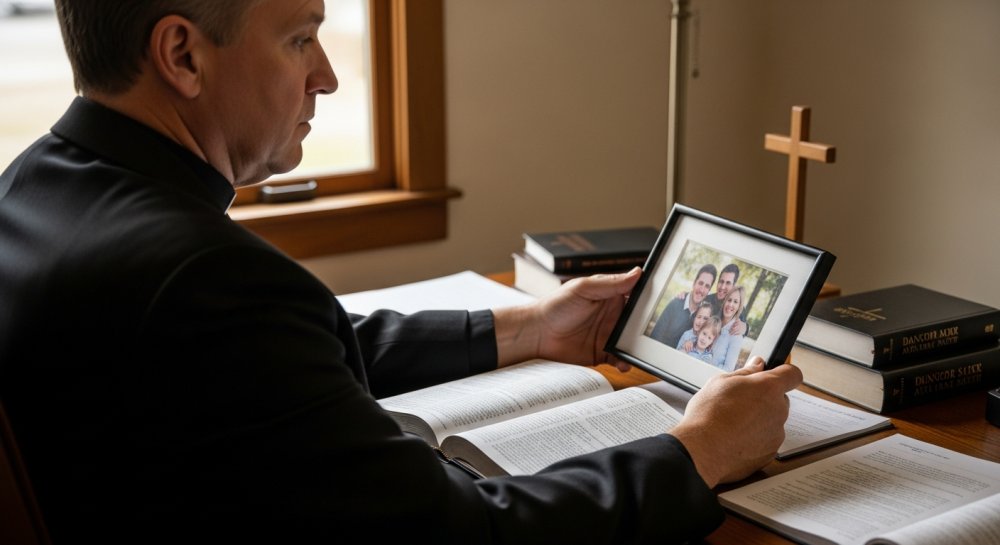
When a prominent political leader steps down and names his family as his highest priority, Christians should pay attention. The principle transcends partisan politics and speaks to a crisis many ministry leaders face but rarely discuss openly.
In his resignation address, the British Labour Party leader made an emotional confession that resonated far beyond Westminster. He acknowledged that those closest to us—our spouses, our children—often bear the heaviest burden of our calling. It was a moment of raw honesty about the price paid by families when leaders pour themselves entirely into public service.
For pastors, missionaries, and church leaders across America, this should sound uncomfortably familiar. The ministry has a unique way of demanding everything from us. There’s always another counseling session, another crisis to manage, another sermon to prepare, another church member in need. The work is never truly finished, and the temptation to sacrifice family time on the altar of ministry effectiveness is ever-present.
Yet Scripture gives us clear boundaries. Paul’s qualifications for church leadership aren’t suggestions—they’re requirements. Before a man can shepherd God’s flock, he must demonstrate faithful stewardship of his own household. His children should be well-managed, his marriage should be strong, and his home should reflect the gospel he preaches. This isn’t secondary to ministry; it is ministry.
The tragic reality is that too many Christian leaders have learned this lesson too late. They’ve built influential ministries while their marriages crumbled. They’ve led thousands to Christ while their own children walked away from the faith. They’ve preached about God’s love on Sunday while their families experienced emotional absence Monday through Saturday.
This isn’t about condemning those in ministry—quite the opposite. It’s a call to return to biblical priorities before more families pay an unnecessary price. God doesn’t call us to choose between ministry effectiveness and family faithfulness. He calls us to both, with family providing the foundation for everything else.
When we neglect our families for the sake of ministry, we’re not being more spiritual—we’re being disobedient. We’re violating the very qualifications God established for leadership. And we’re teaching our children and congregations that Christian service matters more than Christian character, that public ministry is more important than private faithfulness.
The damage extends beyond individual families. When church leaders burn out or fall into moral failure, the root cause often traces back to neglected relationships at home. When a pastor’s marriage fails, it doesn’t just affect his household—it wounds the entire congregation and damages the witness of the church in the community.
There’s also a profound hypocrisy in preaching family values from the pulpit while failing to live them at home. How can we call our congregations to prioritize their marriages and children if we’re not doing the same? Our families shouldn’t be the mission field we neglect while serving everyone else.
The solution requires intentionality and boundary-setting. Ministry leaders must schedule sacred family time that’s non-negotiable except for true emergencies. They need to be present—not just physically but emotionally and mentally—when they’re with their spouse and children. They should celebrate anniversaries, attend school events, and create memories that communicate: “You matter more than any church program.”
Churches bear responsibility too. Congregations should support realistic expectations for their pastors’ time and availability. Church boards should encourage—even require—their ministers to take full days off, use vacation time, and maintain healthy family rhythms. Creating a culture that honors pastoral families protects both the leaders and the long-term health of the church.
The warning from across the Atlantic is clear: those closest to us pay the highest price for our calling. But it doesn’t have to be that way. God’s design for ministry leadership includes healthy, thriving families. When we honor that design, we honor Him. When we violate it, we undermine our own ministry and hurt the people we love most.
Christian leaders don’t have to choose between effective ministry and faithful family stewardship. God never intended that false dilemma. By prioritizing our families, we don’t diminish our ministry—we strengthen it. We model biblical leadership. We demonstrate that following Christ means keeping our commitments to those He’s entrusted to our care first and foremost.
The question every Christian leader must answer honestly is this: Will my family look back and see a father or mother who was present, engaged, and committed? Or will they remember someone who was always too busy serving others to serve them? The answer to that question reveals whether we truly understand what God requires of His leaders.
Let us know what you think, please share your thoughts in the comments below.

Faith Facts
- The Lausanne Movement has released a free five-part video series connecting personal discipleship with global missions outreach
- The series aims to help everyday believers understand their role in fulfilling the Great Commission
- All videos are available at no cost to Christian communities worldwide
A significant new resource has just become available for Christians seeking to deepen their faith and understand their role in the global spread of the Gospel. The Lausanne Movement has unveiled a comprehensive five-part video series that bridges the gap between personal spiritual growth and worldwide evangelistic mission.
The free video series represents a strategic effort to equip believers with the tools and understanding needed to participate meaningfully in the Great Commission. By connecting everyday faith practices with the larger work of Christian missions around the world, the series addresses a crucial need in contemporary discipleship.
The Lausanne Movement has long been recognized as a major force in global evangelical cooperation and strategic mission work. Founded following the 1974 International Congress on World Evangelization convened by evangelist Billy Graham, the organization has consistently worked to unite Christians across denominational lines in the pursuit of spreading the Gospel to every nation.
This new video resource comes at a critical time when many believers are searching for practical ways to live out their faith with greater purpose and impact. The series is designed to be accessible to Christians at all stages of spiritual maturity, from new believers to seasoned disciples.
By offering the content free of charge, the Lausanne Movement removes financial barriers that might otherwise prevent individuals or church communities from accessing quality discipleship materials. This approach reflects a commitment to making biblical teaching and mission training available to the broadest possible audience.
The five-part format allows for thorough exploration of key themes while remaining manageable for small groups, Sunday school classes, or individual study. Churches and ministry leaders can incorporate the series into existing discipleship programs without extensive adaptation or additional curriculum development.
The emphasis on connecting personal faith with global mission addresses a common disconnect many Christians experience between Sunday worship and Monday-morning life. By helping believers see how their daily faithfulness contributes to God’s redemptive work worldwide, the series aims to foster a more integrated and purposeful Christian lifestyle.
As the Church continues to navigate cultural challenges and seeks to remain faithful to biblical mandates for evangelism and discipleship, resources like this video series provide valuable support. The material equips Christians not only with theological understanding but also with practical vision for how their lives can make an eternal difference.
Let us know what you think, please share your thoughts in the comments below.
Faith Facts
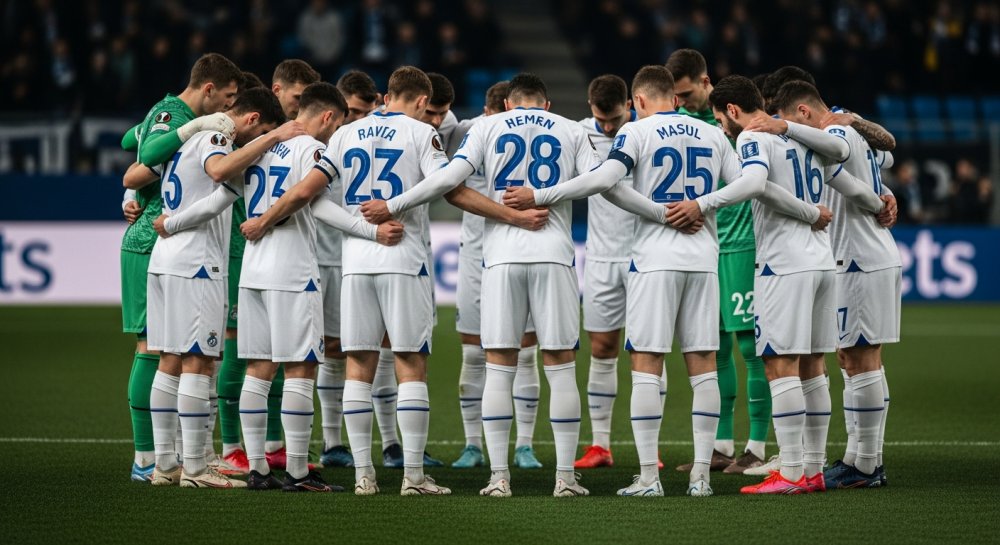
- U.S. soccer star Christian Pulisic publicly shared a photo of his team praying together following a World Cup victory
- The powerful image shows the national team gathered in unified prayer, demonstrating their faith on the world stage
- Pulisic continues to use his platform as a professional athlete to openly express his Christian beliefs
As America’s national soccer team continues its World Cup journey, one of its brightest stars is shining a light on something far more important than athletic achievement. Christian Pulisic, widely regarded as one of the premier players on the U.S. Men’s National Team, is using his global platform to share his faith with millions.
Following a crucial World Cup match victory, Pulisic took to social media to post something that transcends sports. The image he shared captured his teammates gathered together in prayer, heads bowed in humble gratitude. In an era when many athletes shy away from public displays of faith, Pulisic’s willingness to highlight his team’s spiritual foundation stands as a powerful witness.
The photograph reveals a truth often hidden from mainstream sports coverage: faith remains central to many elite athletes’ lives. While the world watches these men compete at the highest level of international soccer, they understand their abilities come from a higher source. Their willingness to pray together publicly demonstrates both unity and conviction.
For Christian conservatives, Pulisic’s example serves as an encouraging reminder that our values can thrive even in secular, global environments. The World Cup represents one of the planet’s most watched sporting events, yet this American team isn’t afraid to bow their heads in prayer before a watching world. This kind of bold faith witness resonates deeply with believers who yearn to see public figures embrace rather than hide their relationship with God.
The soccer star’s consistent public expression of faith extends beyond this single moment. Throughout his professional career, Pulisic has maintained his Christian identity, refusing to compartmentalize his beliefs away from his athletic life. In doing so, he provides a model for young believers everywhere: success and faith are not mutually exclusive.
As our nation faces increasing pressure to remove faith from public spaces, athletes like Pulisic demonstrate that Americans can compete at the world’s highest levels while maintaining their spiritual convictions. Their prayer circle wasn’t performed for show or publicity—it was a genuine expression of gratitude and dependence on God. The fact that Pulisic chose to share it speaks to his understanding that witnessing to faith matters more than protecting his brand or avoiding controversy.
This public demonstration of team prayer also highlights the role of faith in building unity and purpose. When athletes come together in prayer, they acknowledge something greater than individual achievement or national pride. They recognize their talents as gifts to be stewarded faithfully and their victories as opportunities for thanksgiving.
For families raising children in an increasingly secular culture, examples like this matter tremendously. Young people need to see successful, accomplished individuals who aren’t ashamed of Jesus Christ. They need role models who understand that worldly success means nothing without spiritual grounding. Christian Pulisic, through simple actions like sharing a prayer photo, provides exactly that kind of example.
The World Cup stage gives these athletes a platform that reaches billions. What they choose to do with that platform reveals their priorities. By consistently pointing toward his faith, Pulisic demonstrates where his true identity lies—not in soccer stardom, but in his relationship with God.
Let us know what you think, please share your thoughts in the comments below.


-

 Self-Reliance1 year ago
Trump’s Bold Move Uncovers Massive Social Security Fraud
-

 Faith1 year ago
New Clues Emerge in Noah’s Ark Mystery
-

 News1 year ago
Governor Walz’s Rhetoric Sparks National Controversy
-

 News1 year ago
Mel Gibson’s ‘The Passion of the Christ’ Sequel Title Announced
-

 Family1 year ago
Texas Lawmaker Targets Furries in Schools
-

 Freedom1 year ago
Maine Lawmaker Challenges Sports Fairness Controversy
-

 Family1 year ago
Canada’s Controversial Policy Sparks Ethical Debate
-
Faith7 months ago
Congress Hears Pleas for Nigerian Christians