
Faith
A Rabbi’s Challenge to Modern Culture Offers Third Path Between Despair and Denial


Faith Facts
- Rabbi Marc Angel, a respected New York Hebrew scholar and co-founder of the Institute for Jewish Ideas and Ideals, presents an alternative worldview in his new book ‘Loving Truth and Peace’
- The book challenges both blind optimism and fatalistic pessimism by proposing a third way rooted in biblical wisdom and moral clarity
- Rabbi Angel’s perspective offers insights for Christians navigating today’s cultural battles between denial of reality and surrender to despair
As Americans face unprecedented cultural upheaval, a new book by a distinguished Jewish scholar offers timely wisdom for people of faith seeking to navigate the tension between hope and reality. Rabbi Marc Angel’s “Loving Truth and Peace” addresses a challenge many Christian conservatives recognize: how to remain faithful and engaged when society seems determined to abandon its moral foundation.
Rabbi Angel, who serves as Emeritus Rabbi of Congregation Shearith Israel in New York and co-founded the Institute for Jewish Ideas and Ideals, rejects the false choice between naive optimism and despairing pessimism. His approach resonates with the Christian understanding that truth and hope must coexist.
The distinguished scholar identifies a troubling pattern in modern discourse: those who refuse to acknowledge obvious societal problems are labeled optimists, while those who recognize these problems but see no solution are called pessimists. Neither approach, Rabbi Angel argues, serves truth or leads to meaningful change.
Instead, he proposes what might be called biblical realism—an unflinching acknowledgment of problems combined with faith-driven action toward solutions. This third way refuses to ignore evil while also refusing to surrender to it.
For Christian conservatives watching the erosion of religious liberty, the assault on traditional family values, and the breakdown of moral consensus, Rabbi Angel’s framework offers both validation and direction. His message affirms that recognizing societal decay is not pessimism but clarity, while working toward restoration is not optimism but obedience.
The book’s title itself, “Loving Truth and Peace,” points to a biblical mandate found across both Jewish and Christian scripture: the call to pursue both honesty about reality and the shalom that comes through righteousness. This dual commitment—to truth-telling and peace-making—stands in sharp contrast to a culture that increasingly demands we choose between honest assessment and hopeful engagement.
Rabbi Angel’s work demonstrates that the Judeo-Christian tradition has always rejected false dichotomies. The prophets of old neither ignored Israel’s sins nor abandoned hope for restoration. They spoke hard truths precisely because they believed in redemption.
In an era when conservative Christians are often dismissed as either hopelessly naive or dangerously alarmist, Rabbi Angel’s scholarship provides intellectual grounding for a more sophisticated position. His third way acknowledges the seriousness of our cultural moment while maintaining confidence in the power of truth, properly applied, to effect change.
The book arrives at a moment when many Americans of faith feel caught between competing pressures: the demand to accept moral confusion as progress, or the temptation to withdraw into isolated pessimism. Rabbi Angel’s alternative suggests a more excellent way—one that our spiritual heritage has always prescribed.
For Christians seeking to engage culture with both conviction and grace, Rabbi Angel’s framework offers practical wisdom. It validates concerns about societal trends without endorsing despair, and it encourages hopeful action without requiring blind eyes.
This work stands as a reminder that wisdom transcends denominational boundaries. When Jewish and Christian scholars arrive at similar conclusions about truth, peace, and cultural engagement, it strengthens the broader Judeo-Christian witness in an increasingly hostile secular environment.
Rabbi Angel’s scholarship ultimately calls people of faith back to their roots: to be communities that love truth enough to speak it, and love peace enough to work for it, regardless of the cultural climate. That message resonates powerfully in today’s America.
Let us know what you think, please share your thoughts in the comments below.


Faith Facts
- YouVersion’s Bible app has reached one billion downloads worldwide, breaking daily engagement records
- Digital Bible accessibility is creating unprecedented opportunities for churches to connect with faith-curious seekers
- Founder Bobby Gruenewald reveals how online platforms are transforming how people engage with Scripture in the modern era
In an era when many worry about declining church attendance and waning faith, a remarkable technological transformation is quietly reshaping how millions encounter God’s Word. The YouVersion Bible app has achieved a milestone that would have been unimaginable just two decades ago: one billion downloads worldwide.
This achievement represents more than just impressive numbers. It signals a fundamental shift in how people are seeking spiritual truth and engaging with Scripture in their daily lives.
Bobby Gruenewald, the visionary founder behind YouVersion, has witnessed firsthand how digital accessibility is breaking down traditional barriers to Bible reading. The platform continues to set new records for daily engagement, demonstrating that hunger for God’s Word remains strong when believers can access it conveniently and consistently.
The implications for American churches are profound. While traditional outreach methods still hold value, the digital revolution has created unprecedented opportunities to meet people exactly where they are—on their phones, tablets, and computers.
Faith-curious seekers who might never walk through church doors are now encountering Scripture through digital platforms. This represents a mission field that previous generations of Christians could never have imagined, bringing the Gospel to places and people once considered unreachable.
The success of digital Bible platforms challenges the narrative that younger generations have abandoned faith entirely. Instead, it suggests they may be seeking spiritual truth through different channels than their parents and grandparents used.
For churches across America, this digital transformation offers both opportunity and responsibility. The question is no longer whether people want to engage with Scripture, but whether faith communities are prepared to meet them in the digital spaces they already inhabit.
The billion-download milestone demonstrates that technology, often criticized as a distraction from faith, can actually serve as a powerful tool for spreading God’s Word. When used wisely, digital platforms extend the reach of biblical truth far beyond the walls of any single congregation.
This phenomenon also reflects a broader cultural shift toward on-demand access to information and resources. Just as people expect immediate access to news, entertainment, and communication, they increasingly expect the same convenience when seeking spiritual nourishment.
The data emerging from platforms like YouVersion provides valuable insights into how people engage with Scripture. Churches can learn which passages resonate most deeply, when people are most likely to read, and what types of content spark the greatest interest among different demographics.
As America continues to navigate cultural challenges and spiritual questions, the accessibility of God’s Word through digital means offers hope. When Scripture becomes more accessible, lives can be transformed in ways that ripple through families, communities, and the nation.
The challenge now facing Christian leaders is to harness this digital momentum while maintaining the depth and authenticity of biblical teaching. Technology can open doors, but it takes genuine faith communities to disciple new believers and help them grow in their relationship with Christ.
Let us know what you think, please share your thoughts in the comments below.

Faith Facts
- Three church leaders at the Asia Conference on Church & Mission called for a shift from program-focused ministry to intentional disciple-making cultures
- Leaders argued that measuring success by attendance and activity has produced spiritually shallow Christians across the global church
- The panel emphasized that only deliberate, relational, and intergenerational discipleship can restore spiritual depth to evangelical congregations
On the final day of the Asia Conference on Church & Mission, a powerful challenge echoed through the halls: the evangelical church has been counting the wrong things. Three prominent church leaders from across Asia united in a clarion call for congregations and denominational networks to abandon their fixation on attendance numbers and program metrics.
Instead, they urged a return to what Jesus actually commanded — making disciples. The panel’s central thesis was both simple and convicting: the global church’s failure to prioritize genuine discipleship has resulted in a generation of believers who are spiritually shallow, lacking the deep roots needed to weather cultural storms and live out authentic faith.
The leaders emphasized that this isn’t merely about tweaking existing church programs or adding another ministry initiative to an already crowded calendar. What’s needed is a fundamental transformation in how churches define and measure success — moving from attraction-based models focused on weekend services to relational ecosystems where spiritual multiplication happens organically through life-on-life mentorship.
This shift, they argued, must happen at every level: within individual congregations, across denominational structures, and throughout national alliance networks. The problem isn’t a lack of religious activity but rather activity divorced from the biblical mandate to “make disciples of all nations.”
The panel’s call reflects a growing recognition among evangelical leaders worldwide that filling seats and running programs can create an illusion of health while masking spiritual malnutrition. True discipleship requires intentionality — believers who invest time, wisdom, and their lives into others, passing on not just information but transformation.
An intergenerational approach stood central to their vision. Rather than age-segregated ministry silos, they advocated for models where seasoned believers mentor younger Christians, creating chains of spiritual reproduction that mirror the Apostle Paul’s instruction to Timothy: “The things you have heard me say in the presence of many witnesses entrust to reliable people who will also be qualified to teach others.”
For American evangelicals facing similar challenges — declining attendance, cultural marginalization, and questions about generational transfer of faith — this message from Asian church leaders carries particular weight. As the demographic and cultural landscape shifts beneath our feet, the temptation is to double down on programming and marketing strategies.
But these leaders propose something different: a return to the ancient pattern of disciple-making that built the early church without buildings, budgets, or professional clergy. It’s a model that prioritizes depth over breadth, transformation over information, and spiritual multiplication over numerical addition.
The implications are profound. Churches would need to rethink budget priorities, staff structures, and how they celebrate ministry wins. Pastors would need to model discipleship personally rather than merely manage programs professionally. And congregants would need to shift from consumer mindsets to disciple-maker identities.
This isn’t a rejection of the local church or organized ministry. Rather, it’s a recalibration — ensuring that all our ecclesiastical structures and activities serve the ultimate mission Jesus gave: making disciples who make disciples. As these Asian leaders demonstrated, sometimes the most important questions aren’t “How many?” but “How deep?” and “Are they multiplying?”
The challenge is clear: will evangelical churches have the courage to measure what Jesus measured and build what He commanded us to build? Or will we continue optimizing systems that produce crowds without cultivating the disciples who will carry faith to the next generation?
Let us know what you think, please share your thoughts in the comments below.
Faith Facts
- A Tennessee-based Catholic exorcist raised concerns about Steven Spielberg’s new alien film potentially undermining Christian beliefs
- Father Dan Reehil suggested certain films could carry spiritual curses that influence viewers
- The controversy emerges as Hollywood increasingly produces content that challenges traditional religious worldviews
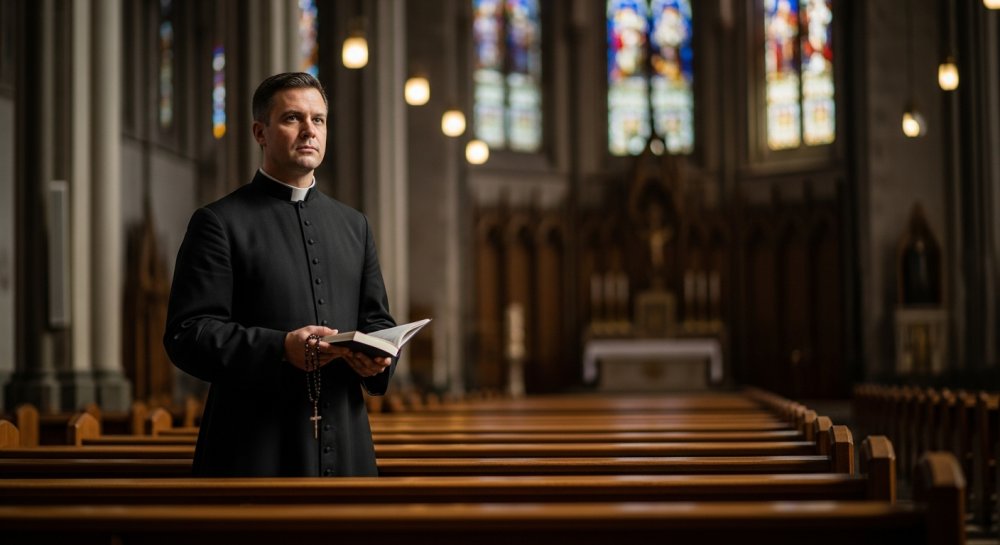
A Roman Catholic priest and exorcist serving in the Diocese of Nashville has sparked conversation among believers by suggesting that certain Hollywood productions may carry spiritual dangers. Father Dan Reehil’s comments come in response to reports surrounding director Steven Spielberg’s upcoming alien-themed film “Disclosure Day.”
According to Father Reehil, the entertainment industry’s power to shape cultural narratives extends beyond mere storytelling. He raised the possibility that some films could be “formally cursed,” a concept that challenges Christians to be more discerning about the media they consume and the messages they allow into their homes.
Father Dan Reehill: “There could be a curse over the Disclosure Day Movie for all who watch it could have demons provoke them” ????????
“Steven Spielberg’s Disclosure Day movie could be consecrated to Satan, Demons could be attached to the movie & those who watch it could have… pic.twitter.com/M8YSozV1hn
— Interstellar (@InterstellarUAP) June 10, 2026
The priest’s concerns center on claims that Spielberg himself suggested his new film might “shake the faith of Christians.” Such a statement, if accurate, represents a direct acknowledgment from Hollywood that entertainment can be weaponized against religious belief. For families committed to raising children in the faith, this admission should serve as a wake-up call about the spiritual battlefield that modern media has become.
The timing of Father Reehil’s warning coincides with broader cultural shifts in which traditional Christian values face increasing opposition from entertainment elites. From television shows that mock biblical teachings to films that present alternative cosmologies as fact, believers find themselves navigating an increasingly hostile media landscape.
The concept of “cursed” media may sound extreme to modern ears, but it reflects an ancient understanding of spiritual warfare that dates back to Scripture itself. The Apostle Paul warned believers to “test everything” and “hold fast what is good,” counsel that applies as much to entertainment choices as to any other area of life.
Father Reehil’s role as an exorcist gives him unique insight into the spiritual realm and the ways demonic influence can manifest in culture. Exorcists report that possession and oppression cases often involve victims who have opened themselves to darkness through occult practices, including consuming media that glorifies evil or presents false spiritual realities.
The alien narrative in particular has become a favorite tool of those seeking to undermine biblical faith. By presenting extraterrestrial life as fact and suggesting advanced alien civilizations visited Earth in ancient times, such stories attempt to explain away biblical miracles and reduce divine revelation to primitive misunderstanding of alien technology.
Christian parents and church leaders should take seriously the responsibility to guard their households against media that seeks to erode faith. While not every film requires formal exorcism, discernment demands that believers evaluate entertainment through a biblical lens and reject content that contradicts God’s truth.
The entertainment industry’s influence on American culture cannot be overstated. When directors and producers openly acknowledge their intent to challenge Christian belief, they reveal an agenda that goes beyond artistic expression to ideological warfare. Believers must respond not with fear but with wisdom, choosing to fill their minds with truth rather than deception.
Father Reehil’s warning also touches on recent controversies within the Catholic Church regarding the removal of a Washington D.C.-based exorcist, though details of that situation remain unclear. What is clear is that the ministry of deliverance remains relevant in an age when spiritual darkness masquerades as enlightenment and entertainment.
For Christians committed to protecting their faith and their families, the message is simple: be vigilant. The battle for hearts and minds happens not only in churches and schools but in living rooms where families gather to watch what Hollywood produces. What we allow into our eyes and ears shapes our souls, and we will give an account for the choices we make.
Let us know what you think, please share your thoughts in the comments below.


-

 Self-Reliance1 year ago
Trump’s Bold Move Uncovers Massive Social Security Fraud
-

 Faith1 year ago
New Clues Emerge in Noah’s Ark Mystery
-

 News1 year ago
Governor Walz’s Rhetoric Sparks National Controversy
-

 News1 year ago
Mel Gibson’s ‘The Passion of the Christ’ Sequel Title Announced
-

 Family1 year ago
Texas Lawmaker Targets Furries in Schools
-

 Freedom1 year ago
Maine Lawmaker Challenges Sports Fairness Controversy
-

 Family1 year ago
Canada’s Controversial Policy Sparks Ethical Debate
-
Faith7 months ago
Congress Hears Pleas for Nigerian Christians