
Faith
Catholic Exorcist Warns Steven Spielberg Film Could Threaten Christian Faith

Faith Facts
- A Tennessee-based Catholic exorcist raised concerns about Steven Spielberg’s new alien film potentially undermining Christian beliefs
- Father Dan Reehil suggested certain films could carry spiritual curses that influence viewers
- The controversy emerges as Hollywood increasingly produces content that challenges traditional religious worldviews
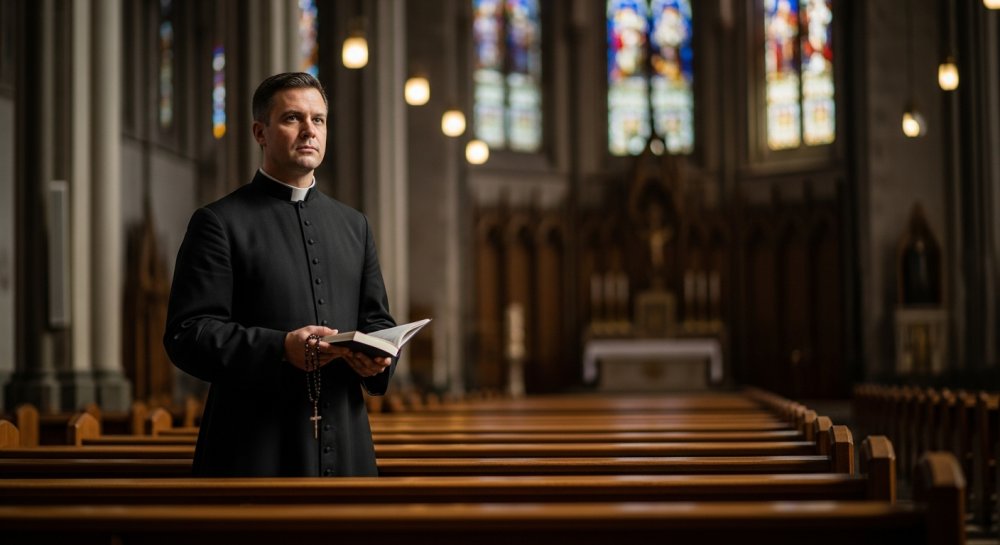
A Roman Catholic priest and exorcist serving in the Diocese of Nashville has sparked conversation among believers by suggesting that certain Hollywood productions may carry spiritual dangers. Father Dan Reehil’s comments come in response to reports surrounding director Steven Spielberg’s upcoming alien-themed film “Disclosure Day.”
According to Father Reehil, the entertainment industry’s power to shape cultural narratives extends beyond mere storytelling. He raised the possibility that some films could be “formally cursed,” a concept that challenges Christians to be more discerning about the media they consume and the messages they allow into their homes.
Father Dan Reehill: “There could be a curse over the Disclosure Day Movie for all who watch it could have demons provoke them” ????????
“Steven Spielberg’s Disclosure Day movie could be consecrated to Satan, Demons could be attached to the movie & those who watch it could have… pic.twitter.com/M8YSozV1hn
— Interstellar (@InterstellarUAP) June 10, 2026
The priest’s concerns center on claims that Spielberg himself suggested his new film might “shake the faith of Christians.” Such a statement, if accurate, represents a direct acknowledgment from Hollywood that entertainment can be weaponized against religious belief. For families committed to raising children in the faith, this admission should serve as a wake-up call about the spiritual battlefield that modern media has become.
The timing of Father Reehil’s warning coincides with broader cultural shifts in which traditional Christian values face increasing opposition from entertainment elites. From television shows that mock biblical teachings to films that present alternative cosmologies as fact, believers find themselves navigating an increasingly hostile media landscape.
The concept of “cursed” media may sound extreme to modern ears, but it reflects an ancient understanding of spiritual warfare that dates back to Scripture itself. The Apostle Paul warned believers to “test everything” and “hold fast what is good,” counsel that applies as much to entertainment choices as to any other area of life.
Father Reehil’s role as an exorcist gives him unique insight into the spiritual realm and the ways demonic influence can manifest in culture. Exorcists report that possession and oppression cases often involve victims who have opened themselves to darkness through occult practices, including consuming media that glorifies evil or presents false spiritual realities.
The alien narrative in particular has become a favorite tool of those seeking to undermine biblical faith. By presenting extraterrestrial life as fact and suggesting advanced alien civilizations visited Earth in ancient times, such stories attempt to explain away biblical miracles and reduce divine revelation to primitive misunderstanding of alien technology.
Christian parents and church leaders should take seriously the responsibility to guard their households against media that seeks to erode faith. While not every film requires formal exorcism, discernment demands that believers evaluate entertainment through a biblical lens and reject content that contradicts God’s truth.
The entertainment industry’s influence on American culture cannot be overstated. When directors and producers openly acknowledge their intent to challenge Christian belief, they reveal an agenda that goes beyond artistic expression to ideological warfare. Believers must respond not with fear but with wisdom, choosing to fill their minds with truth rather than deception.
Father Reehil’s warning also touches on recent controversies within the Catholic Church regarding the removal of a Washington D.C.-based exorcist, though details of that situation remain unclear. What is clear is that the ministry of deliverance remains relevant in an age when spiritual darkness masquerades as enlightenment and entertainment.
For Christians committed to protecting their faith and their families, the message is simple: be vigilant. The battle for hearts and minds happens not only in churches and schools but in living rooms where families gather to watch what Hollywood produces. What we allow into our eyes and ears shapes our souls, and we will give an account for the choices we make.
Let us know what you think, please share your thoughts in the comments below.


Faith Facts
- Three church leaders at the Asia Conference on Church & Mission called for a shift from program-focused ministry to intentional disciple-making cultures
- Leaders argued that measuring success by attendance and activity has produced spiritually shallow Christians across the global church
- The panel emphasized that only deliberate, relational, and intergenerational discipleship can restore spiritual depth to evangelical congregations
On the final day of the Asia Conference on Church & Mission, a powerful challenge echoed through the halls: the evangelical church has been counting the wrong things. Three prominent church leaders from across Asia united in a clarion call for congregations and denominational networks to abandon their fixation on attendance numbers and program metrics.
Instead, they urged a return to what Jesus actually commanded — making disciples. The panel’s central thesis was both simple and convicting: the global church’s failure to prioritize genuine discipleship has resulted in a generation of believers who are spiritually shallow, lacking the deep roots needed to weather cultural storms and live out authentic faith.
The leaders emphasized that this isn’t merely about tweaking existing church programs or adding another ministry initiative to an already crowded calendar. What’s needed is a fundamental transformation in how churches define and measure success — moving from attraction-based models focused on weekend services to relational ecosystems where spiritual multiplication happens organically through life-on-life mentorship.
This shift, they argued, must happen at every level: within individual congregations, across denominational structures, and throughout national alliance networks. The problem isn’t a lack of religious activity but rather activity divorced from the biblical mandate to “make disciples of all nations.”
The panel’s call reflects a growing recognition among evangelical leaders worldwide that filling seats and running programs can create an illusion of health while masking spiritual malnutrition. True discipleship requires intentionality — believers who invest time, wisdom, and their lives into others, passing on not just information but transformation.
An intergenerational approach stood central to their vision. Rather than age-segregated ministry silos, they advocated for models where seasoned believers mentor younger Christians, creating chains of spiritual reproduction that mirror the Apostle Paul’s instruction to Timothy: “The things you have heard me say in the presence of many witnesses entrust to reliable people who will also be qualified to teach others.”
For American evangelicals facing similar challenges — declining attendance, cultural marginalization, and questions about generational transfer of faith — this message from Asian church leaders carries particular weight. As the demographic and cultural landscape shifts beneath our feet, the temptation is to double down on programming and marketing strategies.
But these leaders propose something different: a return to the ancient pattern of disciple-making that built the early church without buildings, budgets, or professional clergy. It’s a model that prioritizes depth over breadth, transformation over information, and spiritual multiplication over numerical addition.
The implications are profound. Churches would need to rethink budget priorities, staff structures, and how they celebrate ministry wins. Pastors would need to model discipleship personally rather than merely manage programs professionally. And congregants would need to shift from consumer mindsets to disciple-maker identities.
This isn’t a rejection of the local church or organized ministry. Rather, it’s a recalibration — ensuring that all our ecclesiastical structures and activities serve the ultimate mission Jesus gave: making disciples who make disciples. As these Asian leaders demonstrated, sometimes the most important questions aren’t “How many?” but “How deep?” and “Are they multiplying?”
The challenge is clear: will evangelical churches have the courage to measure what Jesus measured and build what He commanded us to build? Or will we continue optimizing systems that produce crowds without cultivating the disciples who will carry faith to the next generation?
Let us know what you think, please share your thoughts in the comments below.
Faith Facts
- Christ’s Church of the Valley won a competitive auction with a $9 million bid for nearly 19 acres in Gilbert, Arizona
- The megachurch currently operates 18 campuses across Arizona and will build its 19th on the newly acquired property
- The land acquisition represents a strategic expansion for one of the state’s largest nondenominational Christian congregations
A thriving Arizona megachurch has taken a major step forward in its mission to reach more souls across the Southwest. Christ’s Church of the Valley secured nearly 19 acres of prime land through a competitive auction process, demonstrating the continued growth and vitality of Bible-believing churches in America.
The nondenominational Christian megachurch submitted the winning bid of $9 million at an auction conducted by the City of Gilbert, Arizona. This investment will pave the way for the construction of the church’s 19th campus, expanding its already substantial footprint across the state.
With 18 existing campuses spread throughout Arizona, Christ’s Church of the Valley has built a reputation as one of the region’s most influential evangelical congregations. The church’s multi-site model has enabled it to reach communities across the state with the Gospel message, providing accessible worship opportunities for families seeking biblical teaching and traditional Christian values.
The land purchase reflects a broader trend of evangelical churches investing in physical infrastructure despite cultural pressures and the rise of online worship options. Traditional church communities continue to recognize the irreplaceable value of in-person fellowship, corporate worship, and face-to-face ministry that strengthens families and communities.
Gilbert, one of the fastest-growing cities in America, has become a hub for family-oriented development and faith-based institutions. The city’s demographic profile—marked by young families, strong schools, and conservative values—aligns well with the church’s mission and outreach strategy.
The $9 million investment demonstrates the financial stewardship and commitment of Christ’s Church of the Valley’s congregation. Such substantial investments in kingdom work reflect a congregation willing to sacrifice and invest in the future of Christian witness in their communities.
Multi-site church models have become increasingly popular among evangelical congregations seeking to maximize their reach while maintaining doctrinal consistency and leadership accountability. This approach allows churches to establish a presence in multiple communities without fragmenting into entirely separate entities, preserving unity while expanding ministry impact.
As secularism and progressive ideologies continue to challenge traditional Christian values in the public square, the expansion of Bible-teaching churches represents a beacon of hope for conservatives who cherish religious freedom and the foundational role of faith in American life. Churches like Christ’s Church of the Valley are not retreating but advancing, investing in the next generation of Christian witness.
The acquisition process through a city auction also highlights the transparent and legal manner in which the church conducted its business, operating within established civic frameworks and contributing to local tax bases and community development.
Details about the timeline for construction and the anticipated opening of the 19th campus have not yet been released, but the land purchase marks a significant milestone in the church’s ongoing expansion efforts.
Let us know what you think, please share your thoughts in the comments below.
Faith Facts
- Ebola outbreaks continue in the Democratic Republic of Congo and Uganda, presenting unique challenges for Christian ministry and pastoral care
- Former World Evangelical Alliance chairman offers biblical wisdom on balancing Christian compassion with practical safety concerns
- The guidance challenges believers to consider what faithful witness looks like amid genuine physical danger
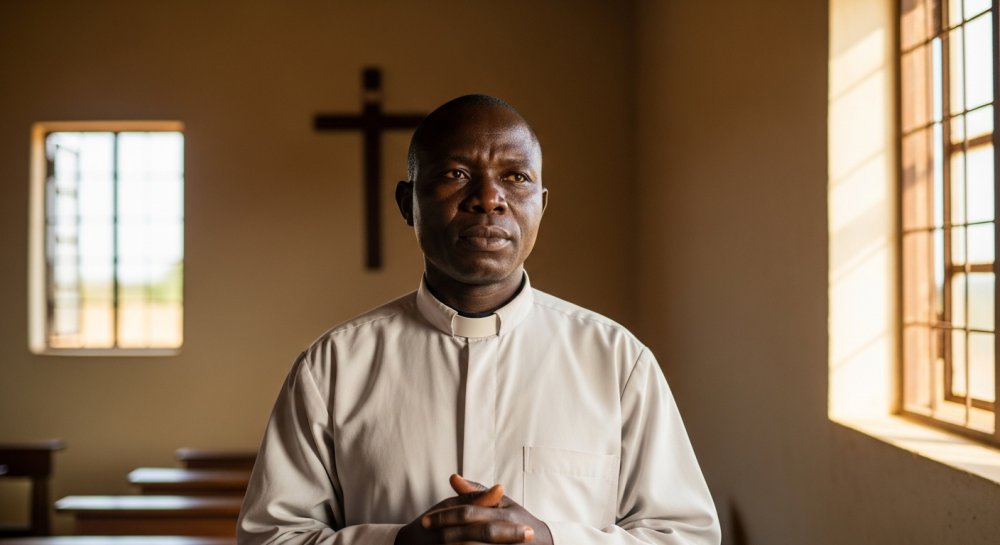
The spreading Ebola crisis in Central Africa has confronted the global Church with a profound question: How do we show Christ’s love when doing so may cost us our lives?
A senior evangelical leader with extensive international ministry experience is urging pastors and church leaders to approach the deadly disease with both faith and wisdom. His counsel, delivered with pastoral sensitivity, acknowledges the tension between our call to serve the suffering and our responsibility to protect our families and congregations.
The former Chairman of the World Evangelical Alliance’s International Council has provided guidance that may surprise some believers. Rather than simply encouraging Christians to rush into affected areas without precaution, the pastoral reflection emphasizes the need for discernment, preparation, and strategic thinking alongside sacrificial love.
This balanced approach recognizes that loving our neighbor doesn’t require reckless endangerment, but it also doesn’t permit fearful withdrawal from those in desperate need. The Church has historically been at the forefront of caring for plague victims and disease sufferers, often at great personal cost to its members.
The Ebola virus presents unique challenges because of its high mortality rate and the way it spreads through bodily fluids. Healthcare workers and family members of the sick face extraordinary risks when providing care, yet Christian values call us to consider the needs of the vulnerable and suffering.
Many missionaries and medical personnel have already given their lives serving Ebola patients in Africa. Their sacrifice stands as a testament to the power of the Gospel to overcome even the fear of death. These modern martyrs followed in the footsteps of countless believers throughout history who have risked everything to demonstrate Christ’s love.
The pastoral guidance being offered doesn’t diminish the importance of such sacrifice. Instead, it seeks to help church leaders make wise decisions about how to engage in ministry amid genuine danger, ensuring that Christian witness remains both bold and prudent.
This situation calls for prayer, not only for those suffering from the disease but also for the pastors, missionaries, and healthcare workers who must navigate these difficult decisions. The Church’s response to Ebola will speak volumes about the authenticity of our faith and our commitment to the Gospel’s call to love our neighbor.
Let us know what you think, please share your thoughts in the comments below.


-

 Self-Reliance1 year ago
Trump’s Bold Move Uncovers Massive Social Security Fraud
-

 Faith1 year ago
New Clues Emerge in Noah’s Ark Mystery
-

 News1 year ago
Governor Walz’s Rhetoric Sparks National Controversy
-

 News1 year ago
Mel Gibson’s ‘The Passion of the Christ’ Sequel Title Announced
-

 Family1 year ago
Texas Lawmaker Targets Furries in Schools
-

 Freedom1 year ago
Maine Lawmaker Challenges Sports Fairness Controversy
-

 Family1 year ago
Canada’s Controversial Policy Sparks Ethical Debate
-
Faith7 months ago
Congress Hears Pleas for Nigerian Christians