Faith
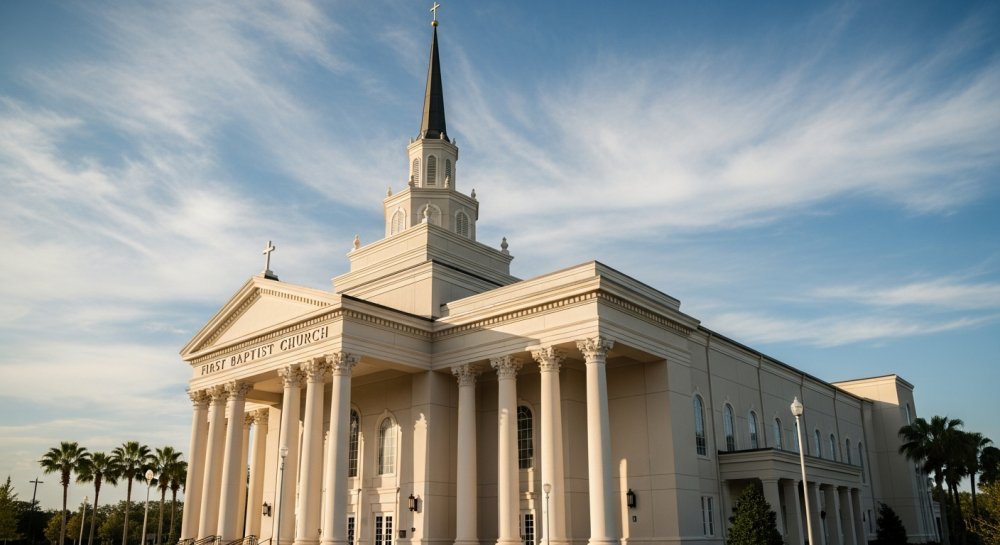
Florida Businessman at Center of Church Membership Debate Passes Away
Faith Facts
- Joe Mills, a Florida business owner who attended First Baptist Church Orlando, has died
- Mills sparked controversy by claiming church membership while in a same-sex relationship
- The situation raised questions about church membership standards and biblical teaching on marriage
A Florida businessman whose attendance at a prominent Southern Baptist congregation became the center of a national debate over church membership and biblical standards has passed away.
Joe Mills regularly attended First Baptist Church Orlando, one of the largest Southern Baptist congregations in the state. His presence at the church generated significant discussion within the broader Christian community about membership requirements and the church’s adherence to traditional biblical teachings.
The controversy centered on Mills’ claim of membership at the megachurch while he was openly involved in a same-sex relationship. This raised important questions for many believers about how churches should balance welcoming all people with maintaining biblical standards for church membership.
First Baptist Church Orlando, like most Southern Baptist churches, holds to traditional Christian teaching that defines marriage as a covenant between one man and one woman. This belief is rooted in Scripture passages throughout both the Old and New Testaments.
The situation highlighted ongoing tensions within American Christianity as churches navigate cultural shifts while seeking to remain faithful to biblical principles. Many congregations face similar challenges in determining how to minister to individuals whose lifestyles conflict with traditional Christian teaching while upholding doctrinal standards.
The debate over Mills’ status at the church reflected broader conversations happening across denominational lines about church discipline, membership requirements, and how congregations should respond to cultural changes regarding sexuality and marriage.
Southern Baptist churches maintain autonomy in their governance while generally adhering to shared doctrinal statements. The denomination’s official position affirms marriage as exclusively between one man and one woman, based on their understanding of biblical teaching.
Questions of church membership and biblical standards remain important discussions for congregations seeking to maintain doctrinal integrity while demonstrating Christ’s love to all people. These conversations require wisdom, grace, and firm grounding in Scripture.
Let us know what you think, please share your thoughts in the comments below.
Faith
Worship Leader Stops Concert Mid-Performance for Urgent Spiritual Intervention
Faith Facts
- Grammy-winning worship leader Brandon Lake halted his performance at CMA Fest’s Cowboy Church to pray for a woman who collapsed in the crowd
- Lake told thousands gathered that the woman’s well-being was ‘more important’ than continuing the concert
- The incident demonstrates how Christian artists prioritize ministry and compassion over entertainment
In a powerful display of faith-first priorities, Grammy-winning worship leader Brandon Lake brought his CMA Fest Cowboy Church concert to an immediate halt Sunday when a woman in the crowd suffered a medical emergency. The singer’s response serves as a reminder of what truly matters in Christian ministry.
Lake was performing before a packed audience along Nashville’s riverfront when the emergency unfolded. Rather than continue with the show while medical personnel attended to the situation, the worship leader made the decision to stop everything.
“More important,” Lake told the gathered crowd, referring to the woman’s condition and the need for prayer over continuing the performance.
The moment exemplifies the heart of Christian ministry — recognizing that people’s physical and spiritual needs take precedence over entertainment value or keeping to a schedule. In an industry often criticized for putting production over people, Lake’s response stood in stark contrast.
CMA Fest’s Cowboy Church has become a beloved tradition at the annual country music festival, providing a space where faith and music intersect. The Sunday morning services regularly draw thousands who gather for worship before the day’s secular festivities begin.
Lake, known for worship anthems like “Gratitude” and “House of Miracles,” has built his ministry on authentic faith expression. His immediate response to pause for prayer rather than delegate the emergency to staff while continuing to perform demonstrates the genuine nature of his calling.
The worship leader’s decision resonated with attendees who recognized they were witnessing ministry in action, not just a concert. In a culture that increasingly prioritizes the show over substance, Lake’s choice to stop and pray sent a clear message about kingdom priorities.
Details about the woman’s condition were not immediately available, but the incident serves as a powerful testimony to the Christian community about maintaining proper priorities even in high-profile moments.
This kind of authentic Christian witness — choosing compassion and prayer over performance — is exactly what sets apart believers who truly walk their faith from those who simply use Christian themes for commercial appeal.
Let us know what you think, please share your thoughts in the comments below.

Faith
Police Ignored Dying Man Over Alleged Racist Remark
Faith Facts
- Henry Nowak died pleading for help while police reportedly prioritized allegations of a racist remark over his medical emergency
- Christian commentators argue that modern identity politics have created dangerous racial partiality that contradicts biblical teaching on human dignity
- The incident highlights growing concerns about how progressive race policies are impacting both law enforcement response and Christian witness
A tragic death in Britain has sparked urgent conversations among Christians about the dangerous consequences of racial partiality in modern society. Henry Nowak lost his life while police officers allegedly focused on accusations that he had made a racist comment, rather than attending to his desperate pleas for medical assistance.
Jamie Bambrick, a Christian commentator, is using this heartbreaking case to call believers back to biblical principles of human dignity and impartial justice. He contends that both the Church and wider culture have been swept up in identity politics that contradict scriptural teaching about the equal value of all people made in God’s image.
The circumstances surrounding Nowak’s death raise troubling questions about law enforcement priorities. According to reports, officers on the scene were more concerned with allegations of offensive speech than with a man’s deteriorating physical condition.
This case exemplifies what many Christian conservatives have been warning about for years: that progressive race policies, while claiming to promote justice, actually create new forms of prejudice and discrimination. When authorities treat accusations of racism as more urgent than a person’s life-threatening medical emergency, society has lost its moral compass.
Scripture is clear that God shows no partiality and commands His people to do the same. James 2:9 warns, “But if you show partiality, you are committing sin and are convicted by the law as transgressors.” The Apostle Peter declared that “God shows no partiality, but in every nation anyone who fears him and does what is right is acceptable to him” (Acts 10:34-35).
Christian leaders emphasizing these truths are not dismissing the reality of racism or the importance of treating all people with dignity. Rather, they’re highlighting that the solution to racial prejudice is not more partiality in a different direction, but rather the biblical call to impartial justice and love for all neighbors.
The Church faces a critical moment. Many congregations have embraced secular frameworks for understanding race and justice that contradict biblical teaching. These ideologies often emphasize group identity over individual worth, collective guilt over personal responsibility, and preferential treatment over equal justice.
Bambrick’s call for Christians to return to Scripture on these matters comes at a time when many believers feel pressured to adopt progressive stances on race to avoid being labeled as insensitive or worse. Yet compromising biblical truth for cultural acceptance has never been the path of faithful Christianity.
The tragedy of Henry Nowak’s death should serve as a wake-up call. When society becomes so obsessed with policing speech and thought that it neglects basic human needs and safety, something has gone terribly wrong. Christians must stand firm on the biblical teaching that every human life has intrinsic value because each person bears the image of God.
This doesn’t mean ignoring genuine injustice or failing to address real instances of racism when they occur. It means approaching these issues with biblical wisdom rather than adopting worldly ideologies that ultimately undermine human dignity and equal justice.
The path forward requires courage. Christians must be willing to speak biblical truth even when it contradicts popular narratives. They must demonstrate love and respect for all people while refusing to embrace frameworks that categorize individuals primarily by race or other group identities.
As believers navigate these challenging cultural waters, they can take comfort in knowing that God’s Word provides clear guidance. The gospel message transcends racial and ethnic boundaries, offering redemption and reconciliation to all who believe. The Church at its best has always been a place where people of every background find unity in Christ.
Henry Nowak’s death is a sobering reminder of what happens when society loses sight of fundamental truths about human dignity and justice. May his tragic story prompt Christians and all people of goodwill to reject partiality in all its forms and embrace the biblical vision of impartial justice and love for all.
Let us know what you think, please share your thoughts in the comments below.

Faith
When Technology Replaces Truth: The Church’s Growing Communication Crisis
Faith Facts
- AI-generated social media content depicting Jesus performing fantastical miracles is spreading rapidly across Christian digital platforms
- Church leaders warn that sensationalized digital content and insider religious jargon are undermining genuine gospel communication
- The crisis reflects a deeper problem: Christians increasingly struggle to communicate biblical truth in accessible, authentic ways
A troubling trend is sweeping through Christian social media, and it reveals a far deeper problem than just poor digital content. Artificial intelligence-generated videos showing Jesus performing impossible feats—like resurrecting dead puppies—are proliferating online, packaged as inspirational content for believers.
But these fantastical depictions represent something more serious than bad taste. They point to what may be the Church’s most pressing challenge in modern America: an inability to communicate the unchanging truths of the gospel in ways that resonate with real people facing real struggles.
The problem extends beyond AI gimmicks. Walk into many churches today, and you’ll hear sermons packed with insider language—what critics call “Christianese”—that leaves newcomers confused and longtime believers spiritually unfed. Terms like “hedge of protection,” “traveling mercies,” and “unspoken prayer request” create barriers rather than bridges to understanding God’s Word.
This communication failure has serious consequences. When the Church relies on sensationalism or impenetrable jargon, it obscures the simple, powerful message of salvation through Jesus Christ. The gospel doesn’t need artificial enhancement or complicated terminology—it needs clear, faithful proclamation.
The apostle Paul understood this principle. Writing to the Corinthians, he deliberately avoided “lofty speech or wisdom” when proclaiming the testimony of God. His focus remained on “Jesus Christ and him crucified,” delivered in terms his audience could understand.
Today’s digital age presents unique challenges. Social media algorithms reward engagement over accuracy, spectacle over substance. Christian content creators face pressure to compete with entertainment-focused platforms, sometimes compromising biblical integrity in pursuit of views and shares.
The AI Jesus phenomenon exemplifies this problem perfectly. These computer-generated images reduce the Son of God to a cartoon character, performing tricks to impress viewers rather than calling sinners to repentance. They trivialize the actual miracles recorded in Scripture, which served specific purposes in revealing Christ’s divine nature and authority.
Meanwhile, churches that rely heavily on insider language create their own barriers. New believers and seekers find themselves lost in a fog of Christian subcultural references. The message that should be accessible to all becomes the exclusive property of those who know the code.
The solution isn’t to water down doctrine or abandon theological precision. Rather, faithful Christians must recover the art of clear communication—explaining biblical truth in terms that connect with people’s lived experiences while remaining anchored in Scripture.
Jesus himself modeled this approach. He spoke in parables that used everyday images—seeds, sheep, coins—to illustrate eternal truths. He met people where they were, addressing their questions and concerns with wisdom that was both accessible and profound.
The early Church continued this pattern. When Peter preached at Pentecost, thousands understood and responded. When Paul addressed the philosophers in Athens, he began with their own cultural references before pointing them to the one true God.
Churches today must reclaim this biblical model of communication. That means preaching sermons that explain Scripture clearly, without assuming everyone knows the religious shorthand. It means creating content that honors truth over trendiness, substance over spectacle.
It also requires discernment about technology’s proper role in ministry. Digital tools can serve the gospel, but they must never replace authentic human connection or distort the message itself. AI-generated content that treats Jesus as a special-effects generator serves no one’s spiritual growth.
The stakes couldn’t be higher. America faces a spiritual crisis, with rising numbers rejecting Christianity—often based on caricatures rather than accurate understanding. When the Church fails to communicate clearly, it contributes to this confusion.
Believers must commit to speaking truth in love, using language that invites rather than excludes, that clarifies rather than confuses. The gospel message is powerful enough on its own—it doesn’t need gimmicks, and it shouldn’t be hidden behind walls of jargon.
This generation needs Christians who can articulate their faith with both conviction and clarity, who understand that effective communication serves the truth rather than competing with it. The goal isn’t to make the gospel “cool” or “relevant” through artificial means, but to present it faithfully in terms people can understand.
When churches prioritize clear, biblically grounded communication over sensationalism and insider language, they position themselves to reach hearts and change lives. That’s the kind of communication crisis the Church can’t afford to ignore.
Let us know what you think, please share your thoughts in the comments below.

-
Self-Reliance1 year agoTrump’s Bold Move Uncovers Massive Social Security Fraud
-

Faith1 year agoNew Clues Emerge in Noah’s Ark Mystery
-

News1 year agoGovernor Walz’s Rhetoric Sparks National Controversy
-

News1 year agoMel Gibson’s ‘The Passion of the Christ’ Sequel Title Announced
-

Family1 year agoTexas Lawmaker Targets Furries in Schools
-

Freedom1 year agoMaine Lawmaker Challenges Sports Fairness Controversy
-

Family1 year agoCanada’s Controversial Policy Sparks Ethical Debate
-
Faith7 months ago
Congress Hears Pleas for Nigerian Christians