Connect with us

Faith

Sweden’s Cousin Marriage Ban Reveals a Truth About Boundaries

Published

on

Faith Facts

  • Sweden is moving to ban marriage between first cousins, challenging the modern ‘love is love’ narrative that consent alone determines relationship boundaries.
  • Christian teachings have long recognized that healthy societies require moral guardrails beyond mere consent in defining appropriate relationships.
  • The debate exposes the logical inconsistency in progressive ideology that claims no relationship boundaries exist while simultaneously advocating for some restrictions.

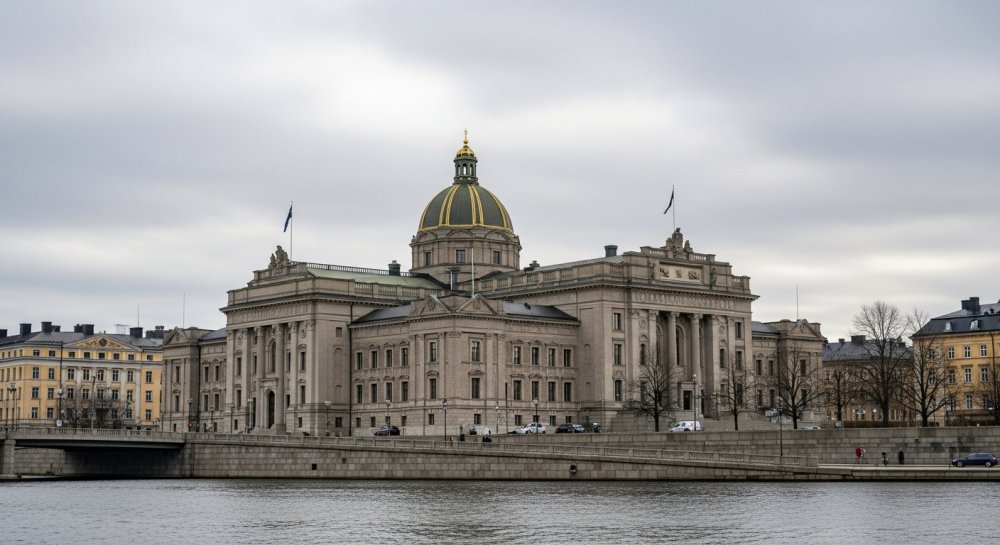
Sweden’s recent decision to ban marriage between first cousins is sparking an important conversation about the limits of the “love is love” mantra that has dominated Western culture for the past decade. While progressive activists have insisted that consent is the only boundary needed in relationships, this policy shift reveals a deeper truth that Christianity has understood for millennia: societies thrive when they recognize moral boundaries rooted in human flourishing.

Lois McLatchie Miller, a prominent voice on cultural issues, points out the glaring contradiction in modern relationship ethics. For years, the Pride movement has championed the idea that any consensual relationship should be celebrated without question. Yet even the most progressive societies are now acknowledging that some boundaries must exist beyond consent alone.

The Christian worldview has always maintained that certain relationship structures promote human dignity, family stability, and societal health better than others. This isn’t about restricting love—it’s about recognizing that true love operates within a framework designed for our good. Biblical teachings on marriage and family weren’t arbitrary restrictions but wisdom passed down through revelation and generations of human experience.

Sweden’s policy shift raises questions that many in the secular world have been reluctant to address. If consent is truly the only standard, on what basis can any relationship be restricted? If “love is love” without qualification, why draw lines at all? The inability of progressive ideology to answer these questions consistently demonstrates the poverty of a worldview built solely on subjective feelings rather than objective moral truth.

Traditional Christian values have long recognized that marriage serves purposes beyond the emotional fulfillment of two individuals. It’s the foundational building block of society, the ideal environment for raising children, and a reflection of God’s design for human relationships. When cultures abandon these principles, they’re forced to confront the logical endpoints of their new philosophies—often discovering that those endpoints are uncomfortable or untenable.

The debate over cousin marriage may seem like a narrow issue, but it represents something much larger: the question of whether society can function without shared moral standards rooted in something beyond individual preference. Christianity answers with a resounding yes—moral truth exists, it’s knowable, and it’s essential for human flourishing.

As Western nations continue to grapple with the consequences of abandoning traditional values, moments like Sweden’s policy change offer opportunities for reflection. Perhaps the wisdom preserved through centuries of Christian teaching wasn’t oppressive after all, but protective. Perhaps the boundaries that seemed restrictive were actually the guardrails that allowed freedom to flourish safely.

The conversation around relationship boundaries will undoubtedly continue, but one thing is becoming clear: consent alone cannot bear the weight of defining healthy relationships and stable societies. The search for deeper moral foundations may yet lead many back to the timeless truths found in Scripture and Christian tradition.

Let us know what you think, please share your thoughts in the comments below.

Continue Reading
Click to comment

Leave a Reply

Your email address will not be published. Required fields are marked *

Faith

How One Greek Church Reaches Thousands by Simply Opening Its Doors

Published

on

Faith Facts

  • The Glyfada Church of Christ in Athens holds nine services weekly in five languages to reach refugees from around the world
  • Greece serves as Europe’s gateway for hundreds of thousands of refugees annually from Africa, the Middle East, and war-torn nations
  • Ministers focus on rapid discipleship, knowing many refugees will relocate within months, preparing them to join churches across Europe

ATHENS, GREECE — Jesus commanded His followers to “go and make disciples of all nations” (Matthew 28:19). But in this ancient European capital with deep biblical roots, the nations are coming to them — often as refugees fleeing persecution and war.

Known as a bridge to Europe, Greece has become the most accessible entry point for refugees from Africa and the Middle East. Hundreds of thousands of people of different nationalities pass through the country each year, presenting Churches of Christ with an unprecedented opportunity to share the Gospel with people from closed nations.

The Glyfada Church of Christ adapted to this influx by offering nine services during the week in five languages: Greek, Russian, English, Farsi and Albanian. While some refugees stay in Athens for years, others remain only for months, forcing ministers and missionaries to completely rethink their approach to evangelism and discipleship.

“You’re going to think about, ‘I have this short time so I need to be prepared,'” said Ebrahim Fatahi, a member who helps lead the Farsi and Greek services.

“How to approach them, how to bring them to the church, how to teach them enough that they can understand what is the plan of salvation, to be saved. Then when they leave, to tell them it’s important to be part of the church and then find them a church in other parts of Europe.”

Fatahi himself arrived in Greece in 2017 through Samos Island as a refugee from Iran. Through worshiping and now ministering at the Glyfada congregation, he has witnessed firsthand the dramatic shifts in refugee populations. When Fatahi started worshiping with the church, anywhere from 80 to 150 people attended the Farsi-speaking service.

Attendance — and the general population of Farsi-speaking refugees in Athens — decreased in 2019 partially because many refugees from the 2015 European migrant crisis received papers to move to other countries. Today, Fatahi said, the average attendance at the Farsi service is between 30 and 40 members.

When refugees who become Christians leave for other countries, it is a bittersweet experience for the preachers at Glyfada. They do not witness firsthand the continued growth of new believers, but they do hear reports about what those Christians are accomplishing when they settle in other nations.

“It’s a joy, and it’s sad, and sometimes it’s strange,” Fatahi said.

Overcoming Challenges and Change

Missionaries Keith and Tricia Young, who worship at the Glyfada congregation, learned to adapt to the flow of refugees through Athens when they arrived in October 2021. The couple expected to work exclusively with Farsi-speaking refugees, but when they arrived, there were large numbers of Ukrainian refugees because of the Russia-Ukraine conflict.

The Youngs adapted and began working with the Ukrainian refugees at the church. They later connected with nonprofit Hellenic Ministries and began serving Farsi-speaking refugees in the community.

“We never dreamed that we’d be working with the Ukrainian outreach and the Farsi,” Tricia said.

“The Ukrainian outreach has taken off so much with so many people being baptized and starting to learn more about Jesus.”

The couple attends the Greek, Russian/Ukrainian and Farsi-speaking worship services but acknowledged it has been difficult for all the small groups to feel like one unified congregation. However, Young said that since the COVID-19 pandemic, leaders have encouraged interaction between the ethnic groups, and there is more crossover now. The smallest group at Glyfada is actually the Greek population, but Young said this gives the church more opportunities to evangelize.

“It gives the ministers here other audiences that might be more receptive,” Young said.

“The refugee population has been the most receptive, especially the Iranian population. They were unhappy with what they had at home and they’re looking for something better.”

Tricia Young, who teaches the children’s class during the Farsi service, said some of the children were especially receptive to the Bible lessons because they could personally relate to the stories of displacement and seeking refuge.

“It was traumatic for them when we talked about Jesus. This is the story they know, having to travel, going to Egypt to be in a safe place. They knew that story. It was their story, too.”

The Ebb and Flow of Refugees

The refugees with whom Fatahi and the Youngs work represent a fraction of the hundreds of thousands of people seeking refuge in Greece. According to the International Rescue Committee, there are 214,000 refugees and 20,000 asylum-seekers in the country this year.

Major world events directly influence the number of refugees — and the countries from which they primarily come. Fatahi first witnessed the effects of the 2015 European migrant crisis, when over 821,000 refugees arrived in Europe through Greece.

A few years later, when the COVID-19 pandemic hit, Athens Institute for Education and Research President Gregory T. Papanikos said the government implemented strict border controls, temporarily reducing the flow of refugees and migrants. Next, the Ukrainian refugee population in Greece increased dramatically with the escalation of the Russia-Ukraine war. Papanikos wrote in an October 2022 paper that the Greek government welcomed large numbers of Ukrainian refugees — about 32,600 arrived from January to May 2022 alone.

However, that meant the number of refugees accepted from other countries decreased proportionally. One of the most recent world conflicts that could affect refugees in Greece is the war between Iran and joint U.S.-Israeli forces. However, data from the Ministry of Migration in Asylum does not indicate a significant increase in Iranian refugees yet.

“To my knowledge, there is no clear evidence of (Iranian outmigration because of the war) or at least no official record,” Papanikos said.

“Current reports from international organizations suggest that, despite significant internal displacement within Iran, there has not been a major cross-border exodus so far.”

Leonid Ivanov, Hellenic Ministries’ director of compassion ministry, has served with the nonprofit since 2017 and also observed the flow of refugees through working in the community. Ivanov, who came to Athens as a refugee from eastern Ukraine, said he remembered the years when refugees in Athens were primarily Farsi-speaking, and the nonprofit served over 500 meals daily. Then, he said, the majority were African refugees, and today, there are many Ukrainian refugees.

“The most rewarding (thing) about ministering to the refugee community is to see the transformation in the lives of refugees. Of course, I mean first the spiritual transformation. … It’s great to see how Muslims become Christian. It’s good to see how people can integrate into society, into Athens.”

Whether refugees choose to stay in Greece, like Fatahi, or if they only remain for a few months, the ministers at Glyfada serve however they can — by helping with housing accommodations, food distribution and, most importantly, sharing the Gospel of Jesus Christ.

“Here, they find fellowship,” Glyfada minister Dino Roussos said.

“It’s not just salvation for eternity, which is the most important, but while we’re on this earth, we need to have good fellowship and a good place. This is a refuge for those who are hurting and trying to find the truth.”

Let us know what you think, please share your thoughts in the comments below.
Continue Reading

Faith

California Pastor Faces Cancer With Unwavering Faith in Christ Alone

Published

on

Faith Facts

  • Shane Idleman, founder and lead pastor of Westside Christian Fellowship in Lancaster, California, has been diagnosed with head and neck cancer
  • The pastor has abandoned alternative treatment in Mexico and is placing his complete trust in Jesus Christ for healing
  • Idleman is leaning on his faith and calling on fellow believers to join him in prayer during this trial

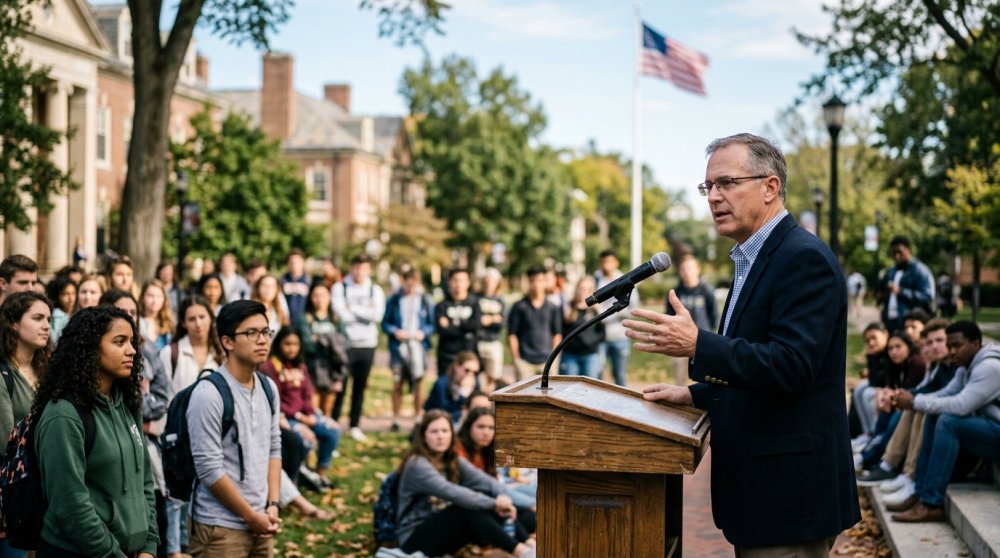
A California pastor is demonstrating extraordinary faith in the face of a serious health diagnosis, choosing to trust God completely rather than pursue alternative medical treatments abroad. Shane Idleman, who founded and leads Westside Christian Fellowship in Lancaster, California, has been diagnosed with head and neck cancer and is now relying entirely on Jesus Christ for his healing journey.

The pastor made the significant decision to abandon alternative cancer treatment in Mexico, instead choosing to place his complete confidence in the Lord. This decision reflects a deep conviction that God’s plan and purpose will prevail, regardless of the medical circumstances he faces.

Idleman’s choice underscores a profound trust in divine providence that resonates with many Christians who believe that ultimate healing comes from the Great Physician. While modern medicine offers various treatment options, the pastor’s decision to lean fully on Jesus demonstrates the kind of radical faith that characterized the early church and biblical heroes.

His diagnosis comes at a time when many Americans are questioning the healthcare establishment and seeking alternatives, yet Idleman’s path is neither conventional medicine nor alternative treatments, but rather complete dependence on Christ. This approach, while personal to his journey, reflects the biblical principle that God is sovereign over sickness and health.

Fellow believers across the nation are being called to join Pastor Idleman in prayer during this challenging season. The power of intercessory prayer and the support of the body of Christ remain central to the Christian response to illness and adversity.

The pastor’s testimony serves as a reminder that faith is not simply believing God can heal, but trusting Him regardless of the outcome. This kind of surrender reflects the prayer of Jesus in the Garden of Gethsemane: “Not my will, but yours be done.”

As Shane Idleman faces this trial, his witness points others toward the same source of strength and hope that has sustained believers throughout church history—the unfailing love and power of Jesus Christ. His journey will undoubtedly encourage many who face their own health battles to seek God’s face and trust in His perfect plan.

Let us know what you think, please share your thoughts in the comments below.
Continue Reading

Faith

Why This Papal Warning About AI Deserves Every Christian’s Attention

Published

on

Faith Facts

  • Pope Leo XIV’s recent encyclical addresses the dangers of unregulated artificial intelligence from a biblical perspective
  • The papal warning emphasizes the unique value of human dignity and points to Jesus Christ as the foundation for understanding humanity
  • Christians across denominational lines are urged to consider the theological implications of AI development without proper moral boundaries

In an era when technology advances faster than our ability to understand its consequences, a surprising voice is calling Christians to attention. Pope Leo XIV’s recent encyclical on artificial intelligence offers wisdom that transcends denominational boundaries and speaks directly to concerns all believers should share.

Evangelicals sometimes move too quickly past theological insights from Catholic leadership, but such dismissiveness may cause us to overlook biblical truth simply because of its source. The Pope’s warning about AI deserves serious consideration from every Christian who cares about the future our children will inherit.

The encyclical presents a thoroughly biblical view of humanity, grounding human dignity in our creation in God’s image and pointing to Jesus Christ as the ultimate measure of what it means to be human. This isn’t Catholic theology at odds with evangelical belief—it’s foundational Christian doctrine that should unite all followers of Christ.

The prospect of completely unregulated artificial intelligence development should concern anyone who values traditional understanding of human uniqueness and God-given purpose. When technology companies pursue innovation without moral guardrails, they risk creating systems that fundamentally challenge what Scripture teaches about human nature and our relationship with our Creator.

The encyclical calls attention to questions every Christian must wrestle with: What happens when machines make life-and-death decisions? How do we preserve human dignity when algorithms increasingly determine human worth? What does it mean to be made in God’s image in an age when artificial intelligence mimics human reasoning?

These aren’t abstract theological puzzles—they’re practical concerns affecting families, churches, and communities right now. From AI systems making healthcare decisions to algorithms shaping what our children see online, the technology is already here, and its influence is growing.

Conservative Christians have long stood for the protection of human life and dignity at every stage. That same commitment demands we think carefully about technologies that could redefine what it means to be human. The Pope’s encyclical provides a framework rooted in Scripture and centuries of Christian thought about human nature.

Rather than viewing this as a Catholic issue, believers should recognize it as a Christian responsibility. When secular tech giants operate without reference to God’s design for humanity, the Church—across all its traditions—must speak with clarity and conviction about the unchanging truth of human dignity and purpose.

The encyclical reminds us that Jesus Christ remains the perfect revelation of humanity as God intended. Any technology that obscures that truth or diminishes the unique status of human beings created in God’s image deserves our careful scrutiny and, where necessary, our opposition.

This isn’t about resisting progress or fearing innovation. It’s about ensuring that technological advancement serves human flourishing as God defines it, not as Silicon Valley executives or globalist elites decide. It’s about protecting the biblical understanding of humanity that has guided Western civilization for two millennia.

Christians of all backgrounds can find common ground in defending human dignity against technologies that threaten to reduce people to data points or algorithms. The Pope’s warning provides an opportunity for evangelical and Catholic believers to stand together on biblical principles that transcend our differences.

In a rapidly changing world, the unchanging truth of Scripture offers the only reliable foundation for navigating new challenges. When that truth is articulated clearly—regardless of the messenger—faithful Christians should listen, evaluate the message against God’s Word, and respond accordingly.

The AI revolution won’t wait for the Church to get its act together. The time for Christians to engage these questions thoughtfully and biblically is now, before secular ideologies fill the vacuum with answers that contradict everything Scripture teaches about human nature and dignity.

Let us know what you think, please share your thoughts in the comments below.
Continue Reading

Trending