
News
Federal Judge Keeps Post After Private Reprimand for Workplace Misconduct


Faith Facts
- A federal judge who engaged in an extramarital affair with a law enforcement officer in her chambers during work hours received only a private reprimand and remains on the bench.
- The misconduct occurred within earshot of court staff, raising serious questions about workplace integrity and moral accountability in the federal judiciary.
- Christian leaders and conservatives continue to advocate for higher moral standards among public officials, emphasizing that those who hold positions of public trust should exemplify virtue and respect for the sanctity of marriage.
A federal judge who engaged in an extramarital affair with a high-ranking law enforcement officer is still serving on the bench after receiving only a “private reprimand” for her actions, according to recent reports. The inappropriate relationship included sexual encounters in her chambers during work hours, reportedly within earshot of court staff.
The revelation has sparked concern among those who believe that judges, entrusted with upholding the law and dispensing justice, should themselves be held to the highest standards of personal and professional conduct. For many Americans who value traditional marriage and moral integrity, the lenient response to this serious breach raises troubling questions about accountability in the federal judiciary.
The extramarital affair represents not only a violation of marital vows but also a profound breach of professional ethics. Federal judges are expected to maintain the dignity of their office and conduct themselves in a manner that inspires public confidence in the judicial system. Engaging in sexual activity in the workplace during business hours fundamentally undermines that trust.
The fact that court staff were aware of the inappropriate conduct adds another layer of concern. Employees who witnessed or overheard these activities were placed in an uncomfortable and potentially compromising position, forced to work in an environment where their superior was openly violating professional boundaries.
The decision to issue only a private reprimand has drawn criticism from advocates of judicial accountability. Unlike a public censure or removal from the bench, a private reprimand allows the judge to continue serving with minimal consequences. Critics argue that such a light response sends the wrong message about the seriousness of ethical violations and marital infidelity among those in positions of authority.
For Christian conservatives who view marriage as a sacred covenant before God, adultery is not merely a personal failing but a serious moral transgression. The biblical standard is clear: those who hold positions of leadership and judgment should be “above reproach,” exemplifying the virtues they are called to uphold in society.
The situation also highlights a broader cultural concern about the erosion of moral standards in public life. When judges, law enforcement officials, and other public servants engage in behavior that violates fundamental principles of fidelity and integrity, it weakens the moral fabric of the nation and diminishes respect for institutions that depend on public trust.
Some observers have noted that if this judge had been subject to the same standards applied in many private sector workplaces or even some state judicial systems, the consequences would likely have been far more severe. The apparent double standard raises questions about whether federal judges enjoy a level of protection from accountability that is inconsistent with the principles of equal justice under law.
Moving forward, advocates for judicial reform are calling for greater transparency in the disciplinary process for federal judges. They argue that misconduct of this nature should be addressed through public proceedings that allow citizens to see that justice is being served and that those who violate ethical standards face meaningful consequences.
The case serves as a reminder that character matters, especially for those entrusted with making decisions that affect the lives and liberties of others. As Americans continue to grapple with questions about the moral direction of the nation, incidents like this underscore the importance of holding public officials to high standards of personal conduct and professional integrity.
Let us know what you think, please share your thoughts in the comments below.


Faith Facts
- Scripture teaches that both men and women are created in the image of God and hold equal dignity and worth before Him.
- God has ordained different roles for men and women within the family and the church, yet both are called to honor one another in love and service.
- Christian tradition has long upheld the importance of ordered liberty, including the protection of family, faith, and the rule of law under the Constitution.
A new extremism has taken hold in parts of the Right, and it’s spreading fast among Gen Z men. Conservatives should reject it, not rebrand it as the movement’s future.
The proposal to repeal the Nineteenth Amendment is not rooted in the principles of limited government or constitutional fidelity. It is a radical departure from the American tradition that conservatives have long defended.
Conservatism has always sought to preserve the institutions that sustain a free society, including the family and the constitutional order. Efforts to strip voting rights from women undermine that heritage and invite division rather than unity.
The American founding was built on the recognition that rights come from the Creator, not from government. Expanding or restricting the franchise must be weighed carefully against the principles of ordered liberty and moral responsibility.
Christian conservatives have consistently called for policies that strengthen the family and encourage fathers and mothers to fulfill their God-given roles. Returning to first principles means defending the Constitution as written, not rewriting it to settle cultural grievances.
Let us know what you think, please share your thoughts in the comments below.

Faith Facts
- Spain’s Council of Ministers approved a Royal Decree on September 22 recognizing decades of service by evangelical pastors as valid Social Security contributions.
- The measure finally grants retired evangelical ministers the right to receive pensions after years of appeals and legal delays.
- Faith-based communities across Spain welcome the ruling as a long-overdue affirmation of religious liberty and equal treatment under the law.
The Spanish government has taken an important step toward justice for evangelical ministers who faithfully served their congregations for decades without proper pension coverage. The Royal Decree approved by the Council of Ministers on Tuesday, September 22, establishes the procedure for recognizing the work these pastors performed before their inclusion in the General Scheme in 1999.
For many years, evangelical pastors labored without the same social protections afforded to other workers, leaving them without pensions in their retirement years. The new decree finally corrects this oversight and acknowledges their faithful service as legitimate contributions to Spain’s Social Security system.
“We thank the Lord for this recognition of the labor of so many faithful servants,” said one evangelical leader following the announcement.
The decision comes after decades of appeals from affected pastors and their families, who sought equal treatment under the law. Christian communities across Spain view the ruling as a victory for religious freedom and fairness.
“This decree restores dignity to those who gave their lives in service to the Gospel,” noted a representative of Spain’s evangelical alliance.
Let us know what you think, please share your thoughts in the comments below.
Faith Facts
- Highland Park United Methodist Church in Dallas maintains its dispute with the North Texas Conference centers on corporate governance rather than doctrine.
- The church filed the clarification in court to protect its autonomy while upholding traditional Methodist teaching.
- Christian leaders continue to stress that church governance must remain accountable to Scripture and local congregations rather than distant bureaucracies.
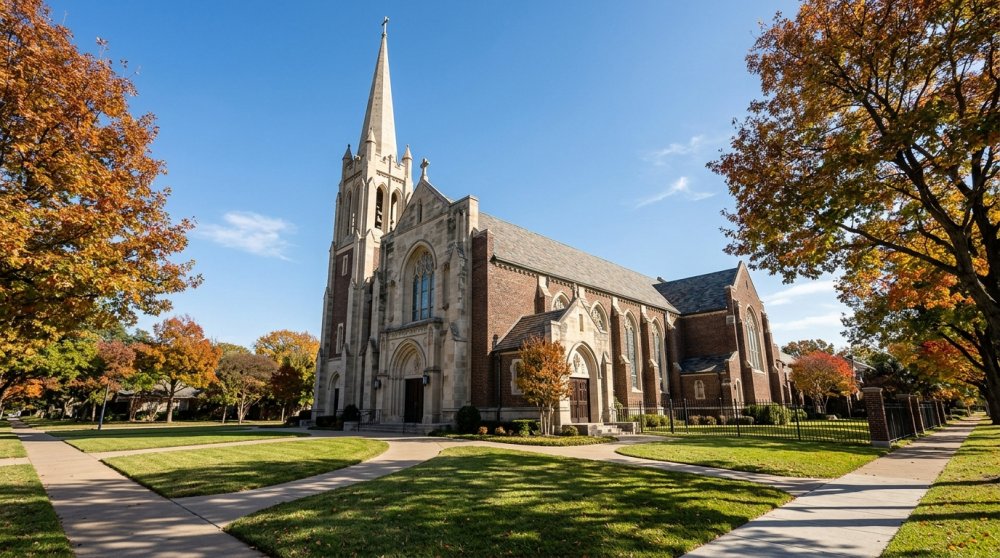
A Texas megachurch has moved to clarify that its legal clash with the North Texas Conference of the United Methodist Church concerns corporate structure, not matters of faith.
Highland Park United Methodist Church filed the statement in Dallas County court to underscore that its disagreement is administrative, not theological.
“Our dispute is about governance and property, not doctrine,” the filing states.
Church leaders say the regional conference attempted to assert authority over local assets and decision-making in ways that exceed its constitutional role.
“We remain committed to the historic Christian faith and the Wesleyan tradition,” the congregation declared in a separate statement.
The filing comes as many United Methodist congregations nationwide continue to navigate questions of autonomy following years of denominational restructuring.
Highland Park leaders emphasize they are seeking to preserve the ability of local members to direct their own affairs under biblical principles.
Let us know what you think, please share your thoughts in the comments below.


-

 Self-Reliance1 year ago
Trump’s Bold Move Uncovers Massive Social Security Fraud
-

 Faith1 year ago
New Clues Emerge in Noah’s Ark Mystery
-

 News2 years ago
Governor Walz’s Rhetoric Sparks National Controversy
-

 News1 year ago
Mel Gibson’s ‘The Passion of the Christ’ Sequel Title Announced
-

 Family2 years ago
Texas Lawmaker Targets Furries in Schools
-

 Freedom2 years ago
Maine Lawmaker Challenges Sports Fairness Controversy
-

 Family1 year ago
Canada’s Controversial Policy Sparks Ethical Debate
-
Faith10 months ago
Congress Hears Pleas for Nigerian Christians