
News
Top White House Official Draws Sharp Line on Conservative Movement

Faith Facts
- Sebastian Gorka, a Trump administration official, publicly stated that Tucker Carlson and Nick Fuentes do not represent true conservatism
- The rebuke highlights ongoing debates within right-leaning circles about the boundaries and principles of the conservative movement
- Gorka’s comments underscore the importance of maintaining clear ideological standards in American political discourse
Sebastian Gorka, a prominent official in the Trump administration, has drawn a firm line in the sand regarding who represents genuine conservative values in America. In recent public remarks, Gorka explicitly stated that commentators Tucker Carlson and Nick Fuentes should not be considered part of the conservative movement.
The strong rebuke from Gorka comes at a time when the conservative movement is actively defining its boundaries and core principles. His comments reflect a broader conversation among traditionalists about maintaining the integrity of conservatism as a political and cultural force in America.
Gorka’s willingness to publicly distinguish between authentic conservatism and other voices demonstrates the administration’s commitment to clarity on foundational values. The statement serves as a reminder that conservatism, rooted in respect for tradition, constitutional governance, and Judeo-Christian principles, requires adherence to certain standards.
This development has sparked discussion among faith-based and patriotic Americans who recognize the importance of maintaining clear ideological markers. Many conservative Christians appreciate leaders who are willing to draw distinctions when necessary, ensuring that the movement remains anchored in principles that honor God, family, and country.
The Trump administration continues to position itself as the defender of traditional American values, with officials like Gorka taking active roles in defining what conservatism means in the modern era. His comments reflect an administration unafraid to establish boundaries and call out those who may dilute the core message.
For Christian conservatives who have long supported President Trump’s agenda, such clarity provides reassurance that their values remain central to the movement’s direction. The willingness to identify and distance from voices deemed incompatible with conservatism demonstrates principled leadership.
Let us know what you think, please share your thoughts in the comments below.

Faith Facts
- Eritrea holds an estimated 350 to 500 Christians in prison solely for their religious beliefs, according to advocacy groups.
- The East African nation has been labeled the “North Korea of Africa” due to its severe restrictions on religious freedom and political expression.
- Christian leaders are calling on the United Nations to maintain its human rights monitoring mission in Eritrea despite government resistance.
Christian advocacy organizations are urging the United Nations to continue its critical oversight of human rights violations in Eritrea, one of the world’s most repressive regimes. The small East African nation has earned the ominous nickname “North Korea of Africa” for its systematic persecution of religious believers and political dissidents.
Religious freedom advocates report that between 350 and 500 Christians currently languish in Eritrean prisons for no crime other than practicing their faith. Many are held in brutal conditions without charges, trials, or contact with family members.
The Eritrean government recognizes only four religious groups: the Eritrean Orthodox Church, Sunni Islam, the Roman Catholic Church, and the Evangelical Lutheran Church of Eritrea. All other Christian denominations and faith communities face severe restrictions, harassment, and imprisonment. Believers who gather for worship outside state-approved channels risk arrest and indefinite detention.
International Christian organizations have documented cases of believers imprisoned in shipping containers, subjected to extreme temperatures, and denied medical care. Some prisoners have been held for more than a decade without formal charges.
The United Nations Special Rapporteur on Eritrea has consistently documented widespread human rights abuses, including arbitrary detention, torture, and severe restrictions on freedom of religion and expression. Christian advocates fear that if the UN reduces its scrutiny, the persecution will intensify without international accountability.
Eritrea’s leadership has repeatedly rejected international criticism and refused to cooperate with UN human rights investigators. The government maintains that its policies are necessary for national security and social stability.
Faith-based human rights groups argue that continued UN engagement represents one of the few remaining sources of pressure on the Eritrean government to respect basic religious freedoms. They contend that abandoning monitoring efforts would send a dangerous signal to other authoritarian regimes and leave vulnerable Christian communities without international support.
The situation in Eritrea serves as a stark reminder of the ongoing global persecution faced by Christians in nations hostile to religious liberty. American believers are called to remember and pray for their brothers and sisters suffering for their faith in one of the world’s most closed societies.
Let us know what you think, please share your thoughts in the comments below.
Faith Facts
- A jury found evidence that Jonathan Fletcher committed abuse, but his dementia diagnosis prevents prosecution and accountability
- Church of England safeguarding failures allowed alleged abuse to continue unchecked for years despite multiple warnings and complaints
- Victims are denied proper justice due to both the perpetrator’s condition and the institution’s inadequate response to protect the vulnerable
The case of Jonathan Fletcher has exposed deep flaws in how the Church of England handles abuse allegations, leaving victims without the justice they deserve. While Fletcher’s dementia diagnosis legally shields him from prosecution despite jury findings of abuse, the greater tragedy lies in the church’s systemic safeguarding failures that allowed the alleged abuse to continue for years.
Christian institutions bear a sacred responsibility to protect the vulnerable and hold wrongdoers accountable. When churches fail in this duty, they not only betray victims but also undermine the witness of Christ’s love and justice in the world.
The Fletcher case reveals a pattern of institutional inadequacy where complaints were reportedly dismissed or minimized rather than properly investigated. Multiple individuals raised concerns over an extended period, yet the church’s safeguarding mechanisms failed to trigger appropriate interventions that could have prevented further harm and preserved the possibility of legal accountability.
This failure represents more than administrative oversight—it reflects a breakdown in the church’s fundamental mission to shepherd God’s people with integrity and protect those who cannot protect themselves. Scripture calls believers to “defend the weak and the fatherless” and to “uphold the cause of the poor and the oppressed.”
For victims who courageously came forward, the double blow of inadequate institutional response followed by the impossibility of legal justice due to the perpetrator’s condition compounds their trauma. They have been failed not once but repeatedly—first by the alleged abuse itself, then by the church’s insufficient response, and finally by circumstances that prevent criminal prosecution.
The Church of England must urgently reform its safeguarding protocols to ensure swift, thorough investigation of all allegations. Transparency, accountability, and victim-centered policies should replace the defensive posture that has characterized too many institutional responses to abuse claims.
Churches must remember that their highest allegiance is to truth and righteousness, not institutional reputation. When leaders prioritize protecting the institution over protecting the vulnerable, they abandon the gospel they claim to proclaim.
This case serves as a sobering reminder that safeguarding is not merely a legal compliance issue but a moral imperative rooted in Christian duty. Every church must examine its own policies and culture to ensure that victims are heard, believed, and protected—and that perpetrators face swift consequences regardless of their status or position.
The victims in this case will not see earthly justice, but their stories must not be silenced or forgotten. Their courage in coming forward should drive comprehensive reforms that prevent future failures and demonstrate that the church truly stands with the oppressed rather than the powerful.
Let us know what you think, please share your thoughts in the comments below.
Faith Facts
- Two Israeli Defense Forces soldiers have been sentenced to weeks in military prison for desecrating a Virgin Mary statue in southern Lebanon.
- The incident is part of a pattern of religious disrespect, following a separate IDF desecration of a crucifix in the same region.
- The military prison sentences represent the IDF’s response to internationally condemned acts against Christian holy symbols.
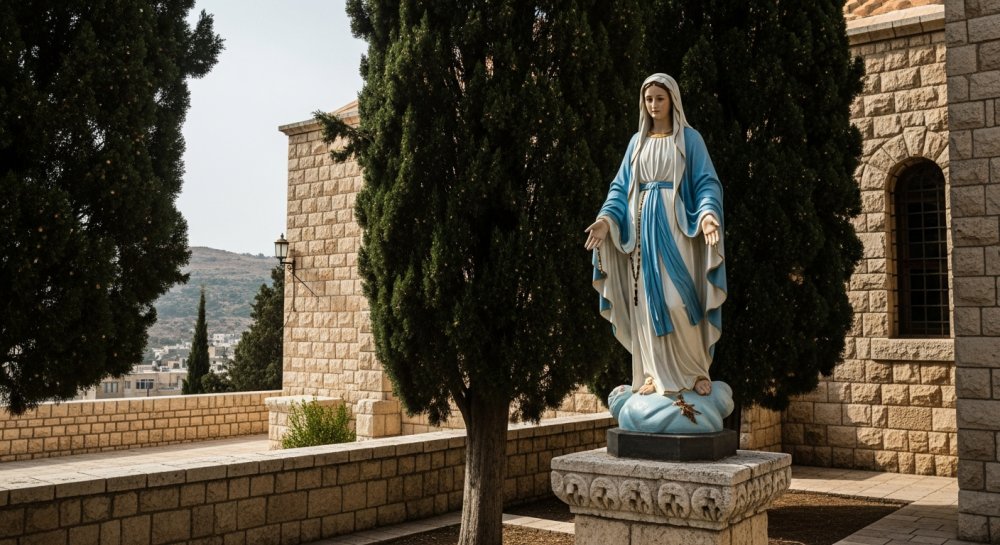
Two Israeli Defense Forces soldiers are heading to military prison for their role in desecrating a statue of the Virgin Mary in southern Lebanon. The sentences mark a significant disciplinary action following international outcry over the treatment of Christian religious symbols in the region.
The soldiers will spend weeks behind bars for their actions against the sacred statue. This punishment comes as the IDF faces mounting criticism over respect for Christian sites and symbols during military operations.
The IDF views the incident with utmost severity and emphasizes that the conduct of the soldier completely deviates from the values expected of its personnel.
Following an initial review, the image in question was taken several weeks ago. The incident will be investigated, and… https://t.co/fi2gQXzdYj
— LTC Ariella Mazor (@LTC_Ariella) May 6, 2026
This incident represents the second known case of IDF personnel desecrating Christian religious items in southern Lebanon. A separate incident involved the desecration of a crucifix in the same area, raising concerns among Christian communities worldwide about the protection of their holy sites.
The military prison sentences signal the IDF’s acknowledgment of the seriousness of these violations. However, questions remain about whether additional safeguards will be implemented to prevent future incidents of religious desecration.
Christian communities in Lebanon and around the world have expressed deep concern over these acts. The Virgin Mary holds profound significance for Christians across denominations, making the desecration particularly offensive to believers globally.
The timing of these incidents has raised awareness about the vulnerability of Christian heritage sites in conflict zones. Many Christian leaders have called for stronger international protections for religious sites and symbols during military operations.
Military officials have not disclosed the specific actions taken against the statue or the identities of the soldiers involved. The length of the prison sentences also remains unspecified beyond the characterization of “weeks.”
These developments underscore ongoing tensions in the region and the challenges of maintaining respect for religious diversity during armed conflicts. The incidents have sparked broader conversations about religious freedom and the protection of Christian communities in the Middle East.
Let us know what you think, please share your thoughts in the comments below.


-

 Self-Reliance1 year ago
Trump’s Bold Move Uncovers Massive Social Security Fraud
-

 Faith1 year ago
New Clues Emerge in Noah’s Ark Mystery
-

 News1 year ago
Governor Walz’s Rhetoric Sparks National Controversy
-

 News1 year ago
Mel Gibson’s ‘The Passion of the Christ’ Sequel Title Announced
-

 Family1 year ago
Texas Lawmaker Targets Furries in Schools
-

 Freedom1 year ago
Maine Lawmaker Challenges Sports Fairness Controversy
-

 Family12 months ago
Canada’s Controversial Policy Sparks Ethical Debate
-
Faith6 months ago
Congress Hears Pleas for Nigerian Christians