
Faith
Photographer Reveals What Sustained Her Faith During Legal Battle


Faith Facts
- Christian photographer Chelsey Nelson challenged a city nondiscrimination law that conflicted with her faith-based business practices
- Nelson credits her reliance on God’s sovereignty as the driving force behind her persistence through years of legal challenges
- Her case highlights the ongoing tension between religious freedom and LGBT nondiscrimination ordinances across America
A Christian photographer is sharing how her faith in God’s sovereign plan gave her the strength to persist through a lengthy legal battle over her right to operate her business according to her religious convictions.
Chelsey Nelson faced a significant challenge when a city nondiscrimination ordinance threatened her ability to conduct her photography business in accordance with her deeply held Christian beliefs. Rather than compromise her faith or abandon her calling, she chose to stand firm and challenge the law in court.
“God’s sovereignty” became Nelson’s anchor throughout the legal proceedings, she explained. Her commitment to honoring the Lord in her professional life motivated her to continue fighting even when the path forward seemed uncertain.
The case represents a broader pattern of conflicts emerging across the nation as religious business owners navigate laws designed to prohibit discrimination based on sexual orientation and gender identity. For many Christians like Nelson, these ordinances create an impossible choice between their faith and their livelihoods.
Nelson’s determination to honor God through her work demonstrates the intersection of faith and the marketplace. Christian business owners increasingly find themselves defending their First Amendment rights to free speech and religious exercise in courts of law.
Her reliance on biblical principles of God’s ultimate control and authority provided both comfort and courage during uncertain times. This theological foundation enabled her to view the legal challenge not merely as a personal battle, but as part of a larger divine plan.
The photographer’s case underscores the importance of religious liberty protections in American society. As cultural values shift, Christians committed to traditional biblical teaching on marriage and sexuality face mounting pressure to conform to prevailing social norms or face legal consequences.
Nelson’s willingness to stand for her convictions serves as an example to other Christians navigating similar challenges in their professional lives. Her testimony points to the sustaining power of faith when facing opposition for righteousness’ sake.
The outcome of such cases carries significant implications for the future of religious freedom in America. They test whether people of faith can fully participate in public commerce while maintaining their deeply held beliefs about fundamental moral issues.
Let us know what you think, please share your thoughts in the comments below.

Faith Facts
- Pastor Israel Ford of LifeWorks Church in Cleveland, Ohio, publicly admitted he has maintained two wives for the past three years.
- The pastor claims the practice of polygyny is endorsed by Scripture, contradicting both American law and historic Christian teaching.
- LifeWorks Church was co-founded in 2009 by Pastor Ford and his first wife, Lydia Ford.
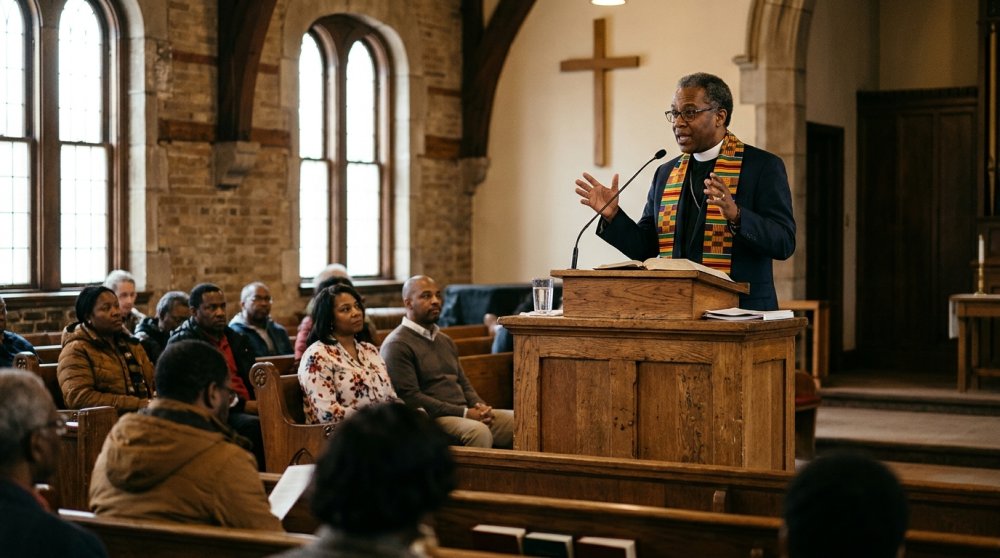
Polygyny is illegal throughout the United States, yet Pastor Israel Ford of LifeWorks Church in Cleveland, Ohio, announced from the pulpit that he has been living with two wives for three years.
Ford told his congregation that having only one wife is unbiblical and that God permits the practice.
“Having only 1 wife is ‘unbiblical'”
The church was founded in 2009 by Pastor Ford and his first wife, Lydia Ford.
Let us know what you think, please share your thoughts in the comments below.
Faith Facts
- Australian megachurch Pastor Russell Evans addressed Hispanic Christians on the need for believers to transform rather than conform to culture.
- Evans stressed that churches must remain contemporary and powerful in the ongoing battle for hearts and minds.
- The message highlights the call for Christians to actively engage and influence their generation through faith and values.
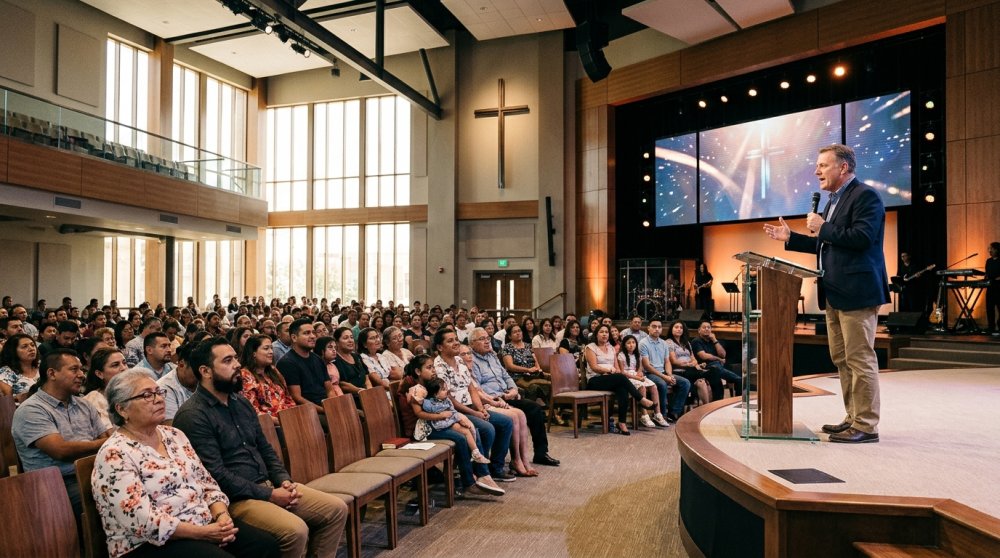
Australian megachurch Pastor Russell Evans delivered a bold challenge to Hispanic Christians, urging them to stand apart from the world while remaining engaged in it.
“Be transformers, not conformers,” Evans declared, calling believers to reject cultural compromise and instead shape society through the power of the Gospel.
Churches, he said, must be both contemporary and powerful to reach this generation amid what he described as a battle for hearts and minds.
Let us know what you think, please share your thoughts in the comments below.
Faith Facts
- Disciple-making movements emphasize serious commitment to following Christ and making other disciples
- Traditional churches and new movements both have valid concerns about how the other approaches ministry
- Church planting movement principles have shown limited growth in Western contexts compared to other parts of the world
Disciple-making movements have raised important questions about how churches in the West are making followers of Jesus. These movements point to a genuine desire for deeper commitment to the Great Commission. Their critique of traditional structures comes from a concern that many established churches have lost focus on personal discipleship.
At the same time, traditional churches have raised concerns about the sustainability and doctrinal depth of newer movements. Both perspectives reflect a shared burden for reaching people with the gospel. The tension between these approaches reveals a broader question facing American Christianity.
Church planting movement principles that have seen dramatic growth in other parts of the world have struggled to produce similar results in Western nations. Cultural differences, established religious traditions, and societal attitudes toward faith all play a role in this disparity. The challenges are complex and require thoughtful examination rather than quick solutions.
This reality challenges established churches to consider whether new approaches might be needed. The call is not to abandon biblical truth but to examine whether current methods are effectively making disciples. Many traditional congregations are beginning to ask hard questions about their own fruitfulness in fulfilling Christ’s command.
Let us know what you think, please share your thoughts in the comments below.


-

 Self-Reliance2 years ago
Trump’s Bold Move Uncovers Massive Social Security Fraud
-

 Faith2 years ago
New Clues Emerge in Noah’s Ark Mystery
-

 News2 years ago
Governor Walz’s Rhetoric Sparks National Controversy
-

 News2 years ago
Mel Gibson’s ‘The Passion of the Christ’ Sequel Title Announced
-

 Family2 years ago
Texas Lawmaker Targets Furries in Schools
-

 Freedom2 years ago
Maine Lawmaker Challenges Sports Fairness Controversy
-

 Family1 year ago
Canada’s Controversial Policy Sparks Ethical Debate
-
Faith11 months ago
Congress Hears Pleas for Nigerian Christians