
Faith
German Pentecostal Movement Explodes With 15,000 New Believers

Faith Facts
- Germany’s Federation of Free Pentecostal Churches added more than 15,000 new members in just two years
- The Bund Freikirchlicher Pfingstgemeinden experienced a remarkable 22% membership growth
- This growth represents a powerful counter-narrative to Europe’s ongoing spiritual decline
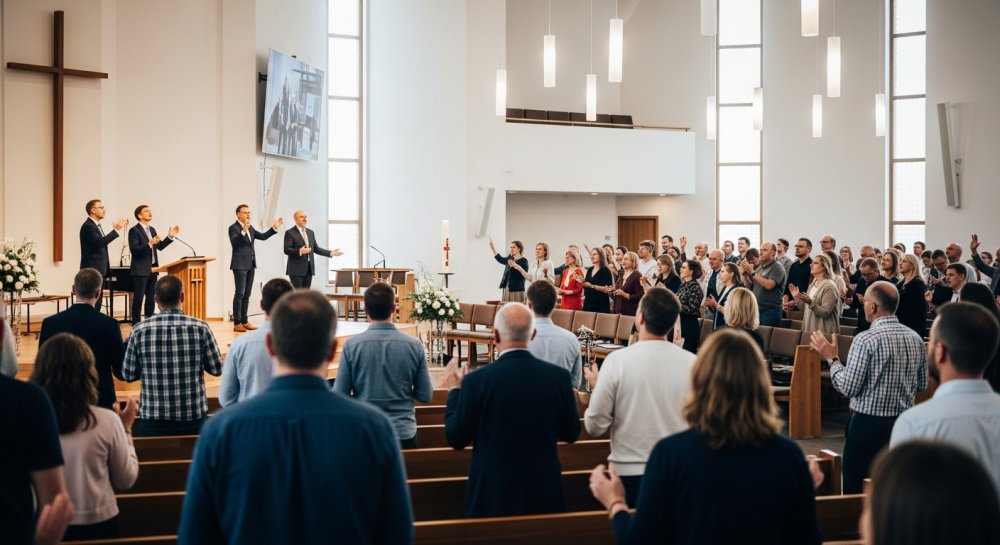
While much of Europe continues its slide into secularism, a remarkable revival is taking root in the heart of Germany. The Bund Freikirchlicher Pfingstgemeinden, Germany’s Federation of Free Pentecostal Churches, has witnessed an extraordinary surge in membership that defies the continent’s broader spiritual trends.
Over the past two years, this network of Spirit-filled congregations has welcomed more than 15,000 new believers into their fellowship. This represents a stunning 22% increase in membership—growth that would be remarkable anywhere, but is especially significant in a nation long known for its traditional state churches and declining religious participation.
The dramatic expansion of Pentecostal Christianity in Germany signals a hunger for authentic, biblical faith among Germans. While mainline denominations have often compromised biblical truth to accommodate secular culture, Pentecostal churches have maintained their commitment to Scripture, dynamic worship, and the transformative power of the Holy Spirit.
This growth pattern mirrors what many Christian observers have noted globally: churches that remain faithful to biblical teaching and emphasize personal relationship with Jesus Christ continue to grow, while those that abandon traditional Christian doctrine tend to decline. The German Pentecostal movement’s success demonstrates that Europeans are not rejecting Christianity itself—they’re rejecting watered-down religion that offers no real hope or transformation.
The Federation of Free Pentecostal Churches represents independent congregations committed to the authority of Scripture and the active work of the Holy Spirit in believers’ lives. Their emphasis on evangelism, prayer, and biblical discipleship has clearly resonated with thousands of Germans searching for spiritual truth in an increasingly secular society.
This remarkable growth also carries implications for Europe’s cultural and political future. As traditional Christian values have eroded across the continent, many nations have struggled with questions of identity, purpose, and moral foundation. A revitalized Christian community rooted in biblical truth could provide the spiritual renewal Europe desperately needs.
The German Pentecostal movement’s expansion offers hope that God is not finished with Europe. Despite decades of secularization, declining church attendance, and cultural hostility toward traditional faith, the Holy Spirit is still drawing people to salvation through Jesus Christ. This growth reminds us that no nation is beyond God’s reach, and that faithful proclamation of the Gospel still bears fruit.
For American Christians, this news should inspire both gratitude and renewed commitment. If God can spark revival in one of Europe’s most secularized nations, He can certainly continue to move powerfully in America. The key ingredients remain the same: faithful biblical teaching, authentic worship, fervent prayer, and bold evangelism.
The story unfolding in Germany’s Pentecostal churches proves once again that the Gospel of Jesus Christ has not lost its power. In every generation and every culture, the message of salvation through faith in Christ alone continues to transform lives and build His church.
Let us know what you think, please share your thoughts in the comments below.


Faith Facts
- Labour politician Andy Burnham identifies as Catholic but supports policies contradicting Church doctrine, including puberty blockers for transgender youth and assisted suicide.
- Burnham has championed conversion therapy bans that Christian leaders warn could criminalize prayer and pastoral counsel.
- His political positions reflect a growing tension between professed faith identity and policy advocacy among Western politicians.
Andy Burnham, the Greater Manchester Mayor positioning himself for national leadership, presents a familiar paradox in modern politics: a self-identified Catholic whose policy positions directly contradict core teachings of his professed faith. For Christian voters seeking leaders who will defend religious freedom and uphold biblical values, this gap between personal religious identity and public action demands careful scrutiny.
Burnham’s Catholic upbringing is part of his public biography. Yet his political record reveals consistent advocacy for positions the Catholic Church—and broader Christian orthodoxy—firmly opposes.
On the issue of gender ideology, Burnham has championed the use of puberty blockers for transgender-identified adolescents, even as evidence mounts about their harmful effects. These experimental drugs, which halt normal physical development during a critical life stage, have been restricted or banned in multiple European countries after medical reviews found insufficient evidence of benefit and significant risks of harm. Christian teaching affirms the goodness of God’s design in creating humans male and female, and opposes medical interventions that deny biological reality and potentially sterilize children.
Burnham has also expressed sympathy for assisted dying legislation, a practice fundamentally at odds with Christian reverence for the sanctity of human life from conception to natural death. The Catholic Church teaches that euthanasia is “morally unacceptable” and represents a rejection of God’s sovereignty over life and death. Yet Burnham’s openness to legalizing physician-assisted suicide signals a willingness to prioritize political expediency over doctrine.
Perhaps most troubling for religious freedom is Burnham’s support for conversion therapy bans. While couched in language about protecting vulnerable people, such legislation threatens to criminalize ordinary pastoral care, parental guidance, and prayer ministry. Christian leaders across denominations have warned that these laws would effectively ban biblical teaching on sexuality and gender, making it illegal for pastors to help congregation members seeking to align their lives with scripture.
The pattern is clear: Burnham invokes his Catholic identity when convenient, yet consistently advances a progressive agenda that undermines Christian ethics in law and public policy.
This disconnect matters profoundly for Americans watching similar dynamics unfold domestically. Politicians who identify as Christian while championing policies that attack religious liberty, redefine marriage and family, promote abortion, or advance radical gender ideology must be held accountable. Faith is not merely a cultural label or demographic checkbox—it should inform moral reasoning and policy positions.
Christian voters have a responsibility to evaluate leaders not by their religious self-identification but by their fruits. Does their legislative record protect life, defend biblical marriage, safeguard parental rights, and preserve religious freedom? Or does it advance secular ideologies incompatible with Christian teaching?
Burnham’s trajectory illustrates a broader challenge facing the church in Western democracies: the rise of nominal Christianity divorced from theological substance or ethical consistency. As cultural Christians hold positions of power, they may invoke religious heritage while simultaneously enacting policies that erode the very foundations of faith and freedom.
For those committed to preserving a Christian foundation in public life, the lesson is clear. We must look beyond labels to examine actual policy commitments. We must demand that those who claim Christian faith demonstrate it through defending biblical values in the public square. And we must be willing to hold politicians accountable when their actions contradict their professed beliefs.
The stakes are too high for anything less. Religious freedom, the protection of children, the sanctity of life, and the integrity of marriage and family all hang in the balance. Politicians like Burnham who claim Christian identity while advancing an anti-Christian agenda must be called to account—or replaced by leaders who will faithfully uphold the values they profess.
Let us know what you think, please share your thoughts in the comments below.
Faith Facts
- Growing numbers of churches and Bible apps are removing The Passion Translation following intense theological scrutiny
- Christian apologist Mike Winger’s investigation has sparked widespread debate about translation accuracy and biblical fidelity
- The controversy highlights the critical importance of maintaining scriptural integrity in Bible translations for American congregations
A wave of churches and digital Bible platforms are severing ties with The Passion Translation as concerns about its theological accuracy continue to grow across the Christian community. The controversial paraphrase faces mounting rejection following increased examination of its departure from traditional biblical scholarship.
The pullback follows an investigation highlighted by prominent Christian apologist Mike Winger, whose work has raised significant questions about the translation’s fidelity to original biblical texts. His research has resonated deeply with pastors and church leaders committed to preserving the integrity of Scripture in their congregations.
The growing distance from The Passion Translation represents a decisive turn by churches determined to prioritize doctrinal soundness. Multiple Bible apps and ministry platforms have quietly removed the version from their offerings, responding to concerns from users who value traditional biblical scholarship and accuracy.
For many conservative Christians, the controversy underscores the vital importance of maintaining theological rigor in translations used for teaching and discipleship. The movement away from disputed versions reflects a broader commitment to scriptural authority that remains central to evangelical faith communities across America.
Church leaders making the change cite their responsibility to shepherd congregations with biblically sound resources. The decisions come as believers increasingly scrutinize Bible translations for theological precision and faithfulness to ancient manuscripts that form the foundation of Christian faith.
The rejection of questionable translations demonstrates the vigilance of American Christians who refuse to compromise on matters of biblical truth. This widespread response reveals a church community that takes seriously its duty to guard the purity of God’s Word for future generations.
Let us know what you think, please share your thoughts in the comments below.
Faith Facts
- Two powerful earthquakes struck Venezuela, prompting evangelical organizations worldwide to mobilize humanitarian relief efforts
- Search-and-rescue operations continue as Christian groups coordinate emergency response
- Faith-based organizations are providing critical aid to devastated communities
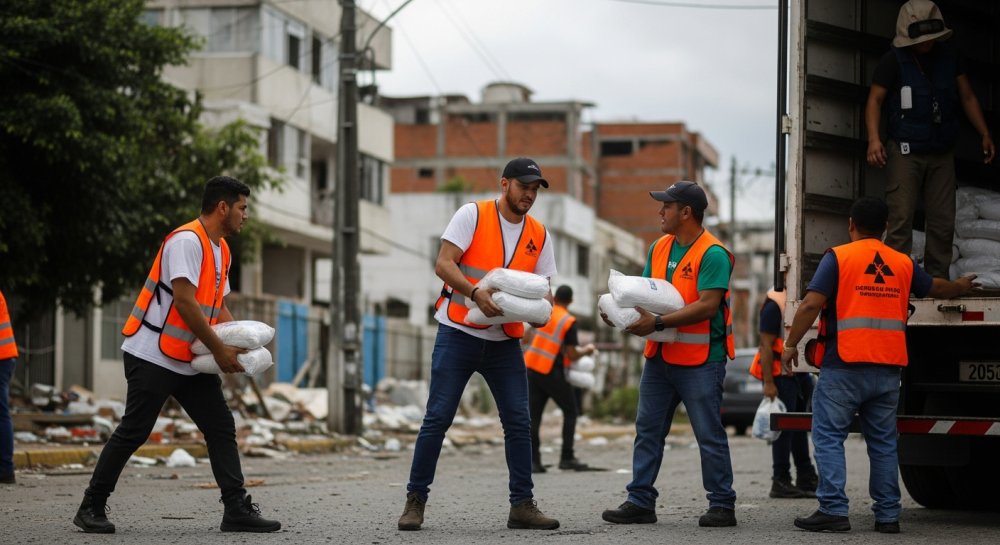
Venezuelan authorities continue their desperate search-and-rescue operations following two devastating earthquakes that struck the nation. Evangelical organizations across the globe are rapidly mobilizing to deliver humanitarian assistance to the crisis-stricken country.
The powerful twin earthquakes have left communities in ruins, prompting an immediate response from faith-based relief organizations committed to serving those in need. Christian groups are coordinating efforts to provide emergency supplies, medical care, and spiritual support to affected populations.
These relief efforts reflect the church’s historical role in responding to natural disasters with compassion and practical aid. Evangelical organizations have established a proven track record of efficient, effective disaster response that prioritizes getting help directly to those who need it most.
The mobilization demonstrates how Christian communities worldwide continue to embody the biblical mandate to care for neighbors in times of crisis. These faith-driven relief efforts often reach communities faster than government agencies, providing critical resources when they’re needed most urgently.
As the situation continues to develop, evangelical groups are preparing for long-term recovery efforts beyond immediate emergency response. This sustained commitment reflects the church’s understanding that true compassion extends beyond the initial crisis to help communities rebuild and restore hope.
Let us know what you think, please share your thoughts in the comments below.


-

 Self-Reliance1 year ago
Trump’s Bold Move Uncovers Massive Social Security Fraud
-

 Faith1 year ago
New Clues Emerge in Noah’s Ark Mystery
-

 News1 year ago
Governor Walz’s Rhetoric Sparks National Controversy
-

 News1 year ago
Mel Gibson’s ‘The Passion of the Christ’ Sequel Title Announced
-

 Family1 year ago
Texas Lawmaker Targets Furries in Schools
-

 Freedom1 year ago
Maine Lawmaker Challenges Sports Fairness Controversy
-

 Family1 year ago
Canada’s Controversial Policy Sparks Ethical Debate
-
Faith7 months ago
Congress Hears Pleas for Nigerian Christians