
Freedom
A Fresh Victory for Democratic Freedom Sparks Renewed Hope in Europe

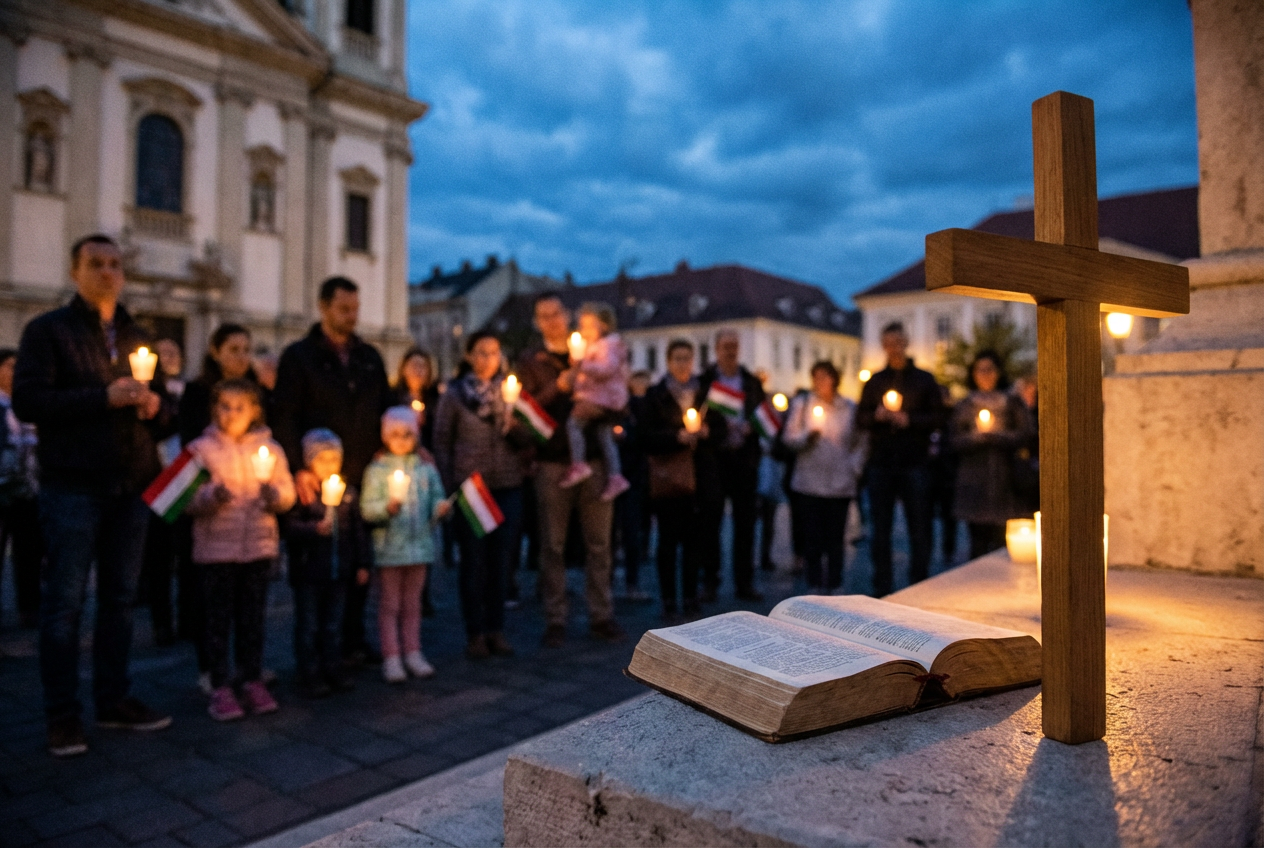
True liberty is a gift from God, requiring constant vigilance and a commitment to Biblical principles across the globe.
Recent events in Hungary demonstrate that political shifts can happen when a nation seeks to reclaim its identity and future through democratic means.
While political systems change, the ultimate struggle remains one of moral accountability and the protection of the family and faith.
This contest often pits secular states against spiritual leaders who uphold traditional teachings on war and morality in the public square.
Faith Facts
- The ability to love and forgive amidst hatred is a form of freedom no earthly tyrant can touch.
- Spiritual resistance through prayer and gratitude can provide inner freedom even in the darkest circumstances.
- A foundation of liberty includes freedom of worship, freedom of speech, freedom from want, and freedom from fear.
“The ability to love and forgive when surrounded by hatred is a form of freedom no tyrant can touch.”
We must remember that freedom is never secure without a firm foundation in God and a willingness to stand for truth.
Let us remain steadfast in our duty to protect these values for the generations to come.



Faith Facts
- Finnish Member of Parliament Päivi Räsänen has been barred from entering the United Kingdom despite her acquittal in Finland on all charges related to her Christian beliefs
- Räsänen faced years of legal persecution for sharing biblical teachings on marriage and sexuality, ultimately vindicated by Finland’s Supreme Court
- The UK border decision raises serious concerns about religious freedom and whether Christians who defend biblical truth are now considered unwelcome in Britain
A Finnish Christian politician who endured years of legal battles for her biblical convictions is now calling on UK Home Secretary Shabana Mahmood to reverse a troubling decision barring her from British soil. Päivi Räsänen, a sitting Member of Parliament in Finland, has requested intervention after being refused entry to the United Kingdom.
Räsänen gained international attention among believers when Finnish prosecutors targeted her for expressing traditional Christian views on marriage and human sexuality. She faced criminal charges simply for quoting Scripture and articulating the teachings of the Bible that the Church has upheld for two thousand years.
After a prolonged legal ordeal that threatened her freedom, Finland’s Supreme Court fully acquitted Räsänen of all charges. The ruling was celebrated by Christians worldwide as a victory for religious liberty and freedom of conscience in an increasingly hostile cultural climate.
Now, despite her complete vindication by Finland’s highest court, the UK government has apparently deemed this faithful Christian lawmaker unfit to enter the country. The decision raises alarming questions about whether Britain now considers biblical Christianity itself to be a disqualifying characteristic for entry.
Räsänen’s request for Home Secretary Mahmood’s intervention highlights the growing tension between Western governments and citizens who refuse to compromise their Christian convictions. Her case has become a bellwether for religious freedom across Europe and beyond.
The Finnish parliamentarian’s exclusion from the UK comes at a time when many Christians feel their governments are increasingly hostile to traditional faith expressions. While borders remain open to many, it appears that standing firm on biblical truth may now be treated as grounds for exclusion.
This situation should concern all Americans who value religious liberty. When democratically elected officials from allied nations are barred from travel simply for maintaining Christian beliefs that were universal in the West just decades ago, it reveals how rapidly the ground is shifting beneath our feet.
Räsänen’s courage throughout her legal persecution inspired countless believers to stand firm in their own contexts. Her willingness to risk her career and freedom rather than deny biblical teaching exemplifies the kind of faithful witness the Church desperately needs in this hour.
The question now is whether the UK government will reverse this decision or whether it will stand as yet another example of Western nations closing their doors to uncompromising Christian faith. Home Secretary Mahmood has the opportunity to correct this troubling precedent.
Let us know what you think, please share your thoughts in the comments below.
Faith Facts
- Western society is experiencing an unprecedented rejection of biological truth, with gender ideology being codified into law despite contradicting observable reality.
- The transgender movement represents a fundamental assault on God’s created order and the biblical understanding of male and female.
- Families are being torn apart as laws and institutions enforce ideologies that contradict both Scripture and science.
America finds itself trapped in a cultural moment that mirrors the dystopian world George Orwell warned us about. The insistence that biological sex is changeable has moved beyond social discourse into the realm of legal mandate, forcing citizens to affirm what they know to be false.
This isn’t simply a matter of political disagreement or evolving social norms. We are witnessing a direct challenge to the fundamental truths established at creation.
The Bible is clear: “So God created man in his own image, in the image of God he created him; male and female he created them.” This divine design is not subject to human revision, yet our institutions increasingly demand we pretend otherwise.
The consequences extend far beyond abstract philosophical debates. Real families are being destroyed as parents lose custody of children for refusing to affirm gender transitions.
Teachers face termination for using biologically accurate pronouns. Medical professionals are pressured to provide harmful interventions to confused young people.
The transgender ideology represents more than bad policy—it’s a spiritual battle over truth itself. When a society abandons objective reality in favor of subjective feelings, it cuts itself off from the moorings that make civilized life possible.
Our obsession with this topic persists because the stakes couldn’t be higher. At issue is whether we will continue to recognize God’s authority over His creation or whether we will embrace the serpent’s ancient lie that we can redefine ourselves apart from our Creator.
Christians cannot remain silent while laws are passed that criminalize truth-telling and force participation in delusion. Our commitment to loving our neighbors includes refusing to affirm destructive lies, even when culture demands compliance.
The relentless push to normalize gender confusion reveals the desperation of a worldview that has rejected divine order. Without God’s truth as an anchor, society drifts into ever more absurd denials of reality.
This conversation will continue—and must continue—until America rediscovers the unchanging truth that we are fearfully and wonderfully made, male and female, in the image of God.
Let us know what you think, please share your thoughts in the comments below.
Faith Facts
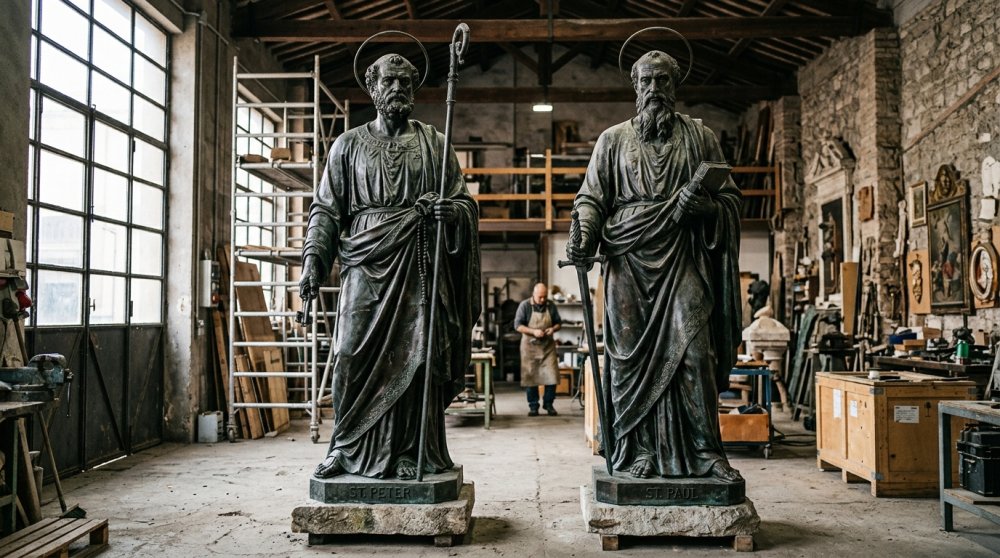
- Massachusetts Supreme Judicial Court upheld a decision blocking two 10-foot bronze statues of Catholic saints from being displayed on a government building
- The $850,000 statues were intended for a new public building but faced legal challenges from residents citing separation of church and state
- The ruling represents another example of religious expression being removed from the public square despite America’s Christian heritage
In a troubling decision that underscores the ongoing assault on religious expression in America’s public spaces, Massachusetts’ highest court has sided with residents seeking to prevent the display of Catholic statues on government property. The case involves two substantial bronze statues, each standing 10 feet tall, depicting Catholic saints that were planned for installation on a new municipal building.
The statues, valued at $850,000, became the center of a legal battle that reached the state’s Supreme Judicial Court. Residents who opposed the religious displays challenged the city’s plan, arguing that placing Catholic saints on public property violated the principle of separation of church and state.
The court’s decision to uphold the block represents a continuation of efforts to sanitize public spaces of religious imagery, even as our nation’s founding documents and historic buildings are replete with acknowledgments of divine providence and biblical principles. For generations, religious art and symbols adorned government buildings across America without controversy, reflecting the nation’s deep spiritual roots.
The $850,000 price tag for the statues indicates the significant investment the city had planned to make in these works of religious art. Bronze statues of this scale represent both artistic achievement and cultural heritage, particularly for communities with strong Catholic traditions.
This ruling fits a broader pattern of courts removing Christian and religious symbols from public view, often at the behest of small groups of objectors. From Ten Commandments monuments to Christmas displays, religious expression in the public square faces increasing hostility despite the First Amendment’s guarantee of free exercise of religion.
The Massachusetts decision stands in contrast to the historical reality that religious imagery, including depictions of Moses and the Ten Commandments, adorns the U.S. Supreme Court building itself. The founding fathers never intended the First Amendment to scrub all religious acknowledgment from government property.
For many Christians and traditional Americans, such decisions reflect a misunderstanding of the Constitution’s intent. The Establishment Clause was designed to prevent a national church, not to erase all religious expression from civic life. The Free Exercise Clause, meanwhile, protects the right of citizens to express their faith publicly.
The case highlights tensions in communities across America where Christian heritage and modern secular interpretations of constitutional law collide. As religious liberty advocates often point out, neutrality toward religion has increasingly become hostility toward religion in practice.
Let us know what you think, please share your thoughts in the comments below.


-

 Self-Reliance1 year ago
Trump’s Bold Move Uncovers Massive Social Security Fraud
-

 Faith1 year ago
New Clues Emerge in Noah’s Ark Mystery
-

 News1 year ago
Governor Walz’s Rhetoric Sparks National Controversy
-

 News1 year ago
Mel Gibson’s ‘The Passion of the Christ’ Sequel Title Announced
-

 Family1 year ago
Texas Lawmaker Targets Furries in Schools
-

 Freedom1 year ago
Maine Lawmaker Challenges Sports Fairness Controversy
-

 Family1 year ago
Canada’s Controversial Policy Sparks Ethical Debate
-
Faith9 months ago
Congress Hears Pleas for Nigerian Christians