
Faith
Why Young Americans Are Choosing Traditional Christianity Over Watered-Down Faith

Faith Facts
- Despite skepticism about viral claims of mass revival, pastors and church leaders report genuine momentum toward traditional Christian teaching and practice among younger believers
- Cultural observers note a growing appetite for what some call ‘full-fat’ Christianity—orthodox doctrine, liturgical worship, and robust theological engagement rather than entertainment-focused services
- The shift represents a generational pushback against secularism and therapeutic, feel-good religion in favor of substantive biblical truth and historic church practices
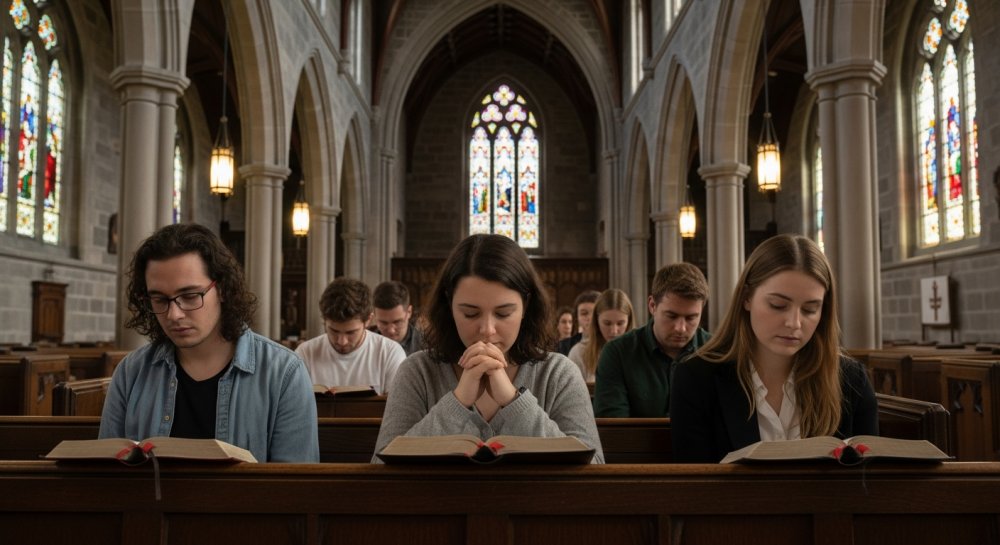
While recent claims about a “Quiet Revival” sweeping American college campuses have faced legitimate scrutiny and pushback, many faithful Christians continue to observe a real and meaningful shift in how younger believers approach their faith. The conversation isn’t about inflated numbers or viral headlines—it’s about quality over quantity, depth over breadth.
Church leaders and cultural commentators are increasingly using phrases like “full-fat Christianity” to describe what they’re witnessing: a rejection of watered-down, entertainment-driven religion in favor of orthodox theology, liturgical richness, and serious biblical engagement. Young people aren’t looking for rock concerts with a salvation message tacked on; they’re hungry for transcendence, mystery, and truth that doesn’t bend to cultural fashion.
This phenomenon represents something far more significant than mere attendance statistics. It’s a generational response to the spiritual emptiness of secular culture and the therapeutic moralism that has infiltrated many modern churches. Rather than chasing relevance through superficial means, these younger Christians are discovering the power of ancient practices, doctrinal clarity, and worship that acknowledges God’s holiness rather than merely affirming human feelings.
Traditional liturgical churches—including Anglican, Catholic, and Orthodox congregations—report increased interest from younger seekers who appreciate the weightiness of historic Christian worship. These aren’t cultural Christians looking for social clubs; they’re serious believers pursuing transformation through discipline, sacrament, and submission to biblical authority.
The shift also reflects disillusionment with the therapeutic gospel that dominated evangelical culture for decades. Messages focused primarily on personal fulfillment, emotional wellness, and “your best life now” have left many spiritually malnourished. In contrast, full-fat Christianity offers the hard truths of Scripture: sin is real, repentance is necessary, discipleship costs something, and following Christ means taking up a cross.
This movement toward substantive faith doesn’t necessarily translate into mega-church growth or stadium revivals—at least not yet. It’s often quieter, more local, and more focused on formation than flashy conversions. Small groups study theology. Young families join churches with strong catechesis programs. College students gather for contemplative prayer and serious Bible study rather than pizza parties.
Critics who dismiss revival talk entirely may be missing the forest for the trees. While exaggerated claims deserve skepticism, the underlying spiritual hunger driving young people toward traditional Christianity is both real and encouraging. It suggests that authenticity, not gimmicks, resonates with a generation raised on digital superficiality.
The implications for American Christianity could be profound. If younger believers continue pursuing theological depth and historic Christian practice, they’ll be far better equipped to resist cultural compromise and maintain faithful witness in an increasingly hostile environment. Full-fat faith produces resilient disciples who can withstand persecution and intellectual challenges.
This isn’t about returning to a romanticized past or rejecting all contemporary expressions of worship. It’s about reclaiming the substance of Christian orthodoxy that has sustained believers through centuries of cultural change. Young Christians are discovering that what the church has always taught—about God, humanity, sin, redemption, and eternity—still rings true because it is true.
Whether this represents the beginning stages of genuine revival or simply a smaller-scale reformation among committed believers, the direction is encouraging. A church grounded in biblical truth and historic practice will always outlast one built on trends and entertainment.
Let us know what you think, please share your thoughts in the comments below.


Faith Facts
- More than 13,000 young Christians gathered across two Manila venues on Philippine Independence Day for The Send Philippines mobilization event
- Organizers emphasize this marks the beginning of a sustained, multi-church initiative rather than a one-time gathering
- The event strategically took place on June 12, connecting spiritual mobilization with Philippine national independence
A powerful gathering of faith swept through Manila on June 12, as thousands of young believers assembled to answer a call that organizers say will resonate far beyond a single day. The Send Philippines brought together more than 13,000 young people across two venues in the Manila area, marking what leaders describe as the launch of an ongoing movement rather than a standalone event.
The timing proved significant, as the gathering coincided with Philippine Independence Day. This connection between spiritual awakening and national identity underscored the event’s deeper purpose: mobilizing a generation of Filipino Christians for long-term kingdom work.
What sets this gathering apart from typical youth conferences is the organizers’ stated commitment to sustained mobilization. Rather than creating a temporary spiritual high that fades after the final worship song, The Send Philippines represents the starting point of a coordinated, multi-church initiative designed to channel young people’s passion into lasting ministry impact.
The dual-venue format allowed organizers to accommodate the overwhelming response while maintaining the event’s participatory nature. Thirteen thousand young voices united in worship and commitment signals something significant stirring among Filipino believers—a recognition that their generation carries both privilege and responsibility in advancing the Gospel.
This mobilization reflects a broader pattern emerging across Asia, where young Christians are increasingly stepping forward to take ownership of their faith and their role in the Great Commission. The Philippines, with its strong Christian heritage and youthful population, stands positioned to become a sending nation rather than merely a mission field.
The multi-church approach proves essential to the initiative’s sustainability. By bringing together congregations across denominational lines, The Send Philippines creates infrastructure for ongoing collaboration that extends well beyond the excitement of a single gathering.
For American Christians watching this development, the Filipino mobilization offers both encouragement and challenge. It demonstrates that God continues raising up laborers from unexpected places, while reminding Western believers that the center of global Christianity has shifted southward and eastward.
The connection to Independence Day adds layers of meaning. Just as the Philippines celebrates freedom from colonial rule, these young believers are declaring spiritual independence from passivity and cultural Christianity, choosing instead active discipleship and mission engagement.
Let us know what you think, please share your thoughts in the comments below.

Faith Facts
- Pastor Seth Troutt offers a biblical alternative to modern influencer culture’s vision of masculinity
- The rise of figures like Andrew Tate reveals young men’s desperate search for purpose and direction
- True biblical manhood is rooted in humility, discipline, responsibility, and servant leadership
As a generation of young American men searches for meaning and purpose in an increasingly confused culture, one pastor is pointing them back to Scripture’s timeless model of masculinity.
Pastor and author Seth Troutt is offering a biblical vision of manhood that stands in stark contrast to the messages flooding social media from popular influencers. While figures like Andrew Tate have captured massive followings among young men seeking direction, Troutt argues that only God’s Word provides the true foundation for masculine identity.
The popularity of controversial influencers reveals a hunger among young men that the church must address with biblical truth. Rather than allowing secular voices to define manhood for this generation, Christian leaders are called to present Scripture’s countercultural vision of strength, leadership, and purpose.
Troutt’s approach centers on core biblical principles: humility before God, personal discipline, taking responsibility, and serving others sacrificially. This model directly challenges both the passive, directionless masculinity promoted by progressive culture and the pride-driven, self-centered masculinity marketed by some secular influencers.
The crisis of masculinity in America is real and urgent. Young men are struggling with identity, purpose, and direction at alarming rates. Suicide rates, educational achievement gaps, and lack of life direction point to a generation desperately needing solid biblical teaching about what it means to be a man.
The church has a unique opportunity and responsibility to fill this void with truth. Scripture offers a robust, compelling vision of manhood—men who lead with love, protect with courage, provide through hard work, and point others to Christ through humble service.
Biblical masculinity is not about domination or passivity, but about stewarding God-given strength and leadership for His glory and others’ good. It calls men to be both tender and tough, gentle and firm, humble and confident—all grounded in submission to Christ.
As cultural confusion intensifies, faithful pastors and teachers must boldly proclaim what God’s Word says about manhood. The next generation is listening, searching, and hungry for truth that resonates with how God created them.
The answer to our masculinity crisis isn’t found in self-help gurus or social media influencers, but in the eternal Word of God and the perfect example of Jesus Christ—the ultimate man who combined perfect strength with perfect love.
Let us know what you think, please share your thoughts in the comments below.
Faith Facts
- A 2,750-year-old standing stone discovered at Tel Eton may provide archaeological evidence of King Hezekiah’s biblical reforms
- The ancient artifact was found in an Israelite mansion south of Jerusalem, dating to the late 8th century BC
- Researchers from Bar-Ilan University believe the stone supports the biblical account of Hezekiah’s efforts to centralize worship in Jerusalem
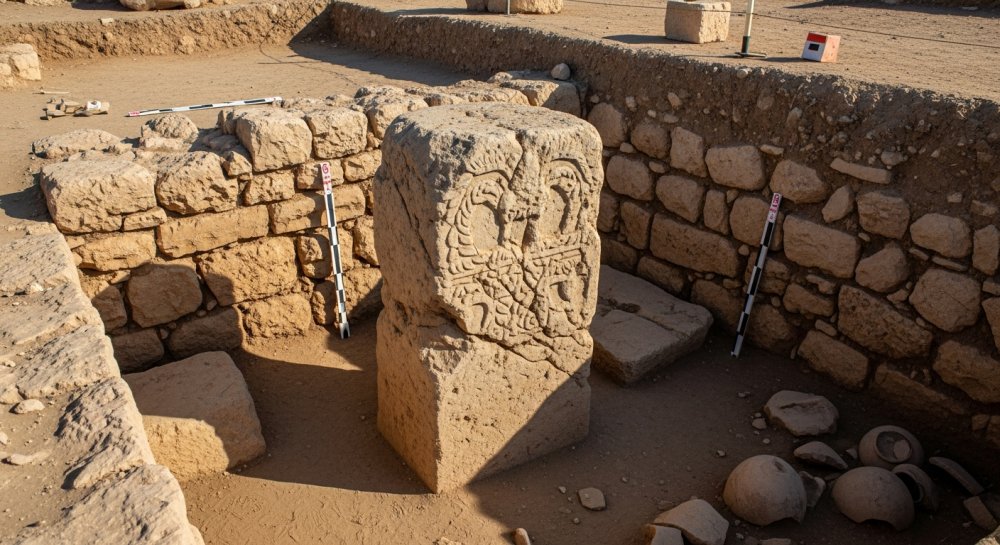
Archaeological discoveries continue to validate the historical accuracy of Scripture, and a new find in Israel offers compelling evidence for one of the Old Testament’s most significant religious reforms. A research team from Bar-Ilan University has uncovered a 2,750-year-old standing stone that may substantiate the biblical account of King Hezekiah’s campaign to centralize Jewish worship in Jerusalem.
The ancient stone was discovered at Tel Eton, an archaeological site located south of Jerusalem. The artifact’s age corresponds precisely with the period of King Hezekiah’s reign in the late 8th century BC, when the biblical monarch undertook sweeping religious reforms throughout the Kingdom of Judah.
According to the biblical account in 2 Kings and 2 Chronicles, King Hezekiah removed high places, broke down sacred pillars, and destroyed the Asherah poles in an effort to purify worship and direct the people’s devotion exclusively toward the Temple in Jerusalem. This latest discovery provides tangible evidence that such reforms actually took place in the ancient Israelite kingdom.
The standing stone was found within what researchers have identified as an Israelite mansion, suggesting it belonged to a family of significant social standing. The context of this discovery makes it particularly noteworthy for biblical archaeology, as it demonstrates the reach of Hezekiah’s reforms even into the homes of the wealthy and powerful.
For believers who hold to the historical reliability of Scripture, such archaeological confirmations serve as important reminders that the Bible describes real people, real places, and real events. The convergence of biblical text and physical evidence strengthens confidence in God’s Word as a trustworthy historical document, not merely a collection of spiritual myths or legends.
The discovery at Tel Eton joins a growing body of archaeological evidence that corroborates biblical narratives from the Old Testament period. From the Pool of Siloam to King David’s palace, excavations throughout Israel continue to unearth artifacts that align with Scripture’s historical claims.
This finding holds particular significance because it relates to a period of spiritual renewal in Israel’s history. King Hezekiah is portrayed in Scripture as a righteous king who “did what was right in the eyes of the Lord” and who trusted in the God of Israel. His reforms represented a return to biblical faithfulness after years of spiritual compromise under previous rulers.
The Bar-Ilan University study adds to our understanding of how Hezekiah’s religious reforms were implemented throughout Judah. The presence of a standing stone in a private mansion, and presumably its later removal or abandonment, suggests that the king’s directives were carried out even in areas distant from the capital.
For Christians and Jews alike, archaeological discoveries like this one serve as tangible connections to our spiritual heritage. They remind us that the faith we practice today has deep historical roots and that the God who worked through King Hezekiah continues to work in our world today.
Let us know what you think, please share your thoughts in the comments below.


-

 Self-Reliance1 year ago
Trump’s Bold Move Uncovers Massive Social Security Fraud
-

 Faith1 year ago
New Clues Emerge in Noah’s Ark Mystery
-

 News1 year ago
Governor Walz’s Rhetoric Sparks National Controversy
-

 News1 year ago
Mel Gibson’s ‘The Passion of the Christ’ Sequel Title Announced
-

 Family1 year ago
Texas Lawmaker Targets Furries in Schools
-

 Freedom1 year ago
Maine Lawmaker Challenges Sports Fairness Controversy
-

 Family1 year ago
Canada’s Controversial Policy Sparks Ethical Debate
-
Faith7 months ago
Congress Hears Pleas for Nigerian Christians