
Faith
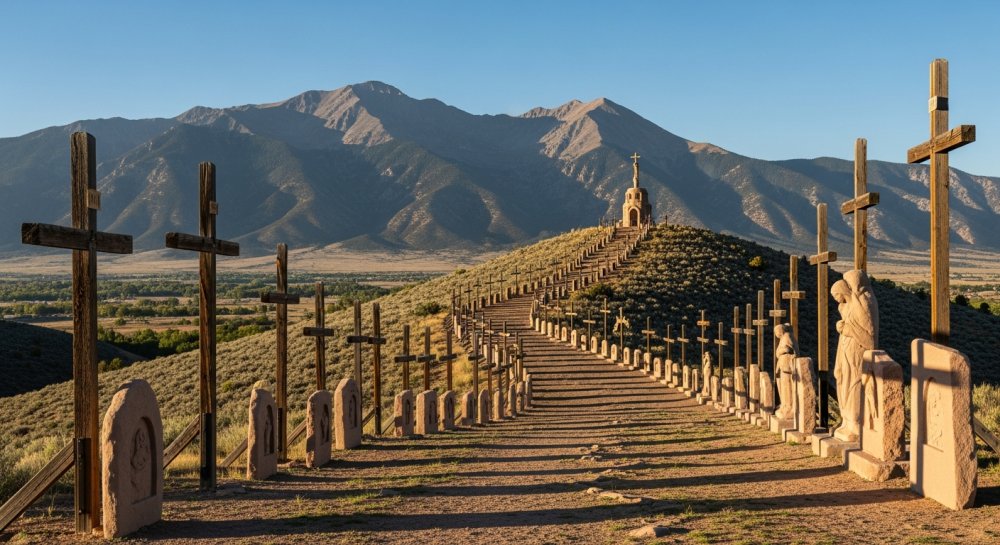
America’s Oldest Colorado Town Preserves Century-Old Faith Traditions

Faith Facts
- San Luis, Colorado’s oldest town, maintains centuries-old Catholic traditions near the New Mexico border
- The town features a historic Shrine of the Stations of the Cross that draws pilgrims from across the nation
- San Luis offers visitors an authentic glimpse into early American settlement where faith shaped daily community life
Nestled in the shadow of the Sangre de Cristo Mountains near Colorado’s border with New Mexico, San Luis stands as a testament to America’s rich spiritual heritage. Founded in 1851, this historic settlement in Costilla County remains the oldest incorporated town in the Centennial State, preserving traditions that date back generations.
The town’s enduring commitment to faith is most visibly demonstrated through the Shrine of the Stations of the Cross, a sacred site that has drawn Christian pilgrims for decades. This spiritual landmark serves as a powerful reminder of an era when religious devotion formed the cornerstone of American community life.
San Luis offers modern visitors a rare opportunity to step back in time and experience the authentic character of early American frontier settlements. The town’s carefully preserved architecture and religious sites reflect the values and priorities of its founding families, who built their community around shared faith and mutual support.
The landscape itself tells a story of perseverance and dedication. Against the dramatic backdrop of Colorado’s mountain ranges, San Luis demonstrates how faith communities flourished even in challenging frontier conditions, creating lasting institutions that continue to serve residents and visitors alike.
For Americans seeking to reconnect with the nation’s spiritual roots, San Luis provides a refreshing alternative to commercialized tourist destinations. The town’s commitment to preserving its religious heritage offers valuable lessons about the role faith played in building strong, resilient communities across the American West.
The Shrine of the Stations of the Cross remains an active site of worship and reflection, welcoming believers who wish to walk the path of devotion that generations before them have traveled. This continuity of faith practice connects present-day visitors to the founding generation’s deeply held convictions.
San Luis stands as living proof that America’s religious heritage remains vibrant and relevant. In an age when many communities have abandoned their spiritual foundations, this Colorado town demonstrates the enduring value of maintaining sacred traditions and honoring the faith of our forebears.
Let us know what you think, please share your thoughts in the comments below.

Faith Facts
- The Bible affirms the sanctity of human life from conception, grounding the pro-life position in Scripture.
- James Talarico’s claim that Scripture is silent on abortion overlooks multiple passages that protect the unborn.
- Christian teaching on life is rooted in the unchanging Word of God rather than shifting cultural arguments.
While the Bible does not use the modern term abortion, the absence of contemporary terminology does not mean the absence of biblical teaching. Scripture consistently affirms the value of life in the womb and condemns the shedding of innocent blood.
Old Testament law explicitly protects the unborn child, establishing a moral framework that transcends modern political debates.
Psalm 139 declares that God forms each person in the womb, knitting them together with purpose and intention.
“For you created my inmost being; you knit me together in my mother’s womb.”
This divine craftsmanship leaves no room for treating the unborn as disposable.
The prophetic witness in Jeremiah reinforces this truth, showing that God knows and calls individuals before birth.
“Before I formed you in the womb I knew you, before you were born I set you apart.”
Such language underscores the personhood and destiny of the child from the earliest moments of existence.
New Testament teaching on love and justice further strengthens the case for defending the defenseless.
Proverbs 24 warns against failing to rescue those being led away to death, a command that applies directly to the unborn.
Christian voters and lawmakers who uphold these biblical principles stand in continuity with generations of believers who treasured life as a gift from God.
Let us know what you think, please share your thoughts in the comments below.

Faith Facts
- Actress Danica McKellar credits Candace Cameron Bure with leading her to a personal relationship with Jesus Christ.
- McKellar is best known for her childhood role as Winnie Cooper on the beloved family series “The Wonder Years.”
- Bure, a committed believer, has consistently used her platform to point others toward faith and traditional values.
Danica McKellar opened up about the meaningful influence of her longtime friend Candace Cameron Bure in her journey toward faith. The two former child stars developed a friendship that extended far beyond their early careers in Hollywood.
McKellar explained that Bure was the one who introduced her to Jesus in a personal way. Their shared history in the entertainment industry gave McKellar a trusted voice to hear when spiritual matters came up.
“Wonder Years” actress Danica McKellar shares how fellow child star Candace Cameron Bure helped bring her to Jesus.
McKellar has spoken openly about her growing faith and the importance of surrounding herself with fellow believers. She has described how that friendship helped anchor her during seasons of change and uncertainty.
The story reflects a pattern seen among many in Hollywood who quietly seek truth and community outside the spotlight. For McKellar, that path led her straight to the feet of Jesus through the faithful witness of a friend.
Let us know what you think, please share your thoughts in the comments below.

Faith Facts
- Danica McKellar credits Candace Cameron Bure with leading her to Christ four years ago.
- McKellar now views her acting career through a faith-centered lens.
- She seeks roles that reflect her Christian values and convictions.
Actress Danica McKellar has opened up about the moment she found faith in Christ. She credits longtime friend and fellow former child star Candace Cameron Bure for guiding her on that journey four years ago.
McKellar shared that her new relationship with Jesus has transformed the way she sees her career and the projects she now chooses to pursue. Instead of simply chasing roles for fame or success, she is now more intentional about the stories she tells on screen.
“It’s been Jesus this whole time”
McKellar’s transformation reflects a deeper commitment to living out her faith both on and off the screen. She has expressed gratitude for the spiritual mentorship she received from Bure, whose own public witness as a believer has long been a steady presence in Hollywood.
The actress says her faith has redefined her purpose, helping her to focus on projects that align with her Christian convictions rather than simply accepting work based on popularity or financial gain.
Let us know what you think, please share your thoughts in the comments below.


-

 Self-Reliance2 years ago
Trump’s Bold Move Uncovers Massive Social Security Fraud
-

 Faith2 years ago
New Clues Emerge in Noah’s Ark Mystery
-

 News2 years ago
Governor Walz’s Rhetoric Sparks National Controversy
-

 News2 years ago
Mel Gibson’s ‘The Passion of the Christ’ Sequel Title Announced
-

 Family2 years ago
Texas Lawmaker Targets Furries in Schools
-

 Freedom2 years ago
Maine Lawmaker Challenges Sports Fairness Controversy
-

 Family1 year ago
Canada’s Controversial Policy Sparks Ethical Debate
-
Faith11 months ago
Congress Hears Pleas for Nigerian Christians