
Faith
The Question About Hell That Changes Everything


Faith Facts
- The concept of eternal judgment reflects God’s perfect justice and holiness, not human standards of fairness
- Our discomfort with Hell may reveal more about our understanding of sin’s gravity than about God’s character
- Biblical teaching presents Hell as the consequence of rejecting God’s grace, not arbitrary punishment
Many believers and skeptics alike wrestle with one of Christianity’s most challenging doctrines: eternal judgment. The question of whether Hell is “fair” has troubled countless hearts and sparked intense theological debates across centuries.
At first glance, the question seems compelling. It appeals to our sense of fairness. It sounds humane. But it also reveals something deeper, something often misjudged.
The discomfort many feel about eternal Hell often stems from comparing divine justice to human justice systems. We think in terms of proportionality—the punishment should fit the crime, with even the worst offenses eventually paid in full. But this framework fundamentally misunderstands the nature of sin and the character of God.
When we question whether Hell is “fair,” we’re placing ourselves as judges over God’s justice. We’re assuming our moral intuitions, shaped by a fallen world, are more reliable than the revealed character of a holy God. This isn’t theological sophistication—it’s the same error made in the Garden of Eden, deciding for ourselves what is right and wrong.
The real question isn’t whether Hell seems fair by human standards. The real question is: What does our sin truly deserve?
Every sin, regardless of how minor it appears to us, is an offense against an infinitely holy God. We’ve grown comfortable with sin, categorizing some as “not that bad” while reserving moral outrage for extreme cases. But Scripture presents a different picture—one where all sin separates us from God and merits judgment.
The cross of Jesus Christ demonstrates both the gravity of sin and the extent of God’s love. If sin could be overlooked or dealt with lightly, the crucifixion would have been unnecessary. The fact that God sent His own Son to die reveals both how seriously He takes sin and how desperately He desires to save sinners.
Hell is not about God being vindictive or cruel. It’s about respecting human choice and the reality of moral accountability. Throughout their lives, people make choices about God—to accept or reject His grace, to acknowledge or deny His authority. Hell represents the culmination of a lifetime of saying “no” to God.
C.S. Lewis famously observed that the doors of Hell are locked from the inside. Those who reject God in this life will not suddenly desire His presence in eternity. Hell is, in one sense, God giving people what they’ve consistently chosen—existence apart from Him.
For Christians, understanding Hell rightly should produce two responses: gratitude and urgency. Gratitude that we’ve been spared the judgment we deserve through Christ’s sacrifice. Urgency to share the gospel with those who remain spiritually lost.
The doctrine of Hell is not peripheral to the Christian faith—it’s central to understanding the gospel. Without judgment, there’s no need for salvation. Without Hell, the cross becomes merely symbolic rather than substitutionary.
Our discomfort with this teaching may actually indicate areas where our thinking needs to be conformed to Scripture rather than contemporary sensibilities. The Bible doesn’t ask us to be comfortable with every doctrine, but to trust that God is both perfectly just and perfectly loving, even when our finite minds struggle to reconcile these truths.
Rather than softening the doctrine of Hell to make it more palatable, we should allow it to sharpen our understanding of grace. The greater the danger we’ve been saved from, the more amazing grace becomes.
If eternal Hell seems unfair, we may be measuring God’s justice by broken human standards rather than recognizing the infinite offense of sin against a holy God. The question isn’t whether Hell fits our sense of fairness—it’s whether we’ll trust God’s character when His ways exceed our understanding.
Let us know what you think, please share your thoughts in the comments below.


Faith Facts
- Pastor Michael Todd serves as lead pastor of Transformation Church in Tulsa, Oklahoma.
- Todd was recently elevated to the rank of apostle in a public service at his church.
- Scripture teaches that believers should guard the biblical qualifications for spiritual leadership outlined in the New Testament.
Pastor Michael Todd of Transformation Church in Tulsa, Oklahoma, says he “could care less” about what people think about his recent elevation to the rank of “apostle” in an elaborate service Sunday, which has been drawing significant criticism online.
The remarks were made after Todd’s church held a ceremony that formally recognized him with the apostolic title. The move has sparked debate among Christians online about the use of biblical titles in modern ministry.
“I could care less,” Todd stated in response to those questioning the decision.
Let us know what you think, please share your thoughts in the comments below.

Faith Facts
- Jon Rush believes Christians should skip the single-player story in Grand Theft Auto VI but remain present in the online world.
- The gaming evangelist is planting a church within the immersive digital environment of the highly anticipated release.
- Rush encourages believers to engage with the virtual world in a way that upholds traditional Christian values.
Gaming evangelist Jon Rush is sparking conversation about how Christians can respond to one of the most controversial video game releases in history.
Grand Theft Auto VI continues to generate headlines for its violent content and moral themes. Rush believes believers should approach the game with caution.
“Christians should skip the single-player story, but still engage with the immersive digital world that’s been created.”
Rather than abandon the platform entirely, Rush has chosen to plant a church inside the online version of the game.
His approach aims to bring the message of Jesus into a space where many young people spend significant time.
“He’s even planting a church there.”
This unconventional ministry highlights the growing intersection between faith and digital culture.
Rush’s decision reflects a desire to reach gamers where they are while upholding biblical principles.
Let us know what you think, please share your thoughts in the comments below.
Faith Facts
- The word “just” often appears in Christian prayers without much thought.
- Gemma Hunt suggests that this small word may reveal deeper attitudes toward God.
- Prayer is presented as an opportunity to approach the Lord with confidence and reverence.
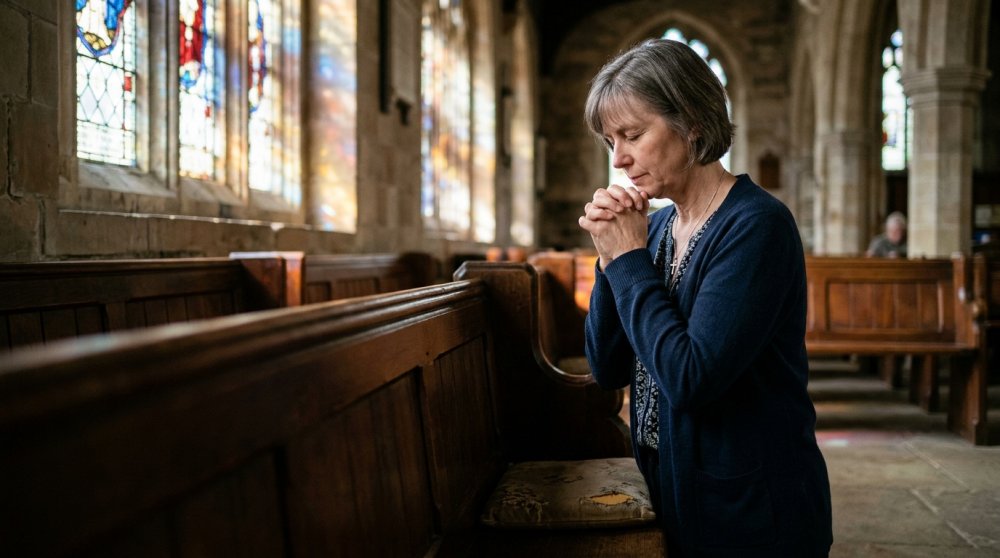
It’s a tiny word that slips into almost every prayer: “Lord, I just want to thank you.”
But Gemma Hunt says your seemingly innocent use of ‘just’ may be revealing something significant about how you see yourself before God.
“Lord, I just want to thank you.”
Hunt argues that repeatedly using the word “just” can unintentionally diminish the boldness and reverence believers are called to bring into prayer.
She encourages Christians to examine whether this habit reflects a lack of confidence in approaching the throne of grace.
“It may be revealing something significant about how you see yourself before God.”
Let us know what you think, please share your thoughts in the comments below.


-

 Self-Reliance2 years ago
Trump’s Bold Move Uncovers Massive Social Security Fraud
-
 Faith2 years ago
New Clues Emerge in Noah’s Ark Mystery
-

 News2 years ago
Governor Walz’s Rhetoric Sparks National Controversy
-

 News2 years ago
Mel Gibson’s ‘The Passion of the Christ’ Sequel Title Announced
-

 Family2 years ago
Texas Lawmaker Targets Furries in Schools
-

 Freedom2 years ago
Maine Lawmaker Challenges Sports Fairness Controversy
-

 Family1 year ago
Canada’s Controversial Policy Sparks Ethical Debate
-
Faith12 months ago
Congress Hears Pleas for Nigerian Christians