
Faith
Personality Tests Exposed: Scripture Calls Us Beyond Temperament


Faith Facts:
- Scripture highlights diverse personalities like Moses and Peter but never categorizes them into psychological systems or boxes.
- The Bible focuses on the heart’s transformation into the image of Christ rather than the static description of natural traits.
- True identity is found through surrender and being known by God rather than through endless secular self-analysis.
Many people today find comfort in personality tests, using letters and numbers to explain their behaviors and limitations.
While these tools provide a common language for self-understanding, they often become a modern substitute for true spiritual identity.
When we anchor our identity in temperament, we risk making personal growth feel optional or even impossible.
This mindset ignores the reality that our habits are often shaped by a fallen world rather than our Creator’s intent.
The Gospel does not merely seek to refine our natural tendencies; it calls for a total reorientation of the self.
We are called to move past our natural wiring to produce the spiritual fruit of love, joy, and peace.
“I have been crucified with Christ and I no longer live, but Christ lives in me” (Galatians 2:20).
Identity is not a matter of self-expression but of faithful transformation through the Holy Spirit.
We must resist the urge to say “this is just how I am” and instead ask who God is calling us to become.



Faith Facts
- Scripture never promises earthly restoration for every trial believers face before reaching Heaven
- Christians must distinguish between false prosperity gospel promises and biblical truth about suffering
- The Bible affirms God’s presence in suffering, but not guaranteed earthly deliverance from all pain
Many well-meaning Christians believe the Bible guarantees an earthly restoration for every painful season of life. This comforting idea has been preached from countless pulpits and shared in Christian counseling sessions across America. But does Scripture actually make this promise?
The answer may challenge some popular teachings within modern evangelical circles. A careful examination of biblical text reveals no such universal guarantee of earthly restoration for faithful believers.
The prosperity gospel movement has popularized the belief that faith, properly exercised, will result in healing, financial blessing, and the resolution of earthly problems. This teaching has shaped how millions of American Christians understand suffering. Yet this interpretation conflicts with the experiences of biblical heroes and the teachings of Jesus Himself.
Consider the apostle Paul, who pleaded three times for God to remove his “thorn in the flesh.” God’s response wasn’t restoration but a promise of sustaining grace. The writer of Hebrews chronicles faithful believers who “were tortured, not accepting deliverance” and others who “wandered in deserts and mountains, and in dens and caves of the earth.”
These weren’t spiritual failures. Scripture commends their faith even though they “did not receive what was promised.”
Job’s story often gets cited as proof of eventual earthly restoration. While Job did receive double what he lost, his story serves primarily as an exploration of suffering’s mystery, not a formula for guaranteed recovery. The loss of his first ten children represents irreplaceable grief no earthly blessing could erase.
Jesus Himself warned His followers to expect tribulation in this world. He promised His presence and ultimate victory, but not necessarily earthly deliverance from every hardship. The early church understood this distinction clearly, which is why they could sing hymns in prison and face martyrdom with joy.
The confusion often stems from misapplying Old Testament covenant promises made specifically to Israel as a nation. These promises operated under a different covenant framework than the New Testament reality believers now experience. Conflating these promises with guaranteed individual outcomes creates false expectations and deepens the pain of those whose restoration never comes this side of Heaven.
This doesn’t mean God never restores or heals on earth. He certainly does, and such moments reveal His mercy and power. Scripture contains numerous accounts of miraculous provision and deliverance. Christians should pray boldly for healing and restoration, trusting God’s goodness.
However, biblical faith also means trusting God when earthly restoration doesn’t come. True Christian hope anchors itself in eternal promises, not temporal circumstances.
The danger of teaching guaranteed earthly restoration extends beyond theological error. It creates spiritual crises for faithful believers whose prayers go unanswered in the ways they hoped. When healing doesn’t come, when the marriage doesn’t restore, when the prodigal doesn’t return, these Christians may question their faith or God’s character.
A more biblical perspective acknowledges that God’s ultimate restoration awaits us in eternity. The Bible promises that in Heaven, God “will wipe away every tear from their eyes; there shall be no more death, nor sorrow, nor crying. There shall be no more pain, for the former things have passed away.”
This eternal perspective sustained believers through centuries of persecution and suffering. It enabled missionaries to sacrifice comfortable lives for the gospel. It comforted mothers who lost children and spouses who became widows.
American Christianity has sometimes traded this robust biblical faith for a more comfortable theology that promises earthly happiness for sufficient faith. This represents a significant departure from historic Christian teaching and the testimony of Scripture itself.
Believers walking through valleys of suffering need the church to offer biblical truth rather than false assurances. They need to know that God walks with them through the valley, not that He guarantees a specific earthly exit from it.
The Christian faith offers something better than guaranteed earthly restoration: the presence of a God who enters into our suffering, who knows grief personally, and who promises ultimate restoration in a kingdom that cannot be shaken. This hope doesn’t disappoint because it rests on God’s unchanging character rather than our changing circumstances.
For those currently walking through seasons of pain and grief without seeing restoration, the biblical message remains clear: God has not abandoned you, your faith is not deficient, and your ultimate restoration awaits in glory. Until then, His grace proves sufficient for each day, and His presence remains your greatest treasure.
Let us know what you think, please share your thoughts in the comments below.
Faith Facts
- A Presbyterian Church (USA) proposal would require monogamy for all ordained clergy, including those in same-sex relationships
- Three denominational committees have rejected the proposal, calling it ‘spiritual coercion’ and questioning its enforceability
- The controversy highlights ongoing debates within mainline Protestant denominations over biblical standards and church authority
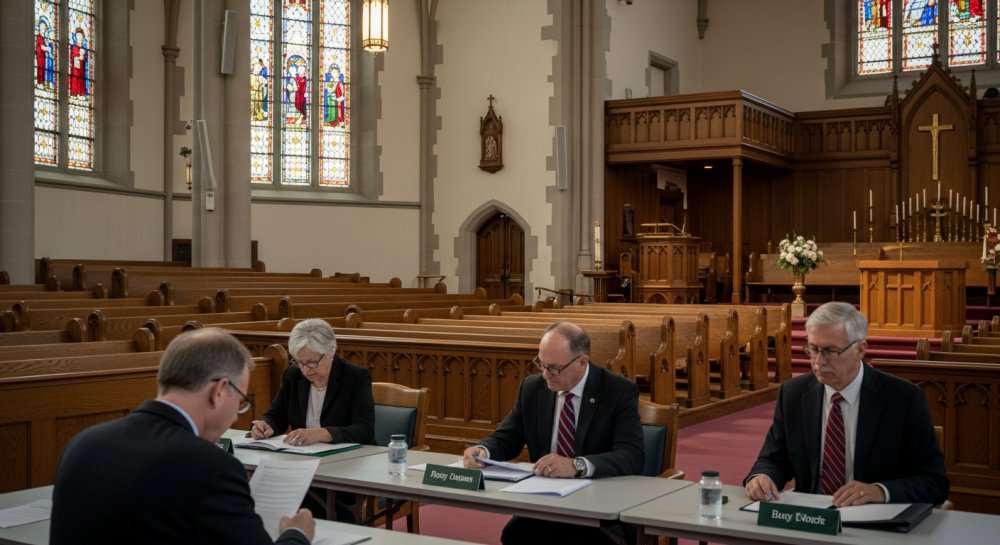
The Presbyterian Church (USA) is experiencing internal division over a proposed rule that would mandate monogamous relationships for all ordained ministers. The measure, which would apply to both traditional marriages and same-sex unions, has sparked significant opposition from denominational leadership.
Three separate committees within the PCUSA have formally pushed back against the overture, which seeks to establish clear behavioral standards for clergy. Critics within the denomination have characterized the proposal as ‘spiritual coercion,’ raising concerns about enforcement mechanisms and denominational authority.
The proposed policy change comes as the PCUSA, like many mainline Protestant denominations, continues to navigate tensions between traditional Christian teaching on marriage and sexuality and contemporary cultural pressures. The denomination previously voted to allow same-sex marriage ceremonies and the ordination of non-celibate LGBT clergy, decisions that led to significant membership losses and congregation departures.
The monogamy requirement, while appearing to set a minimal behavioral standard, has become contentious within a denomination that has increasingly moved away from traditional biblical interpretations of sexuality and marriage. Opponents argue that enforcing such standards would represent an inappropriate exercise of church authority over personal relationships.
Conservative Christians have long maintained that biblical standards call for sexual intimacy exclusively within the covenant of marriage between one man and one woman. The PCUSA’s trajectory over recent decades has represented a significant departure from these historic Christian teachings, contributing to declining membership and ongoing theological controversies.
The debate over clergy standards reflects broader questions about the nature of ordination, the authority of Scripture, and the role of church discipline in contemporary American Christianity. Many evangelical and conservative Presbyterian denominations maintain stricter biblical standards for ordained leadership, viewing moral conduct as integral to pastoral qualification.
As the PCUSA continues to debate the proposed overture, the controversy underscores the challenges facing denominations that have adopted progressive positions on human sexuality while attempting to maintain some form of behavioral expectations for clergy. The outcome may further influence the denomination’s direction and identity in the years ahead.
Let us know what you think, please share your thoughts in the comments below.
Faith Facts
- Florida Pastor Willy Rice was elected president of the Southern Baptist Convention on the first ballot Tuesday
- Rice succeeds Pastor Clint Pressley as leader of America’s largest Protestant denomination
- The election represents a pivotal moment for the 13-million-member convention’s future direction
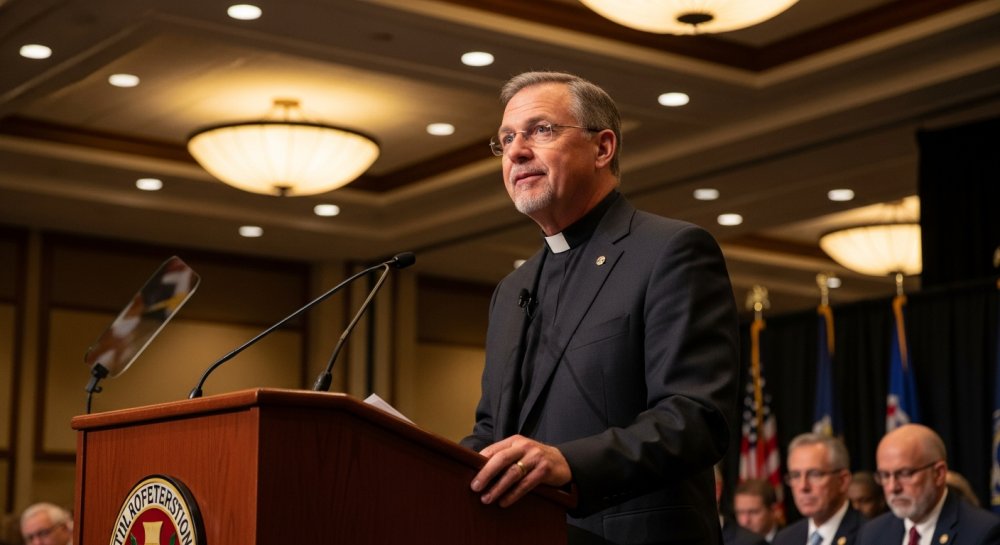
The Southern Baptist Convention witnessed a decisive leadership transition this week as Florida pastor Willy Rice was elected president on the first ballot during Tuesday’s proceedings. The election marks a new chapter for the nation’s largest Protestant denomination, which represents millions of Bible-believing Christians across America.
Rice will succeed outgoing president Clint Pressley in leading the convention, which faces important decisions about maintaining biblical fidelity and engaging with contemporary cultural challenges. The decisive first-ballot victory suggests strong unity among delegates regarding the convention’s future direction.
The Southern Baptist Convention has long served as a pillar of evangelical Christianity in America, championing traditional family values, the sanctity of life, and religious liberty. With more than 13 million members across nearly 47,000 churches, the denomination’s leadership carries significant influence in both spiritual and cultural matters affecting Christian families nationwide.
Rice’s election comes at a critical time as Christian denominations across America grapple with pressure to compromise biblical teachings on marriage, gender, and moral issues. Southern Baptists have historically maintained firm commitment to Scripture as the ultimate authority in all matters of faith and practice.
The new president will be tasked with shepherding the convention through ongoing discussions about mission priorities, theological education, and preserving the gospel message in an increasingly secular culture. His leadership will help determine how effectively the nation’s largest Protestant body can continue reaching souls for Christ while standing firm on biblical truth.
As the Southern Baptist Convention moves forward under new leadership, faithful Christians across America will be watching to see how the denomination navigates the challenges facing Bible-believing churches in the 21st century.
Let us know what you think, please share your thoughts in the comments below.


-

 Self-Reliance1 year ago
Trump’s Bold Move Uncovers Massive Social Security Fraud
-

 Faith1 year ago
New Clues Emerge in Noah’s Ark Mystery
-

 News1 year ago
Governor Walz’s Rhetoric Sparks National Controversy
-

 News1 year ago
Mel Gibson’s ‘The Passion of the Christ’ Sequel Title Announced
-

 Family1 year ago
Texas Lawmaker Targets Furries in Schools
-

 Freedom1 year ago
Maine Lawmaker Challenges Sports Fairness Controversy
-

 Family1 year ago
Canada’s Controversial Policy Sparks Ethical Debate
-
Faith7 months ago
Congress Hears Pleas for Nigerian Christians