
Faith
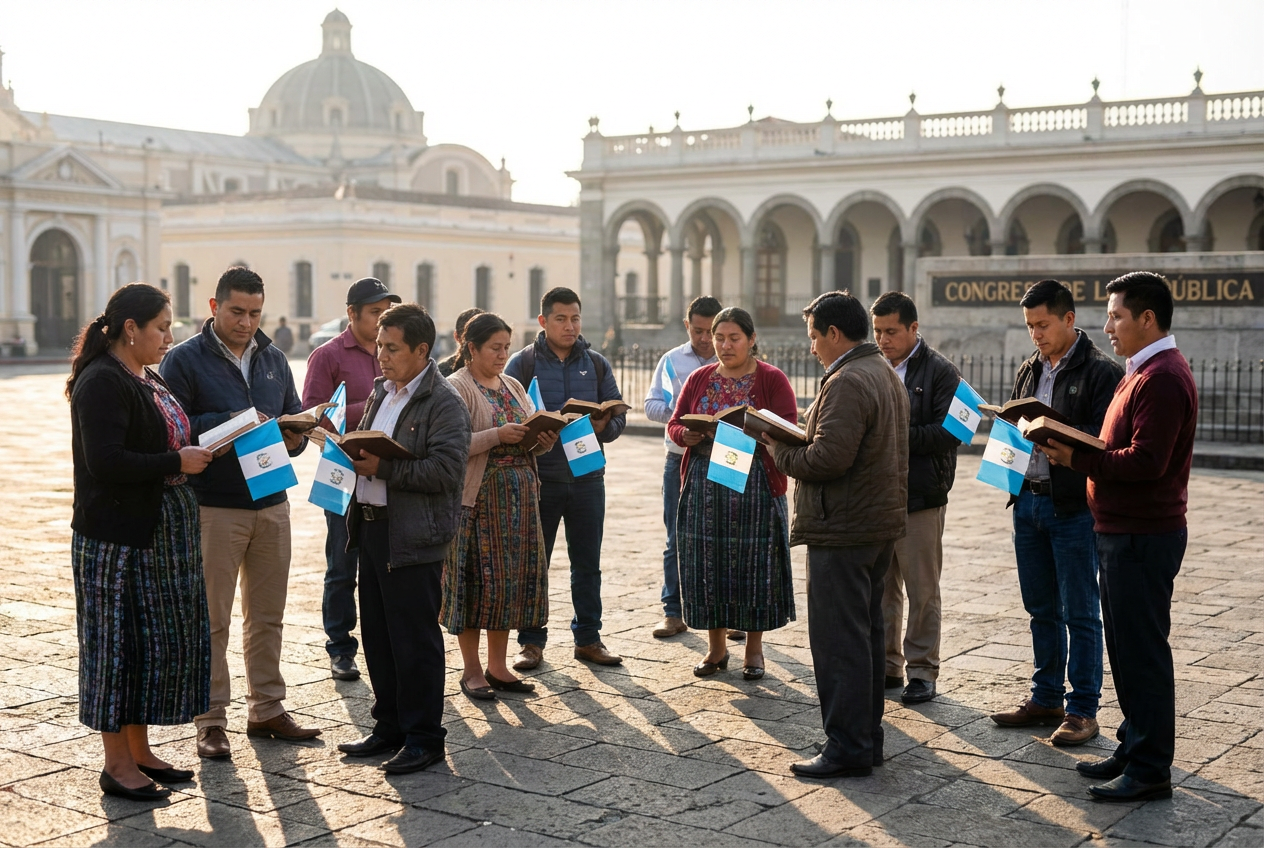
Guatemala’s Evangelicals Defend National Bible Day

Faith Facts
- The Evangelical Alliance of Guatemala addressed the ongoing constitutional review of Decree 5-2025, which established National Bible Day.
- The organization affirmed the Bible’s cultural and spiritual heritage for the nation, calling for respectful, plural public debate grounded in religious freedom.
- National Bible Day, celebrated on the first Saturday of August, highlights the lasting societal contributions of the Bible, according to its supporters.
The Evangelical Alliance of Guatemala has issued a statement supporting the significance of National Bible Day while the country’s Constitutional Court reviews its legality.
The statement encouraged respectful discussion of differing opinions and underscored commitment to religious liberty, the dignity of all, and adherence to constitutional order.
“For many Guatemalans, the Bible is a vital source of values and social unity, contributing to the nation’s ethical and cultural foundation.”
The alliance clarified that the day’s observance does not impose an official religion but instead recognizes a key part of the country’s heritage.
Guatemala’s Congress established this observance with broad support, and the law faces a constitutional challenge that will impact how faith and freedom are honored in public life.
As the nation awaits the court’s decision, believers are reminded to pray for wisdom, unity, and a renewed appreciation for biblical values that build strong families and communities.


Faith Facts
- Churches are increasingly discussing mental health openly, but many lack the structural support systems needed to care for their own leaders and pastors.
- Experts warn that without proper care structures, the Church risks offering ‘cheap healing’ that sounds compassionate but fails to address deeper spiritual and emotional wounds.
- Pastoral burnout and mental health struggles are rising, yet many ministry leaders still face stigma when seeking help within their own congregations.
Across America, churches are finally breaking the silence on mental health. From the pulpit to small groups, conversations about anxiety, depression, and emotional wellness have become more common than ever before. But as these discussions grow louder, a troubling gap has emerged: while congregations talk more openly about mental health, the very leaders guiding these conversations often have nowhere to turn when they struggle themselves.
Michael Tang, a respected voice on faith and wellness, argues that despite increased awareness, the Church has failed to build the necessary structures of care to support those who are hurting. Without these systems in place, he warns, churches risk settling for what he calls “cheap healing” — an approach that feels meaningful in the moment but leaves deeper wounds unaddressed.
“We’ve become very good at talking about mental health,” Tang explains. “But talking isn’t the same as caring. Real care requires intentional structures, resources, and a willingness to walk alongside people through the hardest seasons of their lives.”
The issue is particularly acute for pastors and ministry leaders. These men and women carry heavy burdens: they counsel the grieving, support the struggling, and shepherd their flocks through cultural turbulence. Yet when they face their own battles with burnout, depression, or anxiety, many find themselves isolated, with few safe places to seek help within their own church communities.
Research confirms what many pastors already know: ministry leadership takes a significant toll on mental and emotional health. Long hours, high expectations, and the weight of spiritual responsibility create a pressure cooker environment. Add to that the cultural expectation that pastors should have it all together spiritually, and it’s no wonder many suffer in silence.
The stigma remains real. Despite growing openness about mental health among congregants, many church leaders still fear judgment or loss of respect if they admit to struggling. They worry that vulnerability might be seen as spiritual weakness or a lack of faith. This creates a dangerous double standard: churches encourage members to seek help, but leaders feel they must maintain an image of unwavering strength.
Tang challenges this approach, arguing that authentic healing requires more than good intentions or occasional sermons on mental wellness. It demands deliberate investment in care systems: access to Christian counselors, peer support networks for pastors, sabbatical policies that allow for rest and recovery, and church cultures that normalize seeking help.
“Cheap healing makes us feel like we’re doing something without actually doing the hard work of caring,” he notes. “It’s easier to host a mental health awareness Sunday than to create ongoing support structures. But awareness without action is just noise.”
The consequences of this gap are serious. Pastoral burnout rates continue to climb, with many leaving ministry altogether. The mental and spiritual health of church leaders directly impacts their congregations, their families, and their own walks with faith. When pastors are depleted and unsupported, everyone suffers.
Some churches are beginning to address this crisis intentionally. They’re establishing pastor care teams, providing mental health benefits, creating peer support groups, and building partnerships with Christian counseling organizations. These congregations recognize that supporting their leaders isn’t just compassionate — it’s essential for healthy, sustainable ministry.
The path forward requires churches to match their words with action. If mental health truly matters, then caring for those who lead must become a priority, not an afterthought. This means allocating resources, challenging stigma within leadership circles, and creating cultures where vulnerability is seen as strength, not weakness.
For a Church that proclaims the healing power of Christ, settling for cheap substitutes dishonors both the message and the messengers. True healing — the kind that transforms lives and communities — requires structures of care built on the foundation of biblical love and genuine commitment to one another’s wellbeing.
As congregations continue navigating mental health conversations, the question remains: will the Church rise to meet the needs of those who serve faithfully on the front lines? Or will leaders continue to carry their burdens alone, hidden behind smiles and sermons, while the pews talk about wellness they themselves cannot access?
Let us know what you think, please share your thoughts in the comments below.

Faith Facts
- Christian observers warn that secular “manosphere” influencers are filling a discipleship vacuum left by churches failing to engage young men
- Cultural commentators note that when the Church retreats from forming masculine identity, secular voices rush in to shape the next generation
- Faith leaders are being called to reclaim their biblical mandate to disciple and mentor young men in traditional Christian values
A growing concern among Christian leaders has emerged as secular influencers dominate the formation of young men’s values and identity. Where churches have stepped back from robust discipleship, cultural forces have eagerly filled the void.
The phenomenon known as the “manosphere” represents a collection of online personalities and movements that offer young men guidance on masculinity, purpose, and direction. While some of these voices promote discipline and responsibility, they often lack the moral and spiritual foundation that Christianity has historically provided.
Christian commentator Spud Murphy has issued a stark warning to the Church: this shift represents more than a passing cultural trend. It reveals a fundamental failure in the Church’s mission to disciple the next generation of men.
For centuries, the Christian faith provided clear pathways for young men to understand their purpose, develop character, and embrace responsibility. Churches offered mentorship, accountability, and a vision of manhood rooted in service, sacrifice, and spiritual strength.
Today, many churches have abandoned or minimized these traditional approaches. Youth ministries often emphasize entertainment over formation, and masculine virtues like courage, leadership, and protection are sometimes viewed with suspicion rather than celebrated as gifts from God.
Into this vacuum have stepped secular voices offering young men what they’re hungry for: purpose, structure, and affirmation of their masculinity. While these influencers may promote some positive traits like physical fitness and self-improvement, they cannot provide the eternal truth and moral clarity that only comes through Christ.
The consequences of this discipleship gap are far-reaching. Young men formed by secular worldviews may develop strength and discipline, but without the transforming power of the Gospel, they lack the foundation needed for truly virtuous manhood.
Christian fathers, pastors, and leaders face an urgent call to action. The Church must reclaim its biblical mandate to raise up godly men who lead with integrity, protect the vulnerable, provide for their families, and advance the Kingdom of God.
This means creating spaces where biblical manhood is taught without apology. It means older men investing time in mentoring the younger generation. It means churches offering clear teaching on what God calls men to be and do.
The rise of secular influencers should serve as a wake-up call. Young men are searching for guidance, and they will find it somewhere. The question facing the American Church is whether it will step up to provide the truth these young men desperately need.
Traditional Christian teaching on manhood is not toxic—it is essential. Scripture calls men to sacrificial leadership, to protect and provide, to exercise self-control and courage. These timeless truths have shaped civilizations and must not be surrendered to cultural pressure.
Churches that embrace their role in forming young men will not only change individual lives but strengthen families, communities, and the nation. The alternative is allowing secular voices to continue shaping the next generation without the anchor of biblical truth.
Let us know what you think, please share your thoughts in the comments below.

Faith Facts
- Season 6 of ‘The Chosen’ will premiere on November 15 through Prime Video and 5&2 Studios
- The season will feature a hybrid release combining streaming episodes with a theatrical finale
- The groundbreaking biblical series is entering its final stretch, bringing the story of Jesus Christ to its climactic conclusion
Prime Video and 5&2 Studios have announced that the highly anticipated sixth season of ‘The Chosen’ will premiere November 15. The release will offer viewers both streaming access and a unique theatrical finale experience.
The announcement marks a significant milestone for the groundbreaking series that has captivated Christian audiences worldwide with its authentic portrayal of Jesus Christ and His disciples. The hybrid release strategy reflects the show’s innovative approach to faith-based entertainment, combining modern streaming platforms with the communal experience of theatrical viewing.
This season represents the home stretch for the acclaimed biblical drama, which has become the largest crowdfunded media project in history. The series has consistently broken new ground in Christian entertainment, offering believers a fresh and deeply personal look at the life of Christ and those who walked with Him.
The theatrical component of the release allows Christian communities to gather together for the series conclusion, creating opportunities for fellowship and shared spiritual experience. This approach honors the series’ roots in crowdfunding and community support while providing fans with a memorable finale experience.
‘The Chosen’ has distinguished itself through its character-driven storytelling and commitment to biblical accuracy, resonating with audiences seeking quality faith-based content. The series has demonstrated that there is substantial demand for entertainment that honors Christian values and brings Scripture to life with excellence and authenticity.
The November 15 premiere date gives families and faith communities something meaningful to anticipate as the year draws to a close. The series has become appointment viewing for millions of Christians seeking entertainment that strengthens rather than undermines their faith.
Let us know what you think, please share your thoughts in the comments below.


-

 Self-Reliance1 year ago
Trump’s Bold Move Uncovers Massive Social Security Fraud
-

 Faith1 year ago
New Clues Emerge in Noah’s Ark Mystery
-

 News1 year ago
Governor Walz’s Rhetoric Sparks National Controversy
-

 News1 year ago
Mel Gibson’s ‘The Passion of the Christ’ Sequel Title Announced
-

 Family1 year ago
Texas Lawmaker Targets Furries in Schools
-

 Freedom1 year ago
Maine Lawmaker Challenges Sports Fairness Controversy
-

 Family11 months ago
Canada’s Controversial Policy Sparks Ethical Debate
-
Faith5 months ago
Congress Hears Pleas for Nigerian Christians