
Faith
Bishop Upholds Faith as Isle of Man Debates Vote

Faith Facts
- The Isle of Man’s Tynwald is advancing a bill that would let the Bishop of Sodor and Man keep her seat but end her right to vote.
- Bishop Tricia Hillas warned this change undermines democracy and the church’s role in society.
- Despite these challenges, the Bishop affirms the church’s mission remains rooted in Christ and service.
The Isle of Man faces a significant change as lawmakers consider ending the bishop’s right to vote, though the seat is preserved. This shift reflects a move toward elected representation in government, sparking concerns about faith’s place in public life.
Bishop Tricia Hillas addressed the legislature, cautioning that removing voting rights weakens both democratic principles and the accountability of Christian voices. She emphasized that the heritage and spiritual identity of the diocese are deeply affected by this decision.
“The bill argues for the retention of the bishop’s seat but to remove the vote. However, when contributions are separated from responsibility and accountability, democracy is undermined, and contribution simply becomes commentary.”
In her pastoral letter, Bishop Hillas called for prayer, expressing assurance that Christian confidence remains in God, not in political arrangements. She encouraged the faithful to trust God’s guidance and purpose during these uncertain times.
“Our confidence does not rest in constitutional arrangements, roles, or votes, but in the faithfulness of God who has guided His people through every age.”
The Bishop reaffirmed the church’s commitment to proclaiming God’s kingdom, seeking justice, sharing mercy, and serving the island community no matter the political outcome. She reminded believers that their mission is unchanged, anchored in Christ, and persevering through the trials of the present age.


Faith Facts
- Disciple-making movements emphasize serious commitment to following Christ and making other disciples
- Traditional churches and new movements both have valid concerns about how the other approaches ministry
- Church planting movement principles have shown limited growth in Western contexts compared to other parts of the world
Disciple-making movements have raised important questions about how churches in the West are making followers of Jesus. These movements point to a genuine desire for deeper commitment to the Great Commission. Their critique of traditional structures comes from a concern that many established churches have lost focus on personal discipleship.
At the same time, traditional churches have raised concerns about the sustainability and doctrinal depth of newer movements. Both perspectives reflect a shared burden for reaching people with the gospel. The tension between these approaches reveals a broader question facing American Christianity.
Church planting movement principles that have seen dramatic growth in other parts of the world have struggled to produce similar results in Western nations. Cultural differences, established religious traditions, and societal attitudes toward faith all play a role in this disparity. The challenges are complex and require thoughtful examination rather than quick solutions.
This reality challenges established churches to consider whether new approaches might be needed. The call is not to abandon biblical truth but to examine whether current methods are effectively making disciples. Many traditional congregations are beginning to ask hard questions about their own fruitfulness in fulfilling Christ’s command.
Let us know what you think, please share your thoughts in the comments below.
Faith Facts
- Gateway Seminary, a California-based Southern Baptist Convention theology school, reported record enrollment for the fall semester.
- Leaders at the seminary say students are actively seeking deeper study of Scripture.
- The growth reflects a renewed hunger among believers for sound biblical training and Christian service.
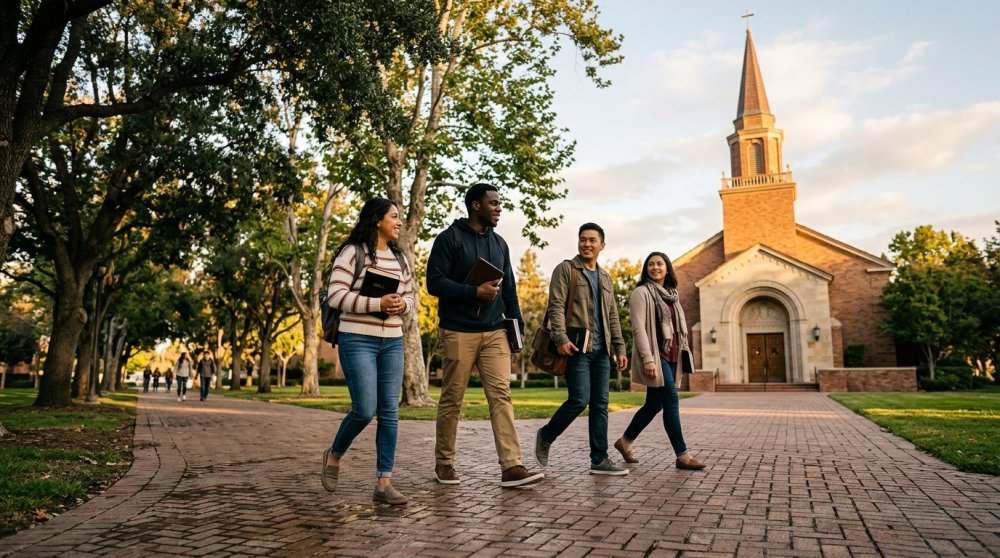
Gateway Seminary announced record enrollment numbers for its fall semester, continuing a trend of growth for the Southern Baptist-affiliated institution based in California.
The seminary’s leadership noted that students are expressing a strong desire to engage with the Bible and prepare for ministry roles across the nation.
“Students are hungry for God’s Word,” seminary officials stated.
The increase in enrollment comes at a time when many traditional seminaries are facing declining numbers, making Gateway’s growth stand out within the broader landscape of theological education.
School leaders attribute the surge to a growing interest in faithful biblical teaching and the desire among younger believers to serve local churches and communities with clarity and conviction.
Let us know what you think, please share your thoughts in the comments below.
Faith Facts
- Dinesh D’Souza has written a new book titled The Stones Cry Out examining biblical archaeology and end times prophecy.
- The author asserts that archaeological evidence supports the historical accuracy of Scripture.
- D’Souza connects these discoveries to biblical prophecies concerning the last days.
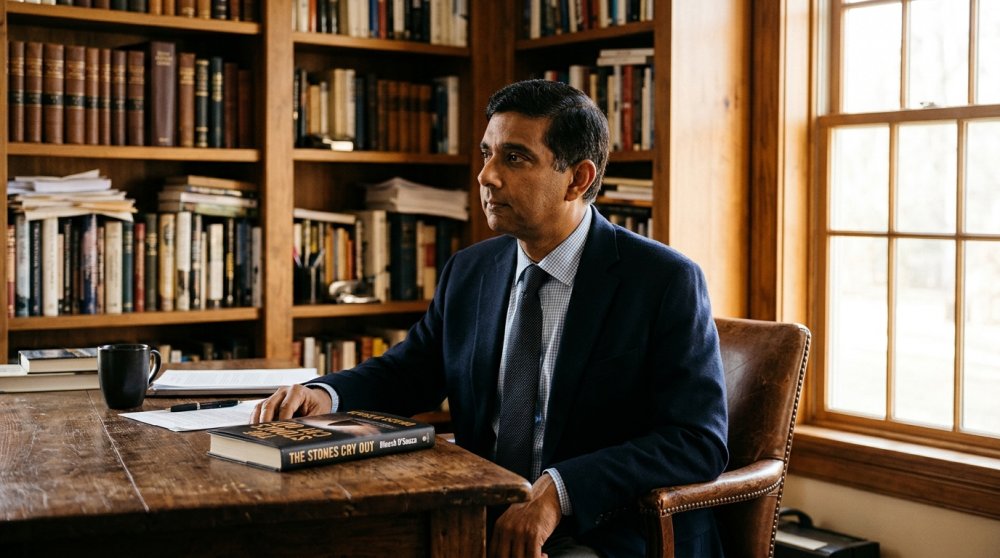
Author and filmmaker Dinesh D’Souza has joined Christian Post to discuss his latest work, The Stones Cry Out: Biblical Archaeology, Prophecy, and the Last Days.
The book examines how recent archaeological findings confirm the reliability of biblical accounts. D’Souza argues that these discoveries strengthen the case for the literal fulfillment of prophecy in our time.
“The Stones Cry Out is about how the ground itself testifies to the truth of Scripture and the nearness of the last days,”
he explained during the interview.
D’Souza highlights specific sites and artifacts that align with Scripture’s historical claims. He presents these findings as evidence that the Bible is not merely spiritual literature but a trustworthy historical record.
“When archaeology confirms what the prophets foretold, it becomes harder for skeptics to dismiss the Word of God,”
he stated.
The author also explores how current events appear to line up with prophetic patterns described in Scripture. He encourages believers to study both the physical evidence and the biblical text with renewed attention.
“God is not silent, and the stones continue to speak,”
D’Souza concluded.
Let us know what you think, please share your thoughts in the comments below.


-

 Self-Reliance2 years ago
Trump’s Bold Move Uncovers Massive Social Security Fraud
-

 Faith2 years ago
New Clues Emerge in Noah’s Ark Mystery
-

 News2 years ago
Governor Walz’s Rhetoric Sparks National Controversy
-

 News2 years ago
Mel Gibson’s ‘The Passion of the Christ’ Sequel Title Announced
-

 Family2 years ago
Texas Lawmaker Targets Furries in Schools
-

 Freedom2 years ago
Maine Lawmaker Challenges Sports Fairness Controversy
-

 Family1 year ago
Canada’s Controversial Policy Sparks Ethical Debate
-
Faith11 months ago
Congress Hears Pleas for Nigerian Christians