
Faith
Remembering Faith’s Foundations in Fort Morgan

Faith Facts
- Fort Morgan’s original Church of Christ nurtured generations with steadfast faith and biblical teaching.
- The former church buildings now serve new congregations and purposes, showcasing resilience and ongoing witness.
- Despite transitions, Christ-centered community endures in Fort Morgan with roots tracing back decades.
A child’s early years were shaped by the warmth and devotion found in Fort Morgan’s Church of Christ congregation, where biblical lessons and caring teachers guided young hearts in the light of God’s truth.
Baptized on a chilly night surrounded by family and friends, a lifelong journey of faith began. This heritage was never forgotten, even as life moved to other communities.
“I’ve never forgotten that congregation and the people who formed me there.”
Returning to Fort Morgan years later revealed that although church buildings changed hands—from Baptist to Spanish-speaking Apostolic and even to a funeral home—the core of Christian fellowship persisted.
Those who once gathered in beloved sanctuaries now worship together in Christ’s Church, continuing a legacy of faith despite loss and change, a testament to God’s enduring presence in their lives.
“Still, I was curious. And though it’s never a good thing to live in the past, an occasional visit can be good for the soul.”
The spirit of unity and love, rooted in Scripture and fellowship, weaves through each chapter of this community’s story—offering hope and perseverance for believers dedicated to serving Christ in every season.
Let us hold fast to the rich traditions of faith and community, cherishing the memories and bonds that have shaped us, and commit to nurturing future generations in God’s truth and love.


Faith Facts
- A Christian hospital in Jos, Nigeria treats over 2,000 women annually with free fistula surgery regardless of their religious background
- Obstetric fistula, often caused by early marriage and childbirth complications, leaves women suffering from devastating injuries and social isolation
- Nigeria’s First Lady has joined the call to end child marriage, recognizing it as a leading cause of this preventable condition
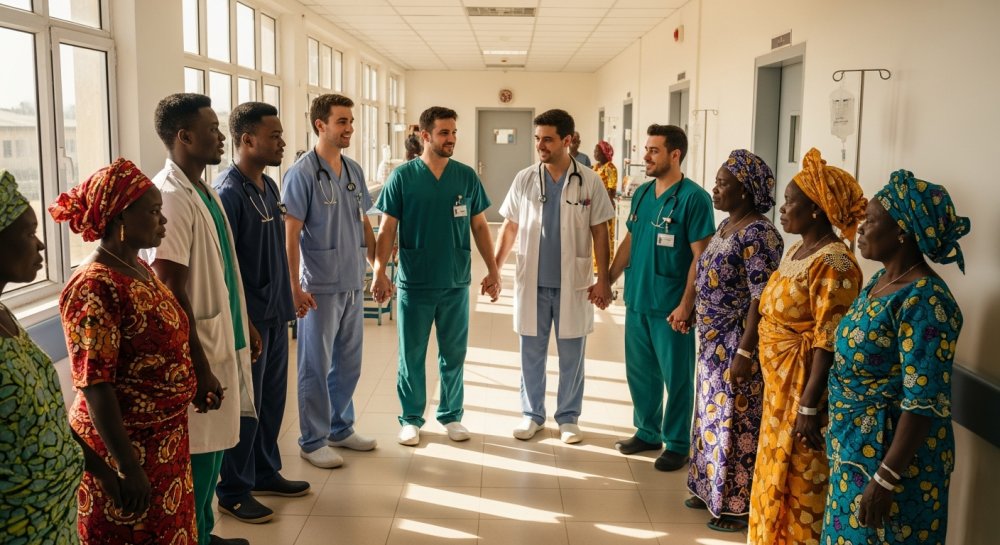
A Christian medical facility in Jos, Nigeria is demonstrating the transformative power of faith in action by providing life-changing surgical care to thousands of women each year. The hospital’s compassionate mission serves women of all faiths who suffer from obstetric fistula, a debilitating condition that tears apart lives and families across the nation.
Obstetric fistula occurs when prolonged, obstructed labor creates an opening between the birth canal and bladder or rectum, resulting in chronic incontinence. This devastating injury disproportionately affects young girls forced into early marriage and pregnancy before their bodies are physically ready for childbirth.
The condition leaves women facing not only severe physical suffering but profound social stigma. Many are abandoned by their husbands and communities, forced to live in isolation due to their injuries. In a culture where family and community bonds are central to daily life, this rejection compounds an already tragic situation.
The Christian hospital’s commitment to treating more than 2,000 women annually represents a powerful testimony to the biblical call to care for the vulnerable and marginalized. By offering these complex surgeries at no cost, the medical mission removes financial barriers that would otherwise leave impoverished women without hope of healing.
Nigeria’s First Lady has added her voice to advocates calling for an end to child marriage, recognizing that this harmful practice directly contributes to the fistula crisis. Early marriage denies young girls their childhood, education, and health, setting them on a path toward complications that could be entirely prevented.
The hospital’s model of serving patients regardless of their religious affiliation reflects the Christian principle of loving one’s neighbor and caring for those in need without distinction. This approach has built trust across religious communities and opened doors for the Gospel to be shared through actions that speak louder than words.
Medical experts emphasize that obstetric fistula is entirely preventable with proper prenatal care, skilled birth attendance, and timely access to emergency obstetric services. The condition is virtually eliminated in developed nations where women have access to quality healthcare during pregnancy and delivery.
For the women who receive surgery at the Jos hospital, the procedure offers more than physical restoration. It provides an opportunity to reclaim their dignity, rebuild their lives, and return to their families and communities. Many patients describe their healing as nothing short of miraculous.
The ongoing work of this faith-based hospital highlights the critical role Christian medical missions play in addressing healthcare gaps in developing nations. Where government infrastructure falls short, Christian organizations step forward to fill the void, motivated by a conviction that every person bears the image of God and deserves compassionate care.
As awareness grows about the preventable nature of obstetric fistula, advocates continue pressing for comprehensive approaches that include ending child marriage, expanding maternal healthcare access, and providing surgical repair for those already affected. The Christian hospital in Jos stands as a beacon of hope, demonstrating that faith paired with medical expertise can transform lives and communities.
Let us know what you think, please share your thoughts in the comments below.
Faith Facts
- Christian rights organizations in Pakistan are demanding constitutional reforms to protect religious minorities, women, and children in the proposed 28th Constitutional Amendment Bill
- Christian leaders are calling for equal representation in government, including seats in the Senate and proportional representation in provincial assemblies
- The reforms seek to address ongoing persecution and discrimination against Pakistan’s vulnerable Christian population
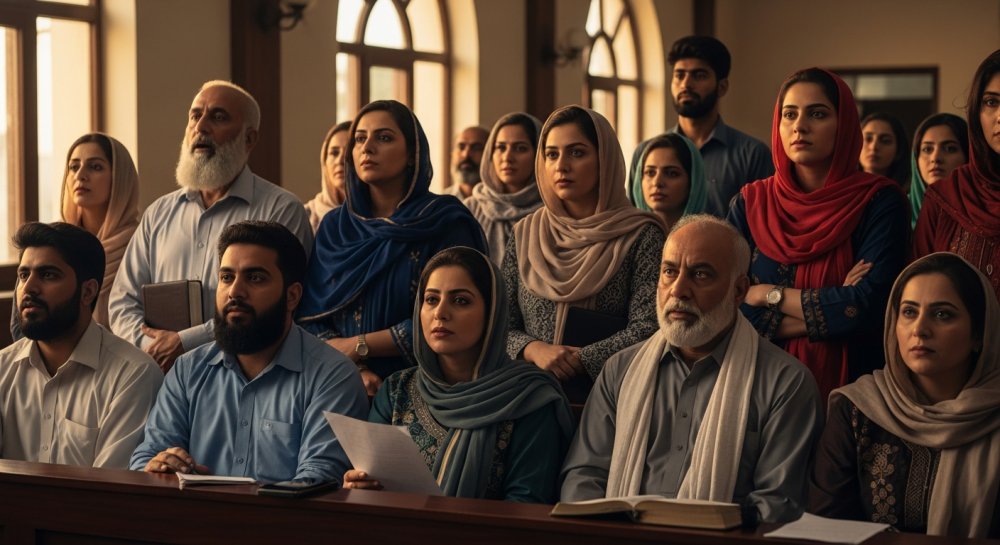
Christian leaders in Pakistan are standing firm in their demand for equal protection under the law as the nation considers sweeping constitutional reforms. Religious freedom advocates are calling on the federal government to include critical safeguards for religious minorities, women, and children in the proposed 28th Constitutional Amendment Bill.
The push for reform comes amid ongoing persecution of Christians and other religious minorities in the predominantly Muslim nation. Faith-based organizations are urging lawmakers to enshrine fundamental protections that would grant believers the same rights and representation afforded to the majority population.
Christian advocacy groups have outlined specific constitutional changes they say are essential for protecting their community. The proposals include guaranteed representation in Pakistan’s Senate and provincial assemblies, ensuring that minority voices are heard in the halls of power.
The reform effort represents a critical moment for religious freedom in Pakistan, where Christians have long faced systemic discrimination and violence. Advocates argue that constitutional protections are necessary to prevent further marginalization of vulnerable populations.
Women and children from minority communities face particular risks, making their inclusion in these reforms especially urgent. The proposed amendments would establish legal frameworks to shield these groups from exploitation and persecution.
For American Christians watching from afar, the struggle of Pakistani believers serves as a sobering reminder of the fragility of religious liberty. It underscores the importance of supporting persecuted Christians worldwide through prayer, advocacy, and assistance.
The outcome of Pakistan’s constitutional deliberations will have far-reaching implications for millions of religious minorities living under increasingly difficult circumstances. The international faith community must remain vigilant in holding governments accountable for protecting fundamental human rights.
Let us know what you think, please share your thoughts in the comments below.
Faith Facts
- Nepal’s Christian population is experiencing rapid growth as the nation stabilizes and emerges from decades of political uncertainty.
- The Nepal Christian Grand Trust now provides a pathway for official recognition of Christian congregations seeking legal protections.
- Church leaders identify theological, spiritual, and practical leadership development as the most urgent need for the maturing Nepali Church.
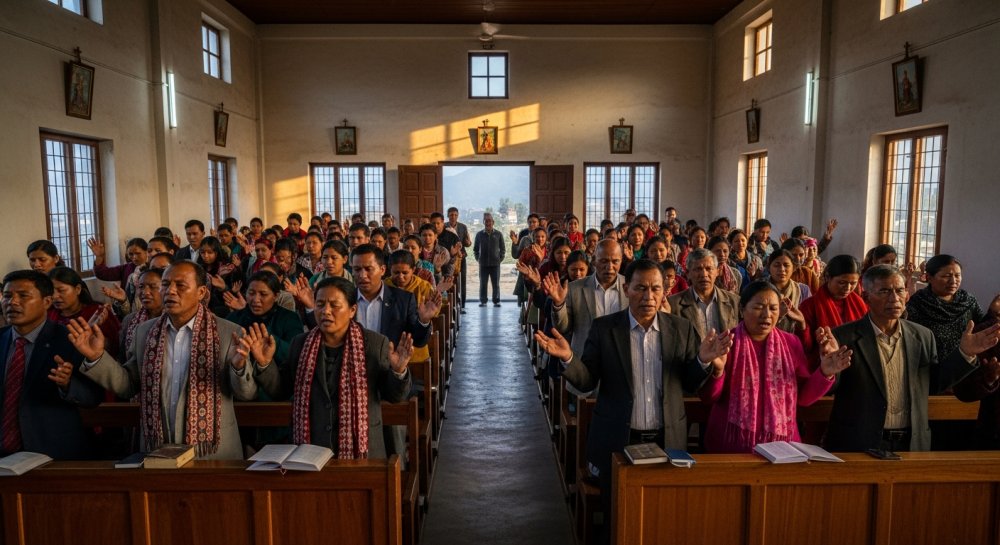
Nepal stands at a crossroads. After decades of political instability and religious restrictions, the nation’s Christian community is experiencing unprecedented growth—and with it, unprecedented challenges.
As the Church in Nepal matures, believers are no longer content to remain in the shadows. They are seeking official status and legal protections for their congregations, a development that reflects both the courage of Nepali Christians and the changing landscape of religious freedom in the Himalayan nation.
The Nepal Christian Grand Trust has emerged as a critical institution in this transformation. By providing a formal pathway for official recognition, the Trust offers Christian congregations the opportunity to operate openly and with legal standing. This represents a significant shift in a country where Christianity was once forbidden and believers faced imprisonment for their faith.
Yet recognition is only the beginning. Church leaders throughout Nepal emphasize that the most pressing challenge facing the growing Christian community is not legal status, but spiritual depth. Theological education, spiritual formation, and practical ministry training remain in desperately short supply.
The rapid expansion of Christianity in Nepal has created an urgent need for qualified pastors, teachers, and leaders who can ground new believers in sound doctrine and biblical truth. Without this foundation, leaders warn, the Church risks becoming a mile wide but only an inch deep—full of enthusiasm but lacking the theological grounding necessary for long-term faithfulness.
This challenge is familiar to Christian communities throughout Asia and the developing world. Explosive growth often outpaces the capacity to train leaders, leaving young congregations vulnerable to false teaching and spiritual confusion. Nepal’s Christian leaders are determined to avoid this pitfall.
The future of Nepal’s Church remains uncertain in many ways. Political changes could shift the landscape again. Cultural pressures and family opposition continue to test believers’ faith. Economic challenges make full-time ministry difficult to sustain.
But uncertainty does not mean hopelessness. The very existence of a thriving, growing Christian community in Nepal is a testament to God’s faithfulness and the courage of Nepali believers who have suffered much for their faith. The establishment of structures like the Nepal Christian Grand Trust and the focus on leadership development demonstrate wisdom and forward-thinking that bodes well for the Church’s future.
American Christians can learn from Nepal’s example. The emphasis on theological depth over numerical growth, the patient work of building institutional structures, and the willingness to suffer for the faith all challenge the comfortable Christianity often found in the West. Nepal’s Christians are building their house on the rock, not on sand.
As Nepal’s Church continues to grow and mature, it will need the prayers and support of believers around the world. The window of opportunity for official recognition and open ministry may not remain open forever. The need for trained leaders will only become more acute as the Church expands.
Yet the future holds genuine hope. A generation of Nepali Christians is rising that has never known a time when the Church was not growing, when believers were not multiplying, when the Gospel was not advancing. They carry the faith forward with both gratitude for what God has done and expectation for what He will do.
Let us know what you think, please share your thoughts in the comments below.


-

 Self-Reliance1 year ago
Trump’s Bold Move Uncovers Massive Social Security Fraud
-

 Faith1 year ago
New Clues Emerge in Noah’s Ark Mystery
-

 News1 year ago
Governor Walz’s Rhetoric Sparks National Controversy
-

 News1 year ago
Mel Gibson’s ‘The Passion of the Christ’ Sequel Title Announced
-

 Family1 year ago
Texas Lawmaker Targets Furries in Schools
-

 Freedom1 year ago
Maine Lawmaker Challenges Sports Fairness Controversy
-

 Family1 year ago
Canada’s Controversial Policy Sparks Ethical Debate
-
Faith6 months ago
Congress Hears Pleas for Nigerian Christians