
Faith
Dallas Megachurch Welcomes New Senior Pastor

Faith Facts
- Highland Park Presbyterian Church in Dallas has called Rev. Thomas Daniel as its new senior pastor after two years of prayerful search.
- Rev. Daniel, who served nearly 12 years in Austin, brings over 25 years of ministry experience and a heart for Gospel-centered service.
- The transition comes as the church prepares to celebrate its 100th anniversary, honoring the legacy of the late Bryan Dunagan.
Highland Park Presbyterian Church has begun a new chapter by naming Rev. Thomas Daniel as its senior pastor, guided by extensive prayer and discernment. Daniel’s appointment follows a unanimous recommendation and a congregational vote, providing hope and direction for the close-knit congregation.
“As my wife, Beth, and I met with the Pastor Nominating Committee, prayed about this opportunity, and sat with trusted friends and mentors who have guided us, it has become abundantly clear that God is calling us to join you all in Dallas and we are filled with gratitude and excitement for what the Lord has in store!”
Rev. Daniel brings a wealth of leadership, having previously led a vibrant, multi-generational church and planted a congregation with a passion for reaching new generations for Christ. His experience is rooted in faithful service, and his vision is shaped by a deep reliance on the Holy Spirit and dedication to spreading God’s love.
The church honors the memory of Rev. Bryan Dunagan, a beloved servant leader whose devotion to sharing the Gospel left a lasting impact. Through loss and transition, HP Pres has remained steadfast in faith, trusting in God’s timing and providence for their next shepherd.
The church family, motivated by biblical values and the desire to serve their neighbors, will soon reach its centennial milestone—a testament to God’s enduring faithfulness.
Stay engaged with stories of faithful leadership and God’s work in our nation’s churches by subscribing to the Faith and Freedom Report.



Faith Facts
- A Christian refugee resettlement expert has challenged a BBC investigation into fraudulent UK asylum claims, arguing it lacked context about legitimate protection needs.
- The expert emphasizes that genuine religious persecution refugees should not be overshadowed by fraud cases.
- The criticism highlights ongoing tensions between border security concerns and humanitarian obligations toward truly persecuted Christians worldwide.
A leading Christian refugee resettlement expert has spoken out against a recent BBC investigation examining fraudulent asylum claims in the United Kingdom. The expert argues the report failed to provide essential context about individuals with legitimate protection needs.
The criticism comes amid growing national debate about asylum integrity and border security. Many Americans watching similar situations unfold in the UK recognize parallels to challenges faced in protecting both national sovereignty and genuine refugees fleeing persecution.
The refugee advocate’s concerns center on the potential harm to authentic asylum seekers, particularly Christians facing severe persecution in their home countries. When media coverage focuses predominantly on fraud cases, it can create a climate of skepticism that affects those with valid claims for protection.
The BBC investigation reportedly highlighted instances of false asylum applications, raising legitimate questions about system vulnerabilities. However, the Christian expert maintains that such reporting requires careful balance to avoid undermining support for those genuinely fleeing religious persecution and violence.
This tension reflects a broader challenge facing Western nations: maintaining secure borders while honoring the biblical mandate to welcome the stranger and protect the persecuted. Conservative Christians have long advocated for immigration systems that are both lawful and compassionate, particularly toward believers facing deadly threats for their faith.
The controversy underscores the importance of accurate, contextualized reporting on immigration and asylum issues. As America continues its own immigration policy debates, the lessons from the UK experience offer valuable insights into balancing security concerns with humanitarian obligations.
Faith-based organizations have consistently played crucial roles in refugee resettlement, bringing both expertise and compassion to complex situations. Their perspective remains essential in policy discussions that affect vulnerable populations worldwide.
Let us know what you think, please share your thoughts in the comments below.
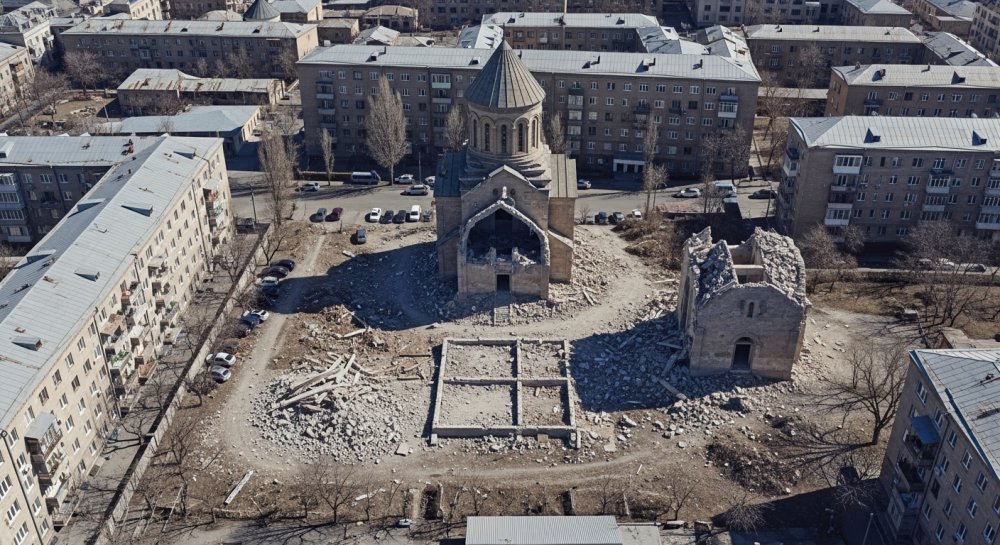
Faith Facts
- Satellite imagery confirms Azerbaijan destroyed two historic Christian churches in Stepanakert, the main city of Nagorno-Karabakh
- The demolitions occurred after Azerbaijan seized control of the disputed region in September 2023
- Armenian church authorities describe the destruction as a deliberate campaign to erase Christian heritage from the territory
Satellite imagery has revealed the complete demolition of two historic Christian churches in Stepanakert, the main city in the Nagorno-Karabakh region, following Azerbaijan’s seizure of the disputed territory in September 2023. The destruction has sparked international outcry and renewed concerns about the protection of Christian heritage in the region.
Armenian church authorities have condemned the demolitions as part of a systematic effort to eliminate Armenian religious and cultural landmarks from Nagorno-Karabakh. The churches, which stood as testaments to the area’s Christian history, have been reduced to rubble, according to verified satellite images.
The region of Nagorno-Karabakh, historically inhabited by ethnic Armenians, has been the site of longstanding territorial disputes between Armenia and Azerbaijan. After Azerbaijan’s military operation in September 2023, nearly the entire ethnic Armenian population fled the region, leaving behind churches, monasteries, and other cultural sites.
Religious freedom advocates have raised alarm about what they describe as cultural genocide — the deliberate destruction of a people’s cultural and religious heritage. The demolition of these churches represents not only the loss of physical structures but the erasure of centuries of Christian presence in the region.
International observers have called for accountability and the protection of remaining Christian sites in Azerbaijan-controlled territories. The destruction of religious buildings violates international conventions on the preservation of cultural heritage during conflicts.
The Armenian Apostolic Church, one of the oldest Christian denominations in the world, has maintained a continuous presence in the region since the fourth century. The demolished churches were part of this ancient Christian tradition that predates Islam’s arrival in the Caucasus region by centuries.
Christian communities worldwide have expressed solidarity with Armenian Christians and called for the preservation of remaining sacred sites. The systematic destruction of churches raises serious questions about religious tolerance and minority rights in territories under Azerbaijani control.
Let us know what you think, please share your thoughts in the comments below.

Faith Facts
- The UK’s Terminally Ill Adults Bill has been defeated, blocking government-assisted suicide from entering the healthcare system
- While suicide was decriminalized in Britain in 1961, this bill would have transformed doctors into facilitators of death
- Christian leaders are calling this a crucial moment to reaffirm the sanctity of life and the true purpose of medical care
In a significant victory for the sanctity of life, Britain’s controversial assisted suicide legislation has fallen. The Terminally Ill Adults Bill, which would have enlisted the National Health Service in facilitating death, has been rejected—a decision that offers hope to defenders of life across the Western world.
The defeat of this bill represents more than a legislative setback for euthanasia advocates. It signals a potential turning point in how society views the fundamental purpose of medicine and the value of every human life, particularly those facing terminal illness.
While suicide itself has not been a criminal act in the United Kingdom since 1961, this proposed legislation represented something far more troubling: the systematic involvement of healthcare professionals in ending lives rather than preserving them. The bill would have fundamentally altered the doctor-patient relationship, transforming healers into executioners.
Christian leaders have been vocal in their opposition to assisted suicide, recognizing it as a dangerous erosion of the principle that all life is sacred and worthy of protection. The hospice movement, which has its roots in Christian compassion, offers a compelling alternative: dignified, pain-managed care that honors life until its natural conclusion.
The fallen bill would have placed vulnerable individuals—the elderly, the disabled, and the terminally ill—at increased risk. History shows that once society accepts medical killing as an option, the criteria inevitably expand. What begins as assistance for the terminally ill often extends to the chronically ill, the mentally ill, and even minors, as has occurred in other nations.
Britain’s National Health Service has faced significant challenges in recent years, with long waiting times and resource constraints. The concern among faith communities was that assisted suicide could become not just an option, but an expectation—a “solution” for patients who feel they are burdens on an overstretched system.
The Christian perspective on suffering recognizes it as a profound human experience, but one that can be met with compassion, medical care, and spiritual support. Palliative care advances have made tremendous strides in managing pain and providing comfort to the dying, making assisted suicide medically unnecessary.
Prayer and advocacy from Christian communities played a role in this legislative defeat. Believers understand that every life has intrinsic value, created in the image of God, and that our duty is to accompany the suffering with love—not to hasten their departure from this world.
The fight to protect life is far from over. Advocates for assisted suicide have made clear their intention to reintroduce similar legislation. This requires continued vigilance from people of faith and all who recognize the dangerous precedent such laws establish.
True compassion involves walking alongside those who are suffering, providing excellent medical care, emotional support, and spiritual comfort. It means investing in hospice services and ensuring that no one feels their only option is death.
The rejection of this bill offers an opportunity for society to recommit to the life-saving and life-affirming purposes of healthcare. It allows Britain to choose a path that values every person, regardless of age, ability, or prognosis.
As Christians, we are called to be defenders of the vulnerable and voices for those who cannot speak for themselves. The defeat of the Terminally Ill Adults Bill is a victory worth celebrating, but it must be followed by renewed commitment to ensuring excellent end-of-life care for all.
The culture of life must prevail over the culture of death. Our prayers must continue, both for those facing terminal illness and for lawmakers who will face pressure to revive these dangerous proposals. We must remain steadfast in our conviction that life is precious from conception to natural death.
Let us know what you think, please share your thoughts in the comments below.


-

 Self-Reliance1 year ago
Trump’s Bold Move Uncovers Massive Social Security Fraud
-

 Faith1 year ago
New Clues Emerge in Noah’s Ark Mystery
-

 News1 year ago
Governor Walz’s Rhetoric Sparks National Controversy
-

 News1 year ago
Mel Gibson’s ‘The Passion of the Christ’ Sequel Title Announced
-

 Family1 year ago
Texas Lawmaker Targets Furries in Schools
-

 Freedom1 year ago
Maine Lawmaker Challenges Sports Fairness Controversy
-

 Family11 months ago
Canada’s Controversial Policy Sparks Ethical Debate
-
Faith5 months ago
Congress Hears Pleas for Nigerian Christians