
Faith
Is Higher Education Still Aligned With Faith?

Faith Facts
- America’s earliest colleges and universities were founded with explicit Christian missions
- Modern campuses often abandon Christian heritage in favor of secular ideologies
- Many young graduates now regret the cost and values of their college experience
The value of a college degree has become increasingly questionable for many American families grounded in faith. Once regarded as a gateway to opportunity, higher education now prompts critical questions about cost, purpose, and the loss of foundational biblical values.
It’s no secret that much of today’s college environment leans heavily toward political correctness and progressive ideals, often at odds with Christ-centered truth. Students and parents alike face rising tuition, mounting debt, and campuses where “indoctrination in political correctness” is more prevalent than the teaching of life-shaping wisdom.
A recent study cited in Newsweek highlighted that nearly one in four Generation Z graduates now regrets attending college. “As artificial intelligence transforms the workplace and student debt balloons, a significant portion of Generation Z now expresses regret over their college education. According to a new survey by Resume Genius, 23% of full-time Gen Z workers regret attending college, and 19% say their degree didn’t contribute to their career.”
Only a minority feel satisfied with their educational journey, with just 32% content with their chosen path. It’s clear that our universities have experienced a dramatic shift away from their original mission.
From their beginnings, America’s most esteemed institutions were entrenched in Christian worldview and devoted to God’s truth. Harvard, for instance, bore the motto “For Christ and the Church,” and early policies were steeped in biblical instruction. Yale, William and Mary, Princeton, Columbia, and Dartmouth were all established as bastions of faith, training ministers and upholding the teachings of Jesus Christ. One of Princeton’s early presidents, Jonathan Dickinson, boldly said, “Cursed be all that learning that is contrary to the cross of Christ.” Their official seals and charters left no doubt about the centrality of biblical principles in their missions.
Yet, over the centuries, these universities have abandoned their founding convictions. Instead, they have embraced a secular model that rejects biblical wisdom and fosters a spirit of moral relativism. The Church, historically the mother of universities as early as the University of Paris, is no longer the guiding influence. Dr. Paul Maier summarized this rich heritage when he said, “You had students from England, studying in Paris who decided to go to a place where the oxen crossed the river, Oxenford, otherwise known as ‘Oxford.’ And that gave birth to Cambridge. Cambridge gave birth to John Harvard, coming over to the United States, Harvard University in 1636. That was the background of our state university system, as well as our private university system, and so on to the universities we have today. Direct Christian origin.”
Today’s graduates are feeling the void left as universities cut ties with faith and foundational values. We are reaping the results: regret, confusion, and a struggle to find purpose in a world adrift from biblical moorings. The urgent need now is to reclaim the wisdom of our ancestors—where education existed to glorify God, not deny Him.
Let us advocate for higher learning that upholds faith, freedom, and responsibility. It is critical for Christian families to seek educational paths grounded in Christ, ensuring future generations are equipped to defend truth, serve others, and lead this great nation with godly conviction.


Faith Facts
- Africa leads the developing world in Christian medical training programs but faces severe shortages of specialist doctors and rural physicians
- Christian health institutions are stepping up to fill gaps in residency programs as healthcare demands grow across the continent
- Faith-based medical schools are emerging as critical infrastructure for healthcare delivery in underserved African communities
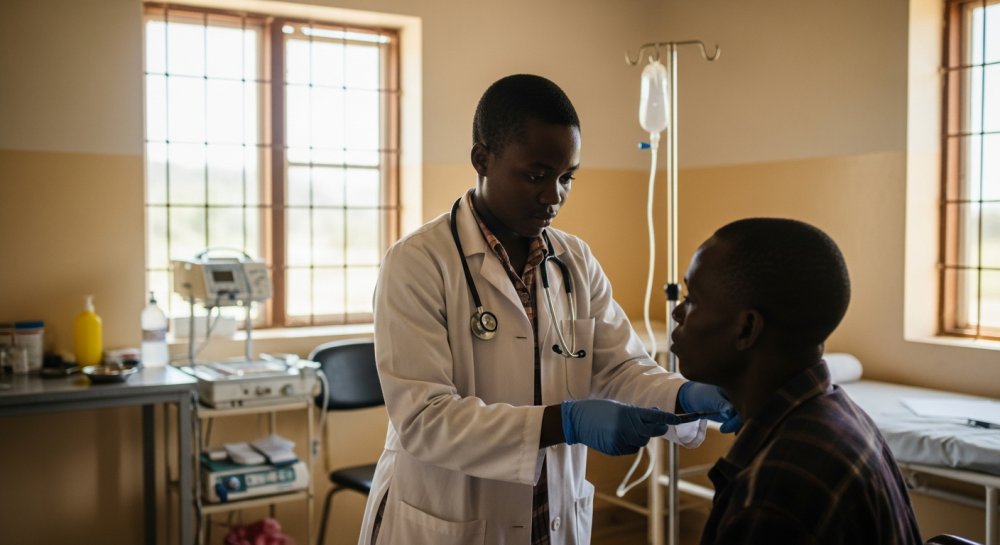
Christian medical institutions across Africa are establishing themselves as essential pillars of healthcare education in the developing world. However, new challenges reveal a troubling gap between training capacity and clinical readiness that threatens to undermine progress in bringing quality healthcare to millions.
The continent has become a beacon for faith-based medical education, with Christian universities and training centers producing thousands of new healthcare workers annually. These institutions represent a powerful testimony to the church’s commitment to healing and service in some of the world’s most medically underserved regions.
Yet health leaders across Africa are sounding the alarm about critical shortages that persist despite these educational gains. The scarcity of specialist doctors capable of performing complex procedures, the lack of physicians willing to serve in rural areas, and insufficient residency programs continue to hamper the continent’s ability to deliver comprehensive healthcare to its growing population.
Christian medical training programs have historically played a vital role in reaching remote communities and serving the poorest of the poor. Faith-based institutions often establish medical schools and teaching hospitals in areas secular organizations avoid, driven by a biblical mandate to care for the sick and vulnerable.
The challenges facing these Christian health institutions reflect broader issues of healthcare infrastructure across Africa. Many graduates of faith-based medical schools seek opportunities abroad or concentrate in urban centers, leaving rural populations without access to basic medical care.
Residency programs, essential for training specialists and advanced practitioners, remain dramatically underfunded and understaffed across the continent. This gap means that even well-trained medical graduates cannot access the supervised clinical experience needed to develop expertise in surgery, obstetrics, pediatrics, and other critical specialties.
The situation demands a renewed commitment from Christian organizations, missionary groups, and churches worldwide. Supporting medical education in Africa is not merely a charitable endeavor but a strategic investment in human flourishing that aligns with biblical principles of stewardship and compassion.
Faith-based medical institutions have proven uniquely positioned to address these challenges. Their commitment to service over profit, their willingness to work in difficult conditions, and their integration of spiritual care with physical healing provide a model that secular organizations struggle to replicate.
As Africa’s population continues to grow and healthcare needs expand, the role of Christian medical training will only become more critical. The church’s response to this moment will determine whether millions of people gain access to life-saving care or continue to suffer from preventable diseases and treatable conditions.
The path forward requires increased support for residency programs, incentives for doctors to serve in rural areas, and sustained investment in specialist training. Christian donors and organizations have an opportunity to make transformative impact by directing resources toward these specific needs.
Let us know what you think, please share your thoughts in the comments below.

Faith Facts
- Undercover footage captures Washington Nationals executive suggesting Catholic pitcher Trevor Williams received reduced promotional support due to his faith
- Catholic advocacy organization CatholicVote calls for Department of Justice investigation into potential religious discrimination
- Williams has been outspoken about his Catholic beliefs and pro-life advocacy throughout his baseball career
A major Catholic advocacy group is demanding federal action after explosive undercover video footage appeared to show religious discrimination against a professional baseball player. The footage has sparked serious questions about whether faith-based bias influences decisions within Major League Baseball organizations.
CatholicVote has formally requested the Department of Justice launch an investigation into the Washington Nationals baseball organization. The call for federal scrutiny follows the release of undercover video in which a team executive allegedly admits that pitcher Trevor Williams faced reduced promotional opportunities because of his Catholic faith.
The video footage, which has sent shockwaves through both the sports and faith communities, appears to capture candid remarks from a Nationals executive. These statements suggest that Williams’ public expression of his Catholic beliefs may have negatively impacted the team’s willingness to promote him as prominently as other players.
Trevor Williams has never hidden his faith. Throughout his Major League Baseball career, the pitcher has been vocal about his Catholic convictions and has actively advocated for pro-life causes. His willingness to stand publicly for traditional Christian values has made him a respected figure among faith-focused sports fans nationwide.
The implications of the alleged discrimination extend far beyond one player or one team. If proven true, these claims would represent a troubling pattern of religious bias in professional sports—an arena that should celebrate diversity of thought and belief, not punish it.
CatholicVote’s appeal to the Justice Department underscores the gravity of the situation. Religious discrimination in the workplace is prohibited under federal law, and professional sports organizations are not exempt from these protections. The group argues that if Williams was indeed denied opportunities based on his faith, it constitutes a clear violation of his civil rights.
The Nationals organization has not yet issued a comprehensive public response to the allegations. As the story develops, many are watching to see whether MLB will address the concerns raised by the undercover footage and whether federal authorities will pursue an investigation.
For Christian Americans, this case represents a larger cultural battle. The freedom to live out one’s faith without professional penalty is a cornerstone of American liberty. When individuals face consequences for their religious convictions, it strikes at the heart of our constitutional protections.
The outcome of this situation may set an important precedent for how religious expression is treated in professional sports and beyond. Athletes of faith deserve the same opportunities and respect as their peers, regardless of whether their beliefs align with prevailing cultural trends.
Let us know what you think, please share your thoughts in the comments below.
Faith Facts
- A new survey reveals most American churchgoers report hearing political and social commentary from the pulpit, even outside election years.
- The study compares how Protestant and Catholic clergy approach controversial cultural issues during Sunday services.
- Churches continue to serve as important forums for addressing moral and social concerns facing Christian families.
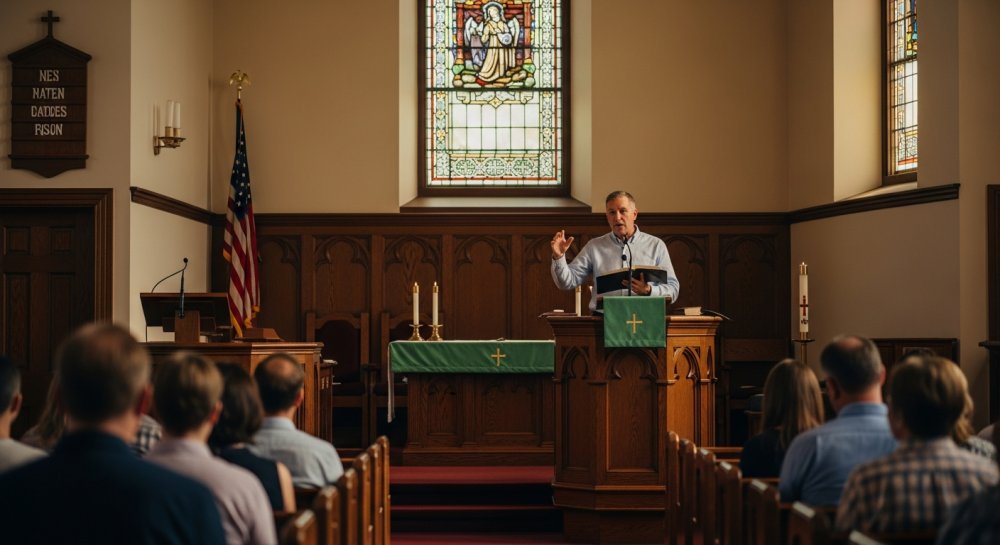
American churches remain vibrant centers of cultural and moral dialogue, according to a significant new survey released this week. The research sheds light on how pastors and priests address the pressing issues facing their congregations, revealing that political and social commentary from the pulpit is far more common than many might assume.
The comprehensive study examines the differences between Protestant and Catholic approaches to discussing controversial topics during worship services. Even when major elections aren’t taking place, clergy members across denominations are engaging their congregations on matters of public concern.
This finding underscores the vital role that churches play in shaping the moral compass of their communities. As American culture faces unprecedented challenges to traditional values, pastors are not shying away from their prophetic duty to speak truth and provide biblical guidance on the issues that matter most to Christian families.
The survey’s timing is particularly noteworthy, demonstrating that political and social engagement in churches isn’t simply an election-year phenomenon. Rather, it reflects an ongoing commitment by faith leaders to help their congregations navigate complex cultural terrain with wisdom rooted in Scripture and Christian principles.
For believers who look to their churches for moral leadership and biblical perspective on contemporary issues, these findings affirm that many pastors are faithfully fulfilling their calling. They’re not merely offering feel-good messages, but are courageously addressing the real challenges facing families and communities across America.
The data also highlights important distinctions between how different Christian traditions approach these sensitive topics, offering valuable insights for understanding the diverse landscape of American Christianity and its ongoing influence on public discourse.
Let us know what you think, please share your thoughts in the comments below.


-

 Self-Reliance1 year ago
Trump’s Bold Move Uncovers Massive Social Security Fraud
-

 Faith1 year ago
New Clues Emerge in Noah’s Ark Mystery
-

 News1 year ago
Governor Walz’s Rhetoric Sparks National Controversy
-

 News1 year ago
Mel Gibson’s ‘The Passion of the Christ’ Sequel Title Announced
-

 Family1 year ago
Texas Lawmaker Targets Furries in Schools
-

 Freedom1 year ago
Maine Lawmaker Challenges Sports Fairness Controversy
-

 Family1 year ago
Canada’s Controversial Policy Sparks Ethical Debate
-
Faith6 months ago
Congress Hears Pleas for Nigerian Christians