
Family
Why Your Accountability Partner Isn’t Enough to Keep You on Track

Faith Facts
- One-on-one accountability relationships often fail when built on just two people, according to ministry leader Derek Hughes
- Scripture emphasizes communal accountability through the body of Christ, not isolated pairs
- Christian men are rediscovering that faithful accountability requires multiple witnesses and a community of support
For years, the standard advice in Christian circles has been simple: find an accountability partner. One trusted friend, one phone call away, one person to keep you honest. But what happens when that relationship quietly fades, when the texts go unanswered, when life gets busy and the weekly check-ins stop?
Derek Hughes has watched this pattern repeat itself countless times. After years of seeing one-to-one mentoring relationships collapse under the weight of unspoken expectations, he began asking a difficult question: What if accountability was never designed to rest on the shoulders of just two people?
The traditional accountability partner model sounds biblical on the surface. We’re told that iron sharpens iron, that two are better than one. But Hughes suggests we may have misunderstood the blueprint. The early church didn’t practice accountability in isolated pairs—they practiced it in community, with elders overseeing the flock, with brothers and sisters bearing one another’s burdens together.
When accountability exists between just two people, several problems emerge. First, there’s no backup when one person falters or life circumstances change. Second, the relationship can become unbalanced, with one person doing all the confessing and the other doing all the advising. Third, without multiple perspectives, blind spots go unaddressed and poor counsel can go unchallenged.
The Scripture speaks of accountability in the context of the body of Christ—not isolated limbs, but interconnected members. When Paul instructed the Galatians to “bear one another’s burdens,” he was addressing the entire church community, not suggesting they pair off into accountability duos. When James wrote about confessing sins to one another, he envisioned a community of believers walking in transparency together.
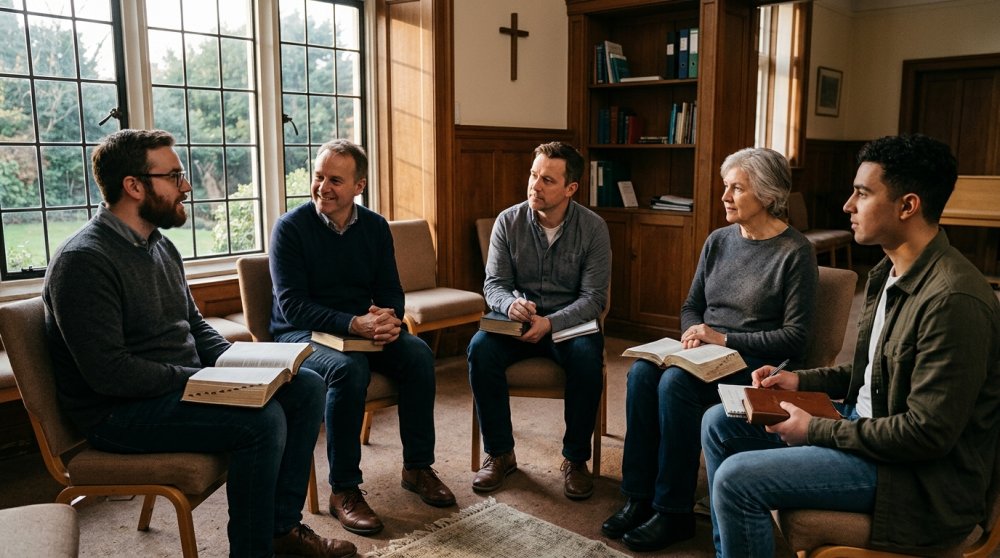
Hughes advocates for what he calls “a room” rather than just “a pair.” This means small groups of three to five men or women who meet regularly, where accountability is shared among multiple relationships. In this setting, if one person misses a meeting, the group continues. If one member offers unwise counsel, others can provide correction. If someone struggles, multiple believers are there to support and pray.
This isn’t about abandoning close friendships or one-on-one discipleship. Those relationships remain vital. But when it comes to the vulnerable work of accountability—confessing struggles, addressing sin patterns, pursuing growth—there’s wisdom in having multiple witnesses and supporters rather than placing all that weight on a single friendship.
The isolation of the one-to-one model can also create unhealthy dynamics. One person may feel responsible for “fixing” the other. Codependency can develop. Or worse, the accountability becomes superficial, with both parties going through the motions of asking surface-level questions while avoiding the harder conversations.
In contrast, a small group provides built-in checks and balances. Different members bring different perspectives, life experiences, and spiritual gifts. One may offer wise counsel, another encouragement, another tough love when needed. The diversity strengthens the accountability rather than weakening it.
For Christian men especially, this shift could address the epidemic of isolation many face. Studies show Christian men are increasingly disconnected from meaningful friendships and spiritual community. The pressure to “find an accountability partner” can feel daunting, and when that relationship inevitably falters, men often retreat into isolation rather than trying again.
A small group removes some of that pressure. There’s less riding on any single relationship. The commitment is to the group, not to performing a role in someone else’s spiritual life. And the shared experience of walking together toward holiness creates bonds that isolated pairs often lack.
This approach also aligns better with how church discipline and restoration are described in Scripture. When Jesus outlined the process for addressing sin in Matthew 18, He spoke of bringing one or two others, then telling it to the church. The pattern moves toward community involvement, not away from it.
Hughes isn’t suggesting that every Christian needs to join a formal accountability group immediately. But he is challenging the assumption that accountability primarily happens in pairs. For those who have tried and failed at the accountability partner model, perhaps the issue wasn’t a lack of commitment or the wrong partner—perhaps the structure itself was insufficient.
The beauty of accountability in community is that it mirrors the gospel itself. We aren’t saved into isolation but into the body of Christ. We don’t grow alone but together, as living stones being built into a spiritual house. Our sanctification happens in relationship with other believers, shaped by their prayers, challenged by their questions, encouraged by their faithfulness.
As churches and ministries rethink how to foster genuine accountability, the shift from pairs to small communities could prove transformative. It won’t solve every problem, and it requires commitment from multiple people rather than just two. But for those who have experienced the quiet collapse of yet another accountability partnership, it offers a more sustainable, biblical path forward.
Let us know what you think, please share your thoughts in the comments below.


Faith Facts
- Wes Huff’s three-year-old daughter spent two nights in hospital after multiple seizures before returning home.
- The Canadian Christian apologist publicly credited God’s care during the family’s health trial.
- Traditional Christian teaching emphasizes trusting God through family illness and hardship.
Canadian Christian apologist Wes Huff has given an update on his young daughter’s recovery. The three-year-old spent two nights in the hospital after suffering multiple seizures. She has now returned home.
“We are so grateful to be home and to see her smiling again,” Huff stated.
Friends and supporters across Canada and the United States have lifted the family in prayer. Many have shared messages of encouragement, reminding the Huffs of God’s promise in Psalm 46:1 that He is “our refuge and strength, a very present help in trouble.”
“The outpouring of prayer has been overwhelming,” Huff added.
Throughout the ordeal, the family leaned on Scripture and church community. This approach reflects a long-standing Christian tradition of turning to faith and fellowship when facing medical uncertainty.
Let us know what you think, please share your thoughts in the comments below.
Faith Facts
- Scripture calls parents to train up children in the way they should go, yet also warns against casting pearls before swine when relationships become destructive.
- Christian teaching emphasizes both honoring father and mother and the reality that adult children may choose rebellion or reconciliation.
- Traditional American values uphold the God-given right of individuals to steward their property according to conscience and biblical principle.
The pain of family estrangement cuts deep into the heart of any believing parent. When a once-close child refuses contact, holidays turn hollow and phone calls go unanswered. Many mothers and fathers wrestle silently with grief that never receives a funeral.
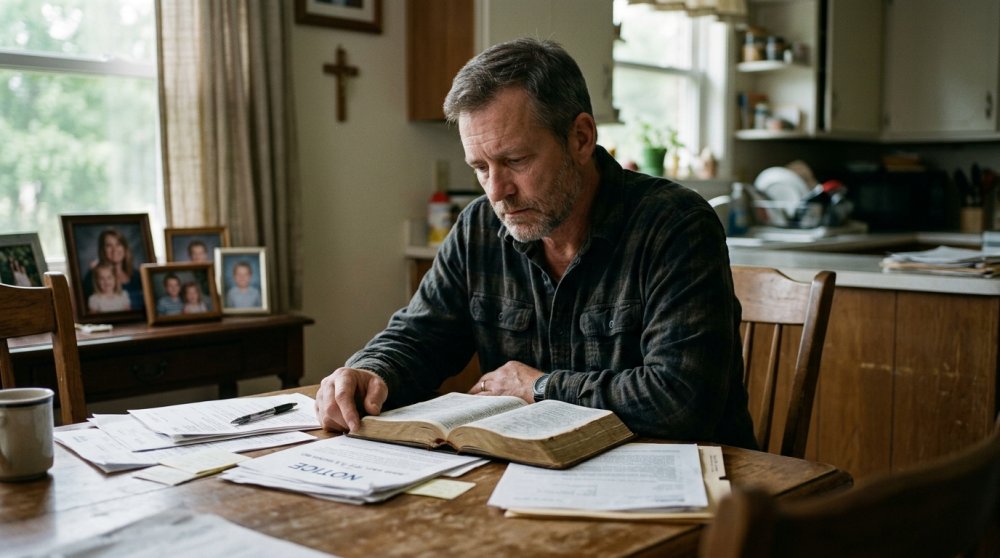
Financial questions quickly surface once emotional wounds are acknowledged. Parents wonder whether an estranged adult child still deserves the inheritance that once seemed certain. Some quietly begin the difficult process of updating wills and trusts to reflect current realities.
Christian counselors often urge families to seek biblical mediation before making permanent legal changes. Reconciliation remains the goal whenever safety allows, yet repeated rejection sometimes leaves parents with no other choice.
“Honor your father and your mother” remains a commandment, yet Scripture also records painful examples of adult children who turned against their parents. The tension between these truths requires prayerful wisdom rather than easy answers.
Legal experts note that competent adults possess the freedom to distribute assets according to their own convictions. Removing a child from an estate plan does not require public explanation, though families should document decisions carefully to avoid future contests.
Some parents choose to leave a modest token amount to an estranged child rather than omit them entirely. This approach may reduce legal challenges while still honoring the principle that inheritance represents both blessing and responsibility.
Others direct resources toward grandchildren or ministries that reflect their lifelong values. Such decisions allow parents to continue supporting what they believe honors God even when direct family relationships have fractured.
Financial advisors recommend reviewing beneficiary designations on retirement accounts, life insurance policies, and payable-on-death accounts. These documents often override wills and require separate attention when family circumstances change.
Ultimately, Christian parents facing estrangement must balance compassion with accountability. They can extend grace while recognizing that repeated patterns of rejection may warrant difficult but necessary boundaries in both relationship and resources.
Let us know what you think, please share your thoughts in the comments below.
Faith Facts
- Ben Smallbone reveals that forgiveness became the foundation for his new Christmas musical Drummer Boy.
- The story centers on reconciliation between brothers set against the backdrop of the American Revolution.
- Smallbone emphasizes that healing deep family wounds is possible through Christian forgiveness.
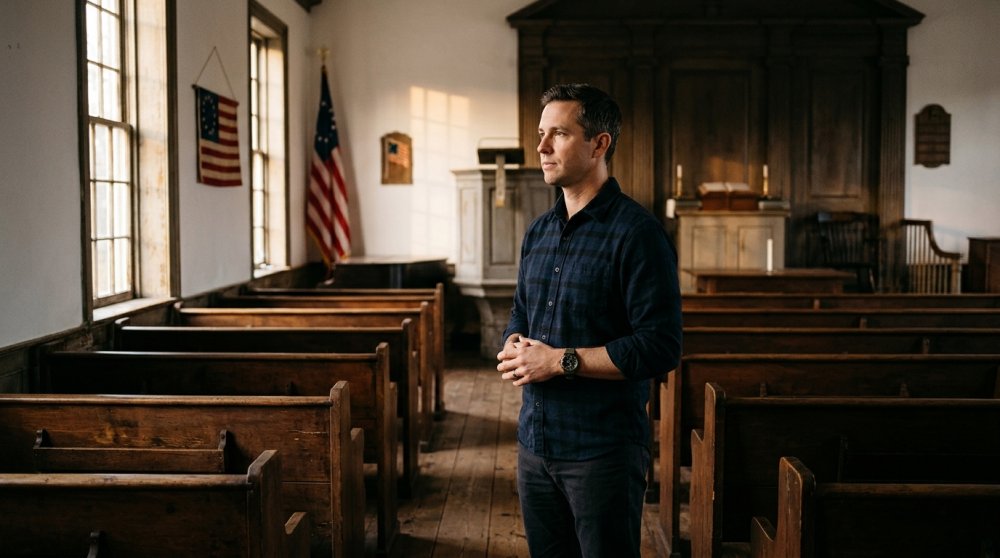
Ben Smallbone has opened up about the painful rift he experienced with his brother Joel and how their journey toward reconciliation became the heart of his new Christmas musical. The project, titled Drummer Boy, is set during the American Revolution and explores the power of forgiveness within families.
Smallbone explained that the personal experience of broken family relationships gave him a deeper understanding of how faith can restore what has been lost. He believes the story resonates because it reflects the struggles many families face today.
“Our journey toward reconciliation became the foundation of Drummer Boy.”
The musical uses the historical setting of the American Revolution to highlight timeless truths about forgiveness and redemption. Smallbone sees the Revolutionary era as a fitting backdrop because it was a time when families were divided by conflict yet still found paths to healing.
“Even the deepest family wounds can be healed through forgiveness.”
Smallbone hopes the production will encourage audiences to pursue reconciliation in their own lives. He views the musical as both a celebration of America’s founding and a reminder of the Christian principles that have guided the nation through its hardest moments.
Let us know what you think, please share your thoughts in the comments below.


-

 Self-Reliance2 years ago
Trump’s Bold Move Uncovers Massive Social Security Fraud
-

 Faith2 years ago
New Clues Emerge in Noah’s Ark Mystery
-

 News2 years ago
Governor Walz’s Rhetoric Sparks National Controversy
-

 News2 years ago
Mel Gibson’s ‘The Passion of the Christ’ Sequel Title Announced
-

 Family2 years ago
Texas Lawmaker Targets Furries in Schools
-

 Freedom2 years ago
Maine Lawmaker Challenges Sports Fairness Controversy
-

 Family1 year ago
Canada’s Controversial Policy Sparks Ethical Debate
-
Faith12 months ago
Congress Hears Pleas for Nigerian Christians