
Family
Why Your Accountability Partner Isn’t Enough to Keep You on Track

Faith Facts
- One-on-one accountability relationships often fail when built on just two people, according to ministry leader Derek Hughes
- Scripture emphasizes communal accountability through the body of Christ, not isolated pairs
- Christian men are rediscovering that faithful accountability requires multiple witnesses and a community of support
For years, the standard advice in Christian circles has been simple: find an accountability partner. One trusted friend, one phone call away, one person to keep you honest. But what happens when that relationship quietly fades, when the texts go unanswered, when life gets busy and the weekly check-ins stop?
Derek Hughes has watched this pattern repeat itself countless times. After years of seeing one-to-one mentoring relationships collapse under the weight of unspoken expectations, he began asking a difficult question: What if accountability was never designed to rest on the shoulders of just two people?
The traditional accountability partner model sounds biblical on the surface. We’re told that iron sharpens iron, that two are better than one. But Hughes suggests we may have misunderstood the blueprint. The early church didn’t practice accountability in isolated pairs—they practiced it in community, with elders overseeing the flock, with brothers and sisters bearing one another’s burdens together.
When accountability exists between just two people, several problems emerge. First, there’s no backup when one person falters or life circumstances change. Second, the relationship can become unbalanced, with one person doing all the confessing and the other doing all the advising. Third, without multiple perspectives, blind spots go unaddressed and poor counsel can go unchallenged.
The Scripture speaks of accountability in the context of the body of Christ—not isolated limbs, but interconnected members. When Paul instructed the Galatians to “bear one another’s burdens,” he was addressing the entire church community, not suggesting they pair off into accountability duos. When James wrote about confessing sins to one another, he envisioned a community of believers walking in transparency together.
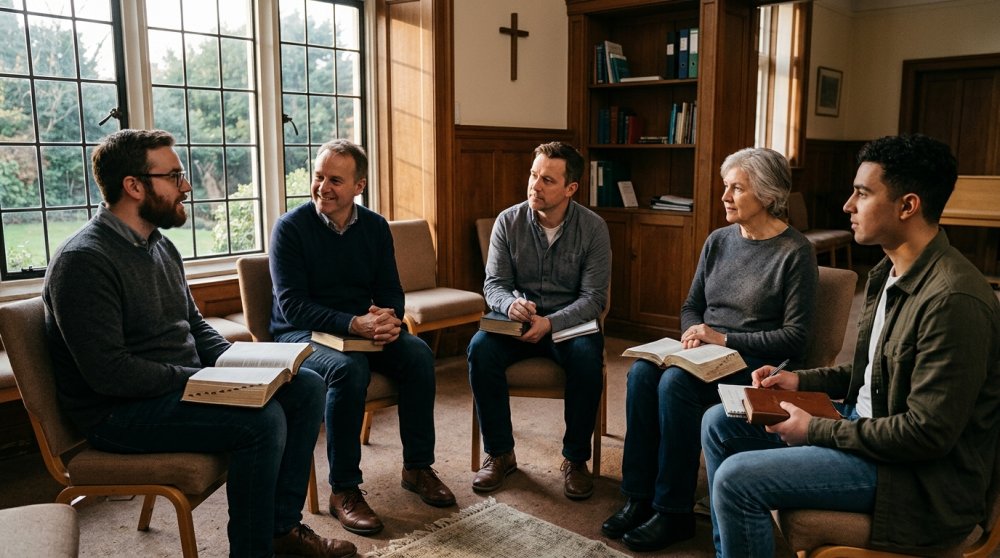
Hughes advocates for what he calls “a room” rather than just “a pair.” This means small groups of three to five men or women who meet regularly, where accountability is shared among multiple relationships. In this setting, if one person misses a meeting, the group continues. If one member offers unwise counsel, others can provide correction. If someone struggles, multiple believers are there to support and pray.
This isn’t about abandoning close friendships or one-on-one discipleship. Those relationships remain vital. But when it comes to the vulnerable work of accountability—confessing struggles, addressing sin patterns, pursuing growth—there’s wisdom in having multiple witnesses and supporters rather than placing all that weight on a single friendship.
The isolation of the one-to-one model can also create unhealthy dynamics. One person may feel responsible for “fixing” the other. Codependency can develop. Or worse, the accountability becomes superficial, with both parties going through the motions of asking surface-level questions while avoiding the harder conversations.
In contrast, a small group provides built-in checks and balances. Different members bring different perspectives, life experiences, and spiritual gifts. One may offer wise counsel, another encouragement, another tough love when needed. The diversity strengthens the accountability rather than weakening it.
For Christian men especially, this shift could address the epidemic of isolation many face. Studies show Christian men are increasingly disconnected from meaningful friendships and spiritual community. The pressure to “find an accountability partner” can feel daunting, and when that relationship inevitably falters, men often retreat into isolation rather than trying again.
A small group removes some of that pressure. There’s less riding on any single relationship. The commitment is to the group, not to performing a role in someone else’s spiritual life. And the shared experience of walking together toward holiness creates bonds that isolated pairs often lack.
This approach also aligns better with how church discipline and restoration are described in Scripture. When Jesus outlined the process for addressing sin in Matthew 18, He spoke of bringing one or two others, then telling it to the church. The pattern moves toward community involvement, not away from it.
Hughes isn’t suggesting that every Christian needs to join a formal accountability group immediately. But he is challenging the assumption that accountability primarily happens in pairs. For those who have tried and failed at the accountability partner model, perhaps the issue wasn’t a lack of commitment or the wrong partner—perhaps the structure itself was insufficient.
The beauty of accountability in community is that it mirrors the gospel itself. We aren’t saved into isolation but into the body of Christ. We don’t grow alone but together, as living stones being built into a spiritual house. Our sanctification happens in relationship with other believers, shaped by their prayers, challenged by their questions, encouraged by their faithfulness.
As churches and ministries rethink how to foster genuine accountability, the shift from pairs to small communities could prove transformative. It won’t solve every problem, and it requires commitment from multiple people rather than just two. But for those who have experienced the quiet collapse of yet another accountability partnership, it offers a more sustainable, biblical path forward.
Let us know what you think, please share your thoughts in the comments below.

Faith Facts
- Clyde and Gwen Antwine celebrated 70 years of marriage rooted in Christian service and missionary work across Europe and the United States.
- The couple met at a youth camp in Texas and built their relationship on shared faith, mission trips, and a commitment to mentoring young Christians.
- They helped establish a healthy church in Zurich, Switzerland, and continued to serve faithfully at Memorial Road Church of Christ in Oklahoma.
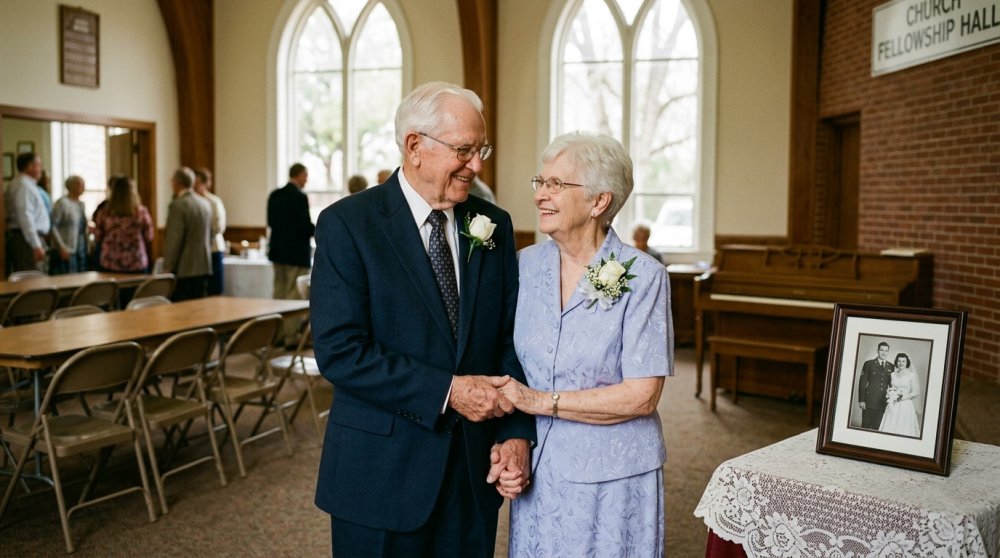
The Antwines first met as teenagers at a two-week encampment at Abilene Christian University. Clyde was 15 years old and sold his FFA prize-winning steer for $40 to attend. That is where he first saw Gwen, then 14, and asked to take her picture.
He carried that photograph in his wallet for five years before they reunited at Abilene Christian during his sophomore year. They married six months later.
“The last day of camp, I worked up the courage to ask her if I could take her picture, and she posed. And I put that picture in my wallet. I didn’t even know her name. I just knew she was pretty.”
After Clyde graduated, the couple boarded a boat for Europe in 1959. They served seven years in Zurich, helping to strengthen a young congregation of the Church of Christ. Their work laid a foundation that still bears fruit today.
Later the Antwines served in the German cities of Augsburg and Munich. After nearly two decades overseas, they returned to the United States. Clyde became missionary in residence at Oklahoma Christian University while Gwen served as office manager for The Christian Chronicle.
“Gwen would get you laughing and see the positive side when things got tough, and Clyde, in his quiet voice, would somehow say the exact words you needed to hear to keep you spiritually grounded.”
Their legacy continues through the many students they mentored for mission work. The Antwines never sought recognition. Their only goal was to prepare others for Kingdom service.
Today, Clyde still carries that original photograph of Gwen from their teenage years. Their story stands as a clear testimony of enduring love, steadfast faith, and lifelong commitment to the Lord’s work.
Let us know what you think, please share your thoughts in the comments below.
Faith Facts
- Ashley Flynn’s family states she “wanted her life to point people to Jesus.”
- She is remembered as a mother of two who “loved Jesus with her whole heart.”
- The case centers on the tragic loss of a Christian wife and mother whose testimony continues to inspire faith.
The family of the late Ashley Flynn is remembering the slain mother of two as someone who “loved Jesus with her whole heart” after her husband Caleb was found guilty of murdering her as the defendant’s family maintains his innocence.
Let us know what you think, please share your thoughts in the comments below.
Faith Facts
- Christians across Puerto Rico are gathering for six days of prayer for families, churches and the island’s future.
- The island is a U.S. territory located in the Caribbean.
- The multi-day prayer initiative reflects a commitment to faith, family and national values.
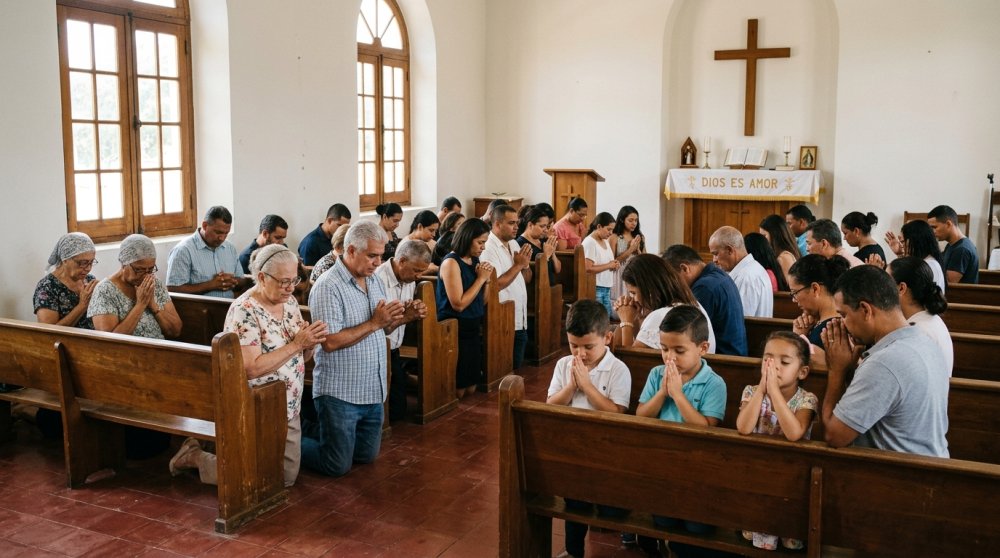
Christians across Puerto Rico are gathering this week for six days of prayer for families, churches and the future of the island, a U.S. territory in the Caribbean.
Believers are uniting in churches and communities to seek God’s guidance and blessing over their households and the territory’s future.
Participants are lifting up concerns ranging from family stability and spiritual renewal to economic growth and cultural preservation.
Let us know what you think, please share your thoughts in the comments below.


-

 Self-Reliance2 years ago
Trump’s Bold Move Uncovers Massive Social Security Fraud
-

 Faith1 year ago
New Clues Emerge in Noah’s Ark Mystery
-

 News2 years ago
Governor Walz’s Rhetoric Sparks National Controversy
-

 News2 years ago
Mel Gibson’s ‘The Passion of the Christ’ Sequel Title Announced
-

 Family2 years ago
Texas Lawmaker Targets Furries in Schools
-

 Freedom2 years ago
Maine Lawmaker Challenges Sports Fairness Controversy
-

 Family1 year ago
Canada’s Controversial Policy Sparks Ethical Debate
-
Faith11 months ago
Congress Hears Pleas for Nigerian Christians